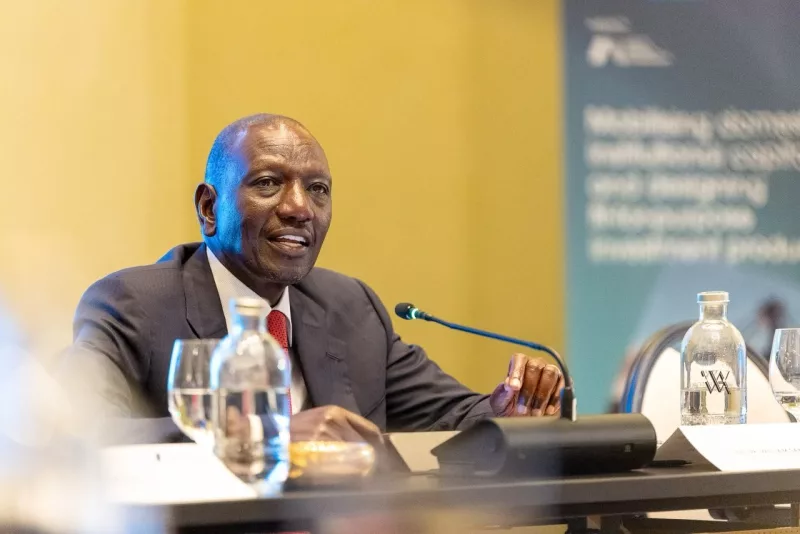
On September 21, 2026, Kenyan President William Ruto addressed a high-level meeting of the AI Middle Powers (AIM) Coalition in New York, emphasizing the need for Africa to have greater ownership and control over artificial intelligence. He warned that technological dependence could undermine political sovereignty, stating that countries risk losing meaningful control over their sovereignty if they remain dependent on technologies they do not control. Ruto's remarks were made on the margins of the 81st United Nations General Assembly.
Ruto highlighted that artificial intelligence is transforming production, distribution of capability, opportunity, and power. He stressed that countries need the capacity to choose, negotiate, adapt, and replace critical systems on which their economies and societies depend. The President noted that middle powers, like Kenya, have talent, resources, markets, and diplomatic influence but cannot independently control the entire AI value chain. He proposed shared sovereignty as a way for countries to pool capabilities in areas where scale is necessary while retaining national control where accountability is essential.
Ruto emphasized that Africa must avoid reproducing its traditional extractive economic model in the digital economy. He called for the continent to move from consuming AI technologies to developing and owning them. The President noted that African researchers, developers, writers, teachers, health workers, and entrepreneurs are already contributing knowledge, data, and talent to the global digital ecosystem. However, he said African languages, contexts, and institutions remain under-represented in many AI systems.
The President cited the importance of Kenya's National Artificial Intelligence Strategy, which focuses on digital infrastructure, data and AI governance, and research, innovation, and commercialization. Ruto stated that Kenya's goal is to use AI to increase agricultural productivity, strengthen healthcare, expand access to education, improve public services, advance financial inclusion, and create enterprises and jobs. He also encouraged countries with abundant renewable energy to take advantage of the growing demand for AI computing infrastructure.
Ruto warned that the development of AI must be accompanied by safeguards against its potential harms, such as misinformation, deepfakes, cyber threats, and harmful AI-generated content. He called for AI governance to be anchored in human dignity, sovereign equality, and international law. The President emphasized that the United Nations should remain central to global discussions on AI, arguing that the rules governing the technology should not be determined by a small group of governments, companies, or laboratories.
The AIM initiative, according to Ruto, will initially focus on mobilizing finance, expanding trusted infrastructure, and developing the human and institutional capacity needed to build, adapt, evaluate, and govern AI. He said countries should cooperate in areas including computing infrastructure, trusted data ecosystems, research, skills, multilingual models, and public-sector capacity. Ruto's call for African ownership and control of AI reflects the continent's growing interest in harnessing the technology for its development.
As the global community continues to grapple with the implications of AI, Ruto's remarks underscore the need for inclusive and equitable approaches to AI development and governance. The President's emphasis on shared sovereignty and African ownership of AI highlights the importance of ensuring that the benefits of the technology are shared by all, while minimizing its risks. With Africa poised to play a significant role in shaping the future of AI, Ruto's call to action is likely to resonate with policymakers and stakeholders across the continent.
Key points
- Ruto calls for African ownership and control of artificial intelligence to avoid technological dependence.
- The President proposes shared sovereignty as a way for countries to pool capabilities in areas where scale is necessary.
- Ruto emphasizes the need for AI governance to be anchored in human dignity, sovereign equality, and international law.