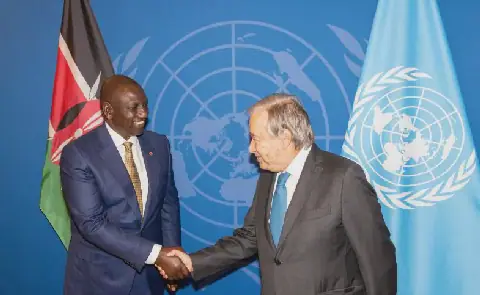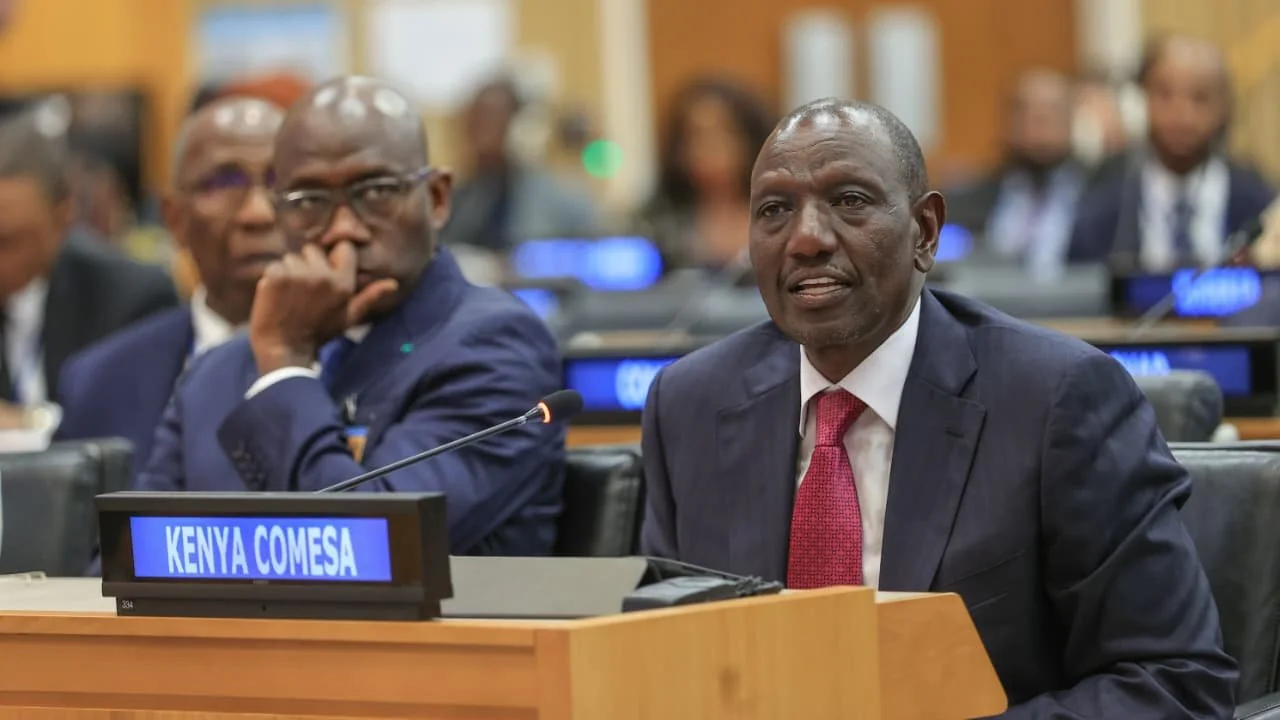
President William Ruto addressed the 81st United Nations General Assembly in New York on September 24, 2026, emphasizing the need for Africa to change its approach to utilizing natural resources. He urged African countries to process minerals and agricultural products locally, rather than exporting raw materials for others to turn into finished goods. This approach, Ruto argued, would enable the continent to build stronger industries and retain more of the value generated from its resources.
According to Ruto, Africa has vast mineral wealth, immense agricultural potential, extraordinary renewable energy resources, and the world's youngest population. These resources, combined with a growing population and expanding market, present an opportunity for the continent to become a major player in food production, clean energy, manufacturing, and global supply chains. The African Continental Free Trade Area (AfCFTA) has also increased linkages among countries, providing a wider market for locally produced goods.
Ruto noted that Africa has more than 1.5 billion people, and the AfCFTA has created a larger market for goods produced locally. He emphasized that the continent's resources should no longer be viewed as merely extractable materials, but rather as the foundation for African industry. The President stated that Africa's past has been marked by the extraction and export of resources, but investment should now focus on supporting industries that process those resources and produce higher-value goods within Africa.
To illustrate the desired shift, Ruto pointed to developments in the cocoa sector, where some producing countries are moving beyond the sale of cocoa beans and developing their own brands. He also referred to cotton-producing countries that are developing value chains around the crop, allowing more activity linked to production and processing to take place within Africa. This approach would enable the continent to capture more of the economic value generated from its resources.
The UN Office of the Special Adviser on Africa has identified Africa's large share of global critical mineral reserves as an opportunity, while noting the challenge of ensuring that the continent captures more of the economic value generated from those resources. Ruto emphasized that the clean energy transition must not become another extractive transition, where Africa simply supplies raw materials for clean energy technologies while manufacturing and other high-value activities remain elsewhere.
Ruto called for the AfCFTA to support greater production on the continent, rather than serving mainly as a market for goods already made in Africa. He stated that the Africa continental free trade area must become a platform on which Africa makes more of what it now imports, rather than merely a market for existing products. This approach would enable the continent to increase investment in African industries, expand value addition, and use mineral, agricultural, and energy resources to support local production.
The President's message centered on transforming Africa's natural resources into finished products, creating industries and jobs, and enabling the continent to produce more finished goods. By adopting this approach, Africa can reduce its dependence on exporting raw materials and become a major player in global markets. Ruto's call to action emphasizes the need for a new approach to economic development in Africa, one that prioritizes value addition, local production, and industrialization.
Key points
- President William Ruto urges African countries to process minerals and agricultural products locally to build stronger industries and retain more of the value generated from its resources.
- Africa has vast mineral wealth, immense agricultural potential, and extraordinary renewable energy resources, presenting an opportunity for the continent to become a major player in food production, clean energy, and manufacturing.
- The African Continental Free Trade Area (AfCFTA) has created a larger market for goods produced locally, providing a platform for Africa to increase investment in industries and expand value addition.