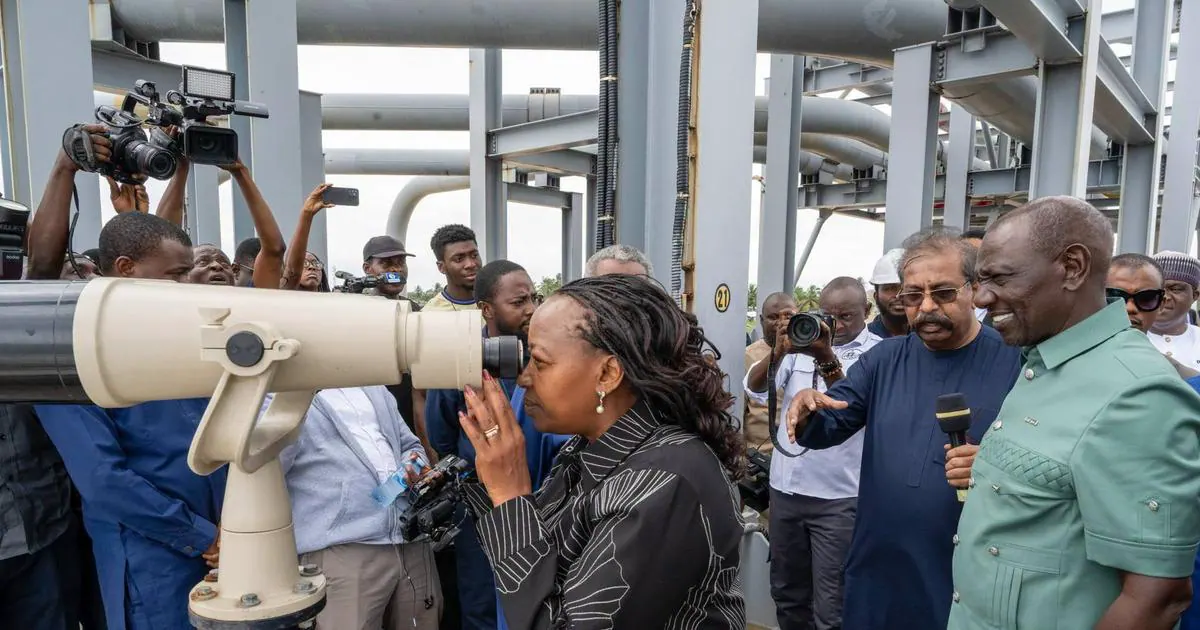
President William Ruto and First Lady Rachel Ruto have toured the Dangote Refinery in Lekki, Lagos State, Nigeria, at the invitation of Dangote Group President and CEO Aliko Dangote. The visit comes ahead of the planned launch of a similar industrial project in Lamu, Kenya. The Dangote Refinery has a nameplate capacity of 700,000 barrels of crude oil per day and is an integrated complex combining refining, storage, marine infrastructure, and petrochemicals.
The Dangote Refinery is a massive investment with a crude oil refining capacity of 700,000 barrels per day and produces more than 100 million liters of petrol, diesel, and aviation fuel every day. The refinery was built around a deepwater jetty, crude-processing facilities, storage, and distribution infrastructure, giving Dangote an integrated route from crude receipt to delivery of refined products. The company says the refinery produces products including petrol, diesel, and aviation fuel, alongside petrochemicals.
The visit is significant because the same broad industrial logic is being attached to the proposed East Africa Refinery in Lamu. Rather than simply producing fuel, the Kenyan project is being positioned as the center of a wider energy, petrochemical, storage, logistics, and manufacturing complex. Kenya and Dangote have set September 30, 2026, for the groundbreaking of the proposed Lamu refinery, which is planned with a processing capacity of 700,000 barrels per day.
The Lamu refinery project has been reported at between $15 billion and $17 billion, with the Kenyan Government reporting putting the latest estimate around Sh2.2 trillion. Construction is expected to take about three years, with the plant targeted to serve Kenya and neighboring markets. The project has been touted as a major job creator, with the Kenyan Government expecting the wider project to create more than 60,000 jobs, with about half projected to be skilled positions.
The economic argument behind the Lamu refinery extends beyond replacing imported petrol and diesel. Kenya spent about Sh511.5 billion on petroleum products in 2025, according to recent Government-linked reporting, making fuel the country's largest import bill. A domestic refinery could retain more value within the regional economy while reducing dependence on imported refined products and strengthening supply security.
Lamu's location is also tied to the LAPSSET corridor and Lamu Port, giving the project access to deep-water maritime infrastructure and a potential route for crude imports, refined-product exports, and regional distribution. The Kenyan Government expects the refinery to stimulate supporting industries in areas such as logistics, manufacturing, chemicals, and petrochemicals. Ruto has additionally pointed to potential downstream industries including fertilizer, chemicals, and packaging.
However, the scale of the plan also comes with major tests. Kenya currently does not have commercial-scale crude production, meaning the refinery's long-term feedstock supply remains an issue. Analysts have warned that the plant could initially depend substantially on imported crude unless regional production and transport infrastructure expand. Dangote Industries has said financing will involve a combination of internal funding, bonds, and an initial public offering, while Kenya and other East African countries have been offered stakes in the project.
Key points
- The Dangote Refinery in Nigeria is a model for Kenya's proposed Lamu refinery.
- The Lamu refinery project is expected to create more than 60,000 jobs and stimulate supporting industries.
- The project has been reported at between $15 billion and $17 billion, with construction expected to take about three years.