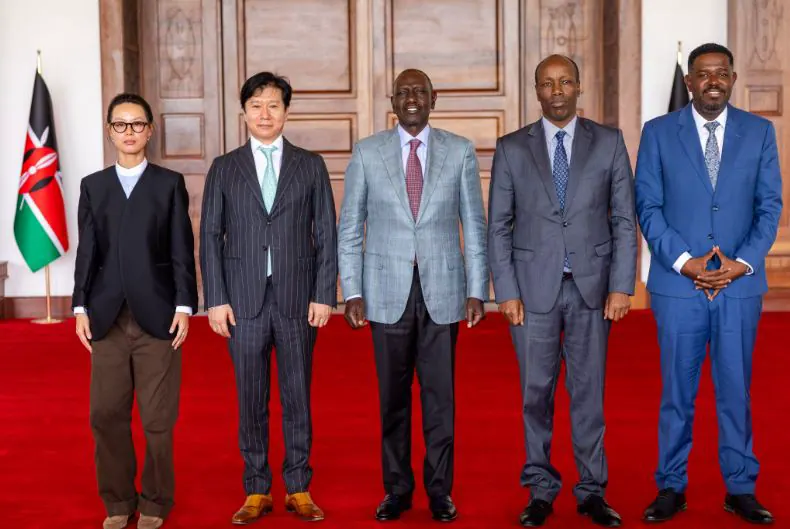
On October 6, President William Ruto announced a proposed $3 billion investment to establish a nationwide electric vehicle manufacturing and green mobility ecosystem in Kenya. The project, which is expected to be one of the largest regional electric mobility investments, aims to reduce the country's reliance on imported vehicles and fuel while boosting local employment. The initiative is a partnership between the Government of Kenya and Endelevu Enterprise Corporation.
The proposed mega-project features two major assembly plants and widespread infrastructure rollout. The Four-Wheel Vehicle Plant will have an assembly facility capable of producing 50,000 electric vehicles annually. The Two-Wheel & Light-Mobility Plant will be a dedicated facility with an annual capacity of 100,000 electric motorcycles and light vehicles. Additionally, the project will establish 1,000 solar-powered charging hubs nationwide and a digital management platform designed to manage and monitor up to 100,000 green vehicles.
President Ruto outlined the broad employment benefits expected across assembly, supply chain, and service sectors. The project is expected to create about 2,000 direct jobs and more than 20,000 indirect jobs among suppliers, logistics firms, and service providers. He added that expanded operations will create even broader career avenues, including up to 80,000 further opportunities in fleet management, operations, and services.
The president highlighted Kenya's goal to become a regional manufacturing hub rather than relying solely on domestic consumption. Vehicles built in Kenya under East African Community (EAC) Rules of Origin will gain access to a market of hundreds of millions of people. President Ruto noted that the ambition goes beyond Kenya, aiming to manufacture for East Africa and for Africa.
To facilitate the project's implementation, President Ruto instructed the Ministry of Investments, Trade, and Industry, via Invest Kenya, to provide end-to-end support for fast-tracking necessary land, infrastructure, and regulatory approvals. He directed the ministry to provide end-to-end facilitation to Endelevu, emphasizing that a signature does not build a factory.
The National Electric Mobility Policy and the National Automotive Bill, currently before Parliament, are expected to support the project's growth. The policy and bill aim to create an enabling environment for the electric mobility sector, promoting local technology transfer and SME contracts. President Ruto emphasized the importance of local technology transfer and SME contracts in the project's implementation.
The partnership between the Government of Kenya and Endelevu Enterprise Corporation sets up a framework for an integrated green mobility ecosystem. The proposed investment of $3 billion is one of the largest electric mobility commitments in the region. With the project's implementation, Kenya is expected to become a leader in electric vehicle manufacturing and green mobility in Africa.
Key points
- The project aims to create about 2,000 direct jobs and more than 20,000 indirect jobs.
- The proposed investment of $3 billion is one of the largest electric mobility commitments in the region.
- Vehicles built in Kenya will gain access to a market of hundreds of millions of people under East African Community (EAC) Rules of Origin.