Kenyan President William Ruto has been a strong advocate for green energy, making passionate speeches at international forums, including the 2023 Africa Climate Summit, where he urged Africa to ditch fossil fuels and rely on renewable energy. He claimed Kenya was on track to achieve 100% green energy by 2030. Ruto's stance on green energy has been consistent, with him telling CNN that Kenya had slowed down investments in fossil fuels. His speeches won a standing ovation, and he was seen as a champion of environmental causes.
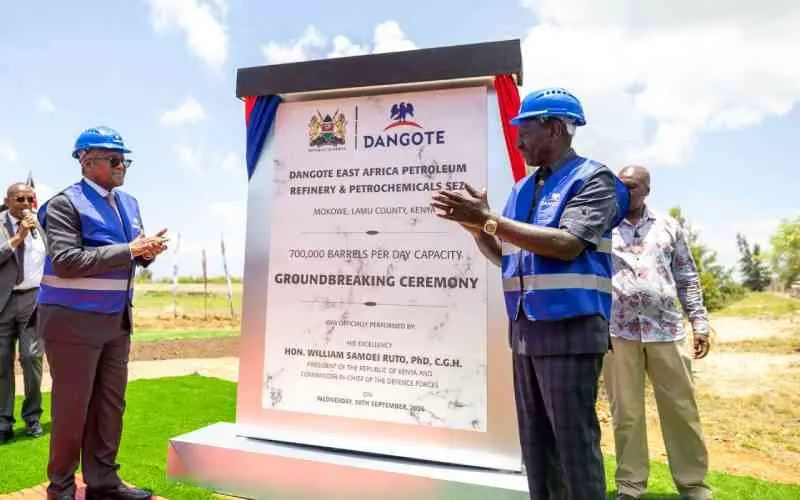
However, Ruto's recent actions have raised concerns among environmentalists and Kenyans. This week, he launched the construction of one of the largest oil refineries in Africa, a move that seems to contradict his previous stance on fossil fuels. The project has sparked concerns about its environmental impact, particularly in Lamu, a UNESCO World Heritage Site. The refinery's location has raised fears about air pollution and the potential harm to the local ecosystem.
Several voices have come out against the planned oil refinery, but surprisingly, environmentalists have been quiet. One would have expected more robust conversations about the project's environmental impact and a point-by-point dissection of the environmental impact reports. The lack of discussion has raised questions about the project's potential consequences and whether public participation was conducted before the project was launched.
The project is being spearheaded by a firm from a country with a questionable record on clean energy. The firm has been involved in oil production activities that have harmed the environment and local communities. This has raised concerns about the potential risks associated with the project and whether Kenya is taking a step backward in its efforts to promote green energy.
The launch of the oil refinery project has also sparked concerns about the government's commitment to its green energy goals. Ruto's administration has been promoting the idea of planting 15 billion trees to clean up the air, but the oil refinery project seems to contradict this goal. The project's impact on the environment and the local community will need to be closely monitored.
The project's location in Lamu, a UNESCO World Heritage Site, has raised concerns about its potential impact on the island's cultural and natural heritage. The site is home to one of the oldest Swahili settlements in the world, and any development in the area must be carefully considered to avoid harming the local ecosystem and cultural heritage.
The government's handling of the project has also raised questions about public participation and the involvement of local communities. If public participation was conducted before the project was launched, what concerns did environmentalists and local communities raise, and have these been addressed? The lack of transparency and public engagement has sparked concerns about the project's legitimacy and potential impact.
Key points
- President Ruto's shift on fossil fuels has raised concerns among environmentalists and Kenyans.
- The oil refinery project's environmental impact and location in a UNESCO World Heritage Site have sparked concerns.
- The government's handling of the project has raised questions about public participation and transparency.