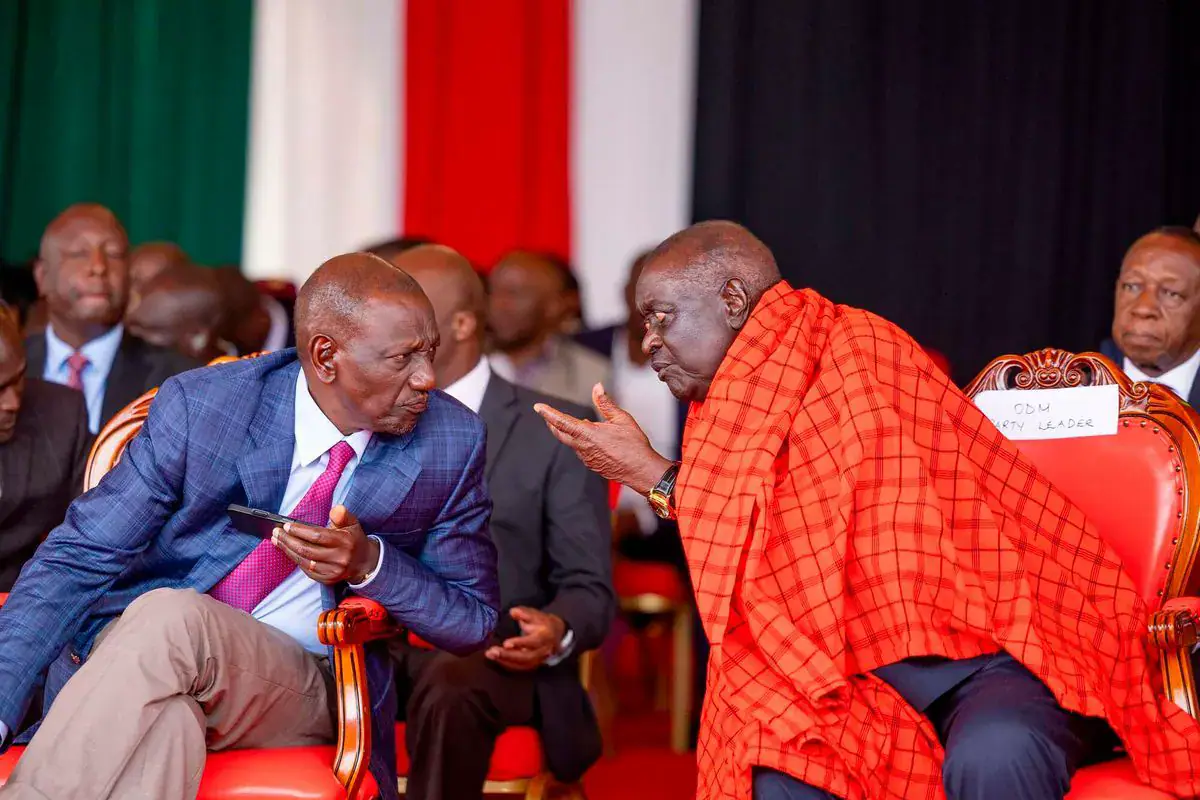
Kenyan President William Ruto's influence in Orange Democratic Movement (ODM) strongholds is growing, posing a challenge to the party's unity and negotiation power. Ruto's administration has been implementing development projects in areas traditionally dominated by ODM, increasing his popularity. Some ODM leaders have openly supported Ruto, despite the party's official stance. This has sparked concerns that ODM might compromise its interests in the 2027 general elections.
Analysts attribute ODM's current predicament to its decision to mobilize supporters behind Ruto's re-election bid without securing a formal agreement on cooperation terms with the United Democratic Alliance (UDA). ODM's leadership, including leader Dkt Oburu Oginga, has warned against divisions that could undermine the party's negotiation position. Oginga urged ODM leaders to present a united front in talks with UDA.
Internal divisions within ODM have been exacerbated by some leaders' personal ambitions and interests. Several ODM leaders, including John Mbadi and Opiyo Wandayi, hold cabinet positions in Ruto's government, which may influence their loyalty to the party. Mbadi has expressed interest in the presidency in 2032, sparking concerns about the party's priorities.
Some ODM leaders, including Junet Mohammed, advocate for a written agreement between ODM and UDA to solidify their cooperation. Mohammed emphasized that a formal agreement is necessary to ensure a cohesive government. However, others, like Kisii Governor Simba Arati, have echoed similar sentiments, stressing that ODM will not enter government without conditions.
Notable ODM leaders have divergent views on the party's cooperation with UDA. Jared Okello, Nyando MP, supports Ruto's administration, citing benefits from government projects. Okello questioned the significance of formal agreements, citing past experiences of political betrayal.
The divisions within ODM have led to speculation about the party's future. Some analysts believe that the current dynamics may alter ODM's traditional strongholds. Professor David Monda noted that the faction led by Sifuna has taken over the political space traditionally associated with Oginga's group.
As ODM navigates its relationships with UDA and the government, the party faces critical decisions that will impact its future. With internal tensions and divergent views, ODM's leadership must find a balance between its interests and the changing political landscape.
Key points
- ODM's internal divisions and Ruto's growing influence in traditional strongholds pose challenges to the party's unity and negotiation power.
- Some ODM leaders advocate for a written agreement with UDA, while others support Ruto's administration without conditions.
- The party's future depends on its ability to navigate its relationships with UDA and the government amidst internal tensions.