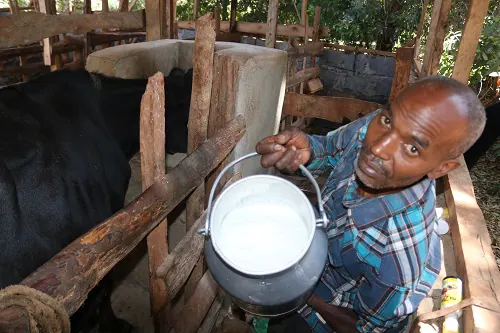
Kenyan President William Ruto has proposed that the country expand its milk sources to include camel, goat, and sheep milk in an effort to address the current milk shortage and rising prices. The proposal comes after the recent drought affected milk production, leading to a shortage and price increase. Ruto made the suggestion during the closing of a three-day Agriculture and Food Systems Transformation conference in Nairobi.
The current milk shortage has led to a significant price increase, with a liter of milk selling for as high as Sh85 in some areas, including Kasarani, Githurai, Zimmerman, Kayole, Buruburu, and Embakasi. According to reports, the price increase is attributed to the drought that has affected milk production. However, Agriculture Minister Mutahi Kagwe has downplayed the claims of a severe milk shortage, citing a decrease in supply.
Ruto instructed Livestock Secretary Jonathan Mueke to expedite research on high-quality camel breeds to increase production. He also emphasized the need to support communities that already have the livestock and expertise to develop the camel milk business, which has a market in urban areas. The President noted that these communities can play a crucial role in increasing milk production and meeting the demand.
The Agriculture and Food Systems Transformation conference brought together stakeholders to discuss ways to transform the agricultural sector. Ruto's proposal to diversify milk sources is part of a broader effort to address food security and sustainability in the country. The conference provided a platform for experts to share knowledge and best practices in agriculture and food systems.
The current milk shortage has had a significant impact on consumers, particularly in urban areas. The price increase has made it difficult for many people to access milk, a staple in many Kenyan households. The government's proposal to diversify milk sources aims to address this issue and ensure a steady supply of milk.
The livestock sector is a significant contributor to Kenya's economy, and the government is keen to support its growth. Ruto's proposal to support communities with camel, goat, and sheep milk production is part of a broader effort to promote sustainable agriculture and food systems. The government aims to increase milk production and reduce reliance on a single source.
The implementation of Ruto's proposal will require collaboration between the government, stakeholders, and communities. The government will need to provide support to communities with expertise and livestock to develop the camel, goat, and sheep milk business. The proposal has the potential to increase milk production, reduce prices, and improve food security in the country.
Key points
- The Kenyan government is exploring alternative milk sources, including camel, goat, and sheep milk, to address the current milk shortage and rising prices.