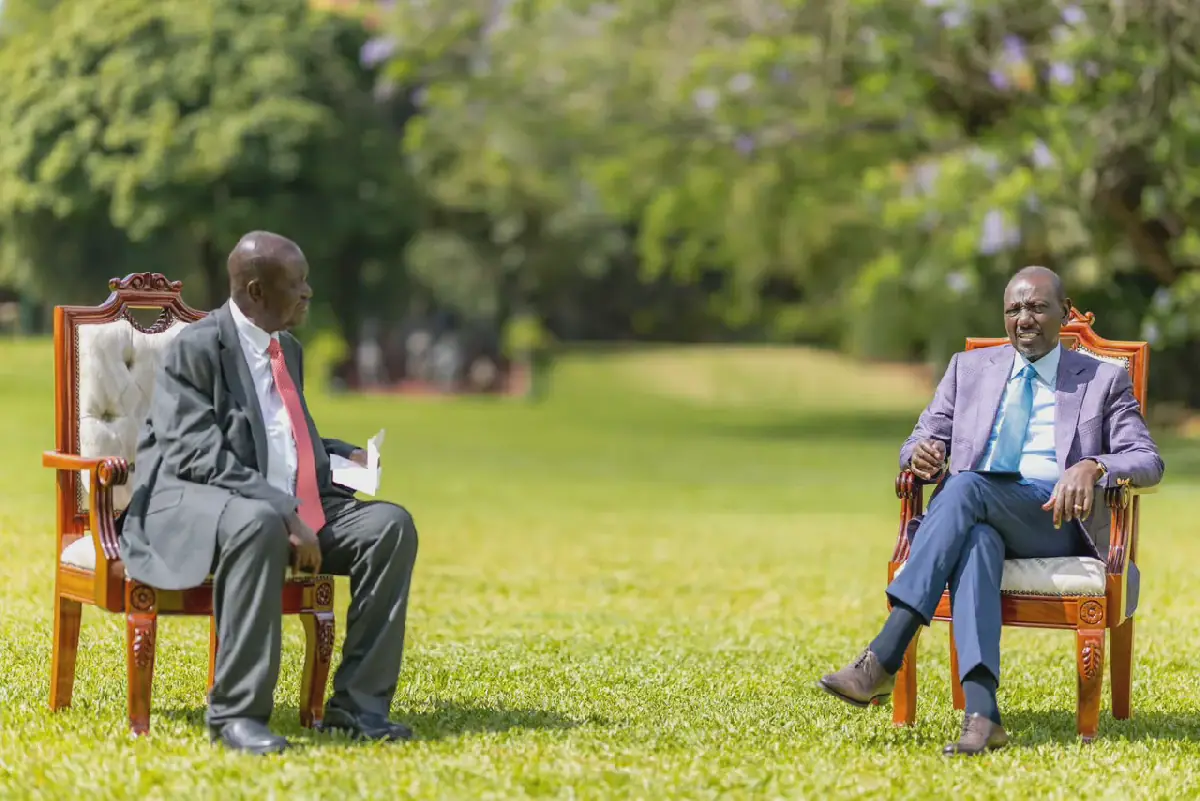
Kenyan President William Ruto hosted Orange Democratic Movement (ODM) leader Oburu Oginga at State House in Nairobi on November 17, 2026. Both leaders emphasized the importance of maintaining their political partnership. Ruto stated that their discussions covered political cooperation, national cohesion, equitable development, and the welfare of Kenyans. Oburu described the talks as an effort to strengthen the broad-based government arrangement between the two parties, focusing on dialogue, national unity, and shared interests.
However, ODM leaders are divided over how far the party should support Ruto's political ambitions and what it should secure in return. A section of the party's senior leadership is pushing for a formal, written agreement with the United Democratic Alliance (UDA) before committing to a possible electoral partnership in 2027. This proposed arrangement would address power-sharing, political representation, and the respective roles of the two parties in a future government.
National Assembly Minority Leader Junet Mohamed has been a vocal proponent of a negotiated agreement, arguing that ODM should not offer unconditional support without securing a meaningful political stake. Junet maintained that ODM was formed to acquire and exercise political power, not simply participate in government without negotiating its interests. His position reflects a broader concern among some party officials that the cooperation established with Ruto should translate into clearly defined political commitments.
Not all ODM leaders agree on the need for a written agreement. Nyando MP Jared Okello has questioned whether such an agreement would guarantee that its terms are respected, citing previous political arrangements in Kenya that failed to deliver their expected outcomes. This disagreement presents a difficult balancing act for Oburu, who assumed leadership of ODM following the death of his brother, Raila Odinga, in October 2025.
Raila had been central to the negotiations that brought ODM and Ruto's administration into a broad-based arrangement. In March 2025, he and the President signed a 10-point framework covering governance, national unity, devolution, corruption, the rule of law, and other national issues. However, this framework did not establish a political union or settle the terms of a future electoral coalition.
The latest meeting between Ruto and Oburu carries significance beyond the public assurances of unity. It comes as both political formations consider how their current cooperation could shape the next general election. For ODM, the central question is whether its participation in the broad-based government will translate into a negotiated political arrangement that reflects its electoral strength.
Although the two leaders have reiterated their commitment to cooperation, the meeting did not publicly establish whether they had reached any new agreement on power-sharing or the terms of a possible 2027 coalition. The outcome of those negotiations could determine not only the future of the ODM-UDA partnership but also the direction of Kenya's political competition as the 2027 elections approach.
Key points
- ODM leaders are divided over whether to secure a formal agreement with UDA before committing to a possible electoral partnership in 2027.