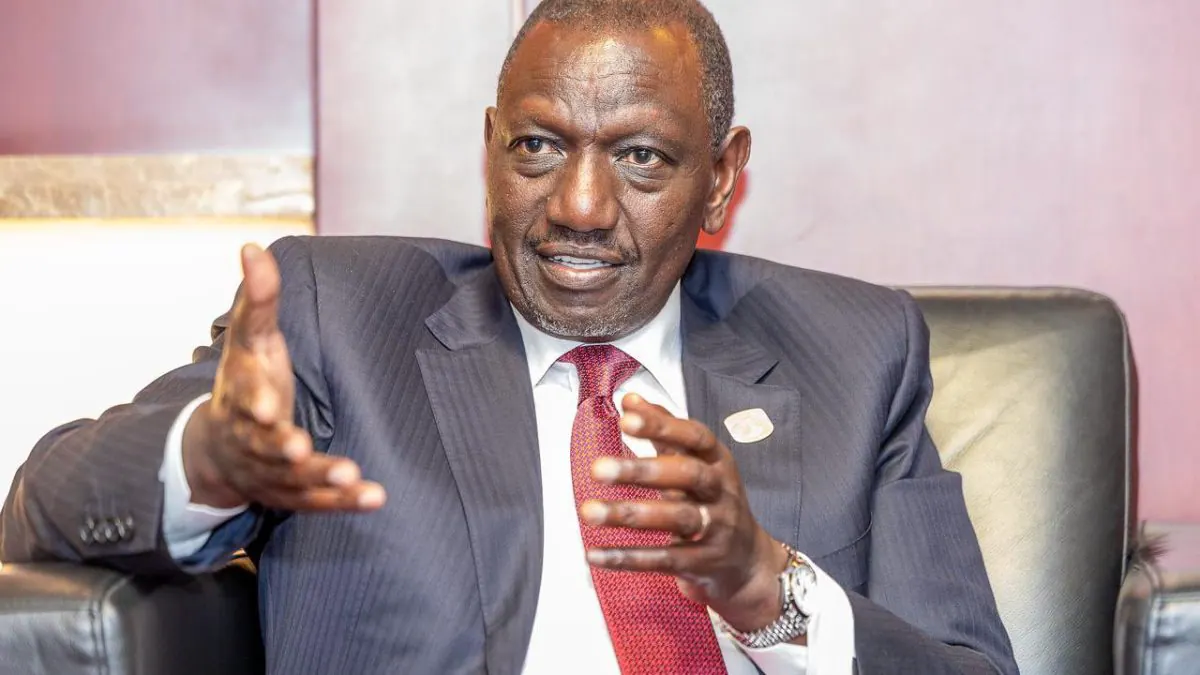
A recent nationwide survey by Politrack Africa has revealed that Kenyan President William Ruto holds a commanding lead in early presidential preference rankings. The survey, conducted between September 15 and 25 across all 47 counties, polled 20,419 respondents. President Ruto emerged comfortably at the top with 45.1% support. This significant lead indicates a strong foundation for his potential re-election bid.
In a notable shift in the political landscape, Nairobi Senator Edwin Sifuna has emerged as the primary challenger in second place with 19.6% support. Sifuna managed to surpass veteran opposition leaders, including Kalonzo Musyoka, who garnered 10.3% support, former Interior Cabinet Secretary Fred Matiang'i with 7.2%, and former Deputy President Rigathi Gachagua with 6.0%. This development positions Sifuna as a key figure to watch in the lead-up to the 2027 General Election.
The survey also provided insights into the popularity of various political parties in Kenya. The ruling United Democratic Alliance (UDA) maintains its lead with 32.0% support. The Democratic Congress Party (DCP) follows closely with 11.7% support, while the Orange Democratic Movement (ODM) secured 10.6% support. Jubilee and Wiper trailed behind with 6.9% and 5.6% support, respectively. These findings suggest a competitive political environment as the 2027 elections approach.
Despite President Ruto's commanding lead, the survey reflects a nation closely divided over the country's trajectory. A slight majority, 45.2% of respondents, believe Kenya is moving in the right direction, while 44.6% feel it is heading the wrong way. This division underscores the challenges facing the administration as it seeks to address various concerns and improve public perception.
The survey highlighted key government initiatives that have received praise from the public. Infrastructure projects, including affordable housing and roads, were cited as primary successes by 16.3% of respondents each. However, the administration faces criticism over its handling of anti-corruption efforts, healthcare management under SHIF/SHA, and the high cost of living. These areas will likely require attention from policymakers to improve public satisfaction.
Politrack Africa emphasized that while UDA retains strong pluralities in the Rift Valley and parts of Mount Kenya, the findings represent a snapshot of the current political mood rather than an official forecast for the 2027 General Election. The survey's results provide valuable insights for political stakeholders and strategists as they prepare for the upcoming elections.
The survey's findings also underscore the need for the government to address pressing concerns such as corruption, healthcare, and the cost of living. With 8.4% of voters remaining undecided, there is still an opportunity for political leaders to influence public opinion and secure support. As the 2027 General Election approaches, political parties and candidates will need to refine their strategies to resonate with the electorate.
Key points
- President Ruto leads with 45.1% support in early 2027 presidential preference rankings.
- Nairobi Senator Edwin Sifuna surges to second place with 19.6% support.
- The ruling UDA maintains its lead in party popularity with 32.0% support.