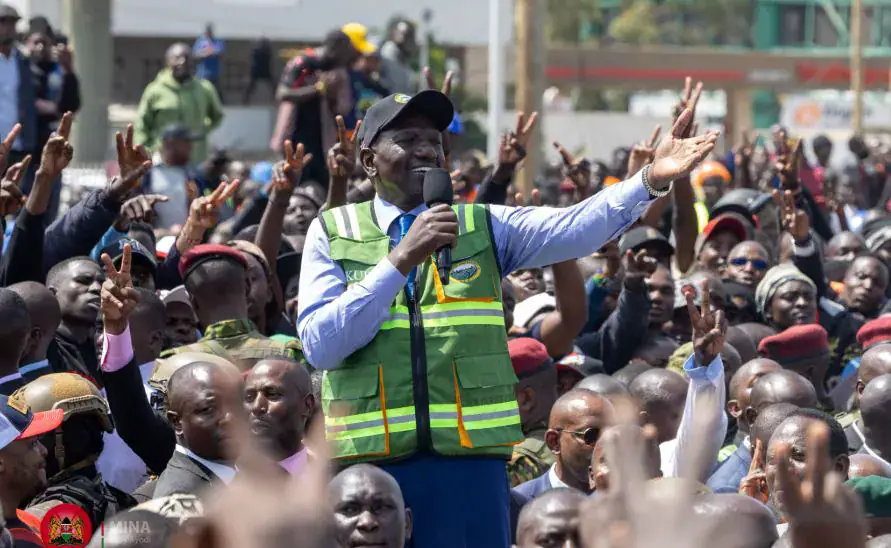
On November 11, President William Ruto spoke in Kisii County, reacting to Uhuru Kenyatta's comments that Kenyans want opposition leaders to unite. Ruto stated that Kenyatta should seek opinions from sober individuals, not those under the influence of alcohol. This response followed Kenyatta's account of hearing public opinion while searching for "kauji," a term associated with alcohol. Ruto's remarks reflect a clear divide between the two leaders on the issue of opposition unity.
Ruto suggested that Kenyatta would hear a different perspective from workers and professionals, including farmers, teachers, and doctors, as well as those employed in the Affordable Housing Project. He emphasized that these individuals would provide a more accurate view of the country's progress. In contrast, Kenyatta claimed that his conversations with ordinary Kenyans indicated widespread support for opposition unity. The two leaders' differing views highlight the complexities of Kenya's political landscape.
The dispute between Ruto and Kenyatta comes ahead of the 2027 General Election. Ruto pointed out that out of ten recent by-elections, the opposition secured only one victory, while candidates aligned with the government won the rest. He argued that these results indicate a likely win for the government in 2027. Ruto cautioned the opposition against drawing too much confidence from the Ol Kalou mini-poll, suggesting they should not be overly optimistic about their chances.
Earlier, Kenyatta had urged opposition leaders to unite and deliver what he described as the public's wishes. He emphasized that only one person could become president and called on other leaders to support the eventual flagbearer. Kenyatta expressed confidence that the leaders would respond to the public's call while upholding fairness. His comments reflect a desire for opposition unity, but Ruto's response suggests that achieving this unity may be challenging.
The term "kauji" has become a point of contention between the two leaders. Ruto used it to imply that Kenyatta's opinions were influenced by alcohol. In contrast, Kenyatta used the term to describe his interactions with ordinary Kenyans. The exchange highlights the rhetorical strategies employed by both leaders to sway public opinion. It also underscores the complexities of Kenyan politics, where language and symbolism play significant roles.
Ruto's comments have sparked a reaction from various political quarters. The opposition has been trying to frame the Ol Kalou mini-poll as a blueprint for the 2027 General Election. However, Ruto's interpretation of the by-election results suggests that the government is likely to maintain its momentum. The debate over opposition unity and the government's prospects in 2027 is likely to continue in the coming months.
The exchange between Ruto and Kenyatta reflects a deeper discussion about Kenya's political future. As the 2027 General Election approaches, leaders are positioning themselves for the contest. The issue of opposition unity remains a contentious topic, with different leaders offering varying perspectives on its feasibility and desirability. The conversation is likely to continue, with both sides seeking to sway public opinion and build momentum for their respective positions.
Key points
- Ruto dismisses Uhuru's claim on opposition unity, saying seek opinions from sober people.