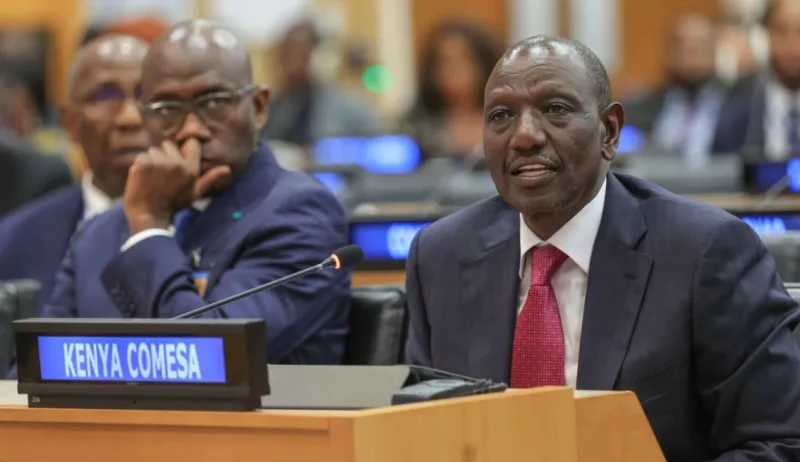
On 23 September 2026, President William Ruto of Kenya urged for reforms to lower Africa's cost of borrowing. He stated that high debt costs constrain government budgets and limit investments in crucial sectors such as jobs, education, health, and infrastructure. Ruto emphasized that African countries require greater access to affordable financing to create opportunities for young people and support development. This statement was made during a High-Level Reflection on the Pact for the Future in New York.
The Pact for the Future, adopted by world leaders two years ago, aims to address global challenges. Ruto noted that Africa played a significant role in shaping the pact and that its commitments should now translate into tangible results. He stressed that the test for Africa is to provide opportunities for its young people and establish a fairer system for financing development. The President's call for reforms is geared towards achieving these goals.
Ruto proposed measures to lower the continent's cost of capital, expand guarantees and risk-sharing instruments, and enable countries to mobilize more domestic resources. He emphasized that these reforms are essential to unlock investment and support development. The President also urged African countries to strengthen domestic revenue mobilization to reduce reliance on borrowing. According to Ruto, domestic revenue mobilization is critical in reducing the need for borrowing.
The President's statement highlights the challenges faced by African countries in accessing affordable financing. High debt costs limit the ability of governments to invest in key sectors, which in turn affects the continent's economic growth and development. Ruto's call for reforms is a timely intervention aimed at addressing these challenges. The proposed reforms seek to create a more favorable environment for investment and development.
Ruto's advocacy for reforms has significant implications for Africa's economic development. The President's emphasis on domestic revenue mobilization is a critical aspect of this effort. By strengthening domestic revenue mobilization, African countries can reduce their reliance on borrowing and create a more sustainable financing model. This approach can help to mitigate the risks associated with high debt costs.
The High-Level Reflection on the Pact for the Future, convened by Namibia, Zambia, the African Union, and the Economic Commission for Africa, provided a platform for Ruto to articulate his vision for Africa's economic development. The event brought together stakeholders to discuss the implementation of the Pact for the Future and its implications for Africa. Ruto's participation in this event underscores the importance of African leaders' engagement in global discussions on economic development.
The Kenyan President's call for reforms to reduce Africa's cost of borrowing is a significant step towards addressing the continent's economic challenges. The proposed reforms have the potential to unlock investment, support development, and create opportunities for young people. As Africa continues to navigate the complexities of global economic development, Ruto's advocacy for reforms provides a critical impetus for change.
Key points
- President William Ruto calls for reforms to lower Africa's cost of capital.