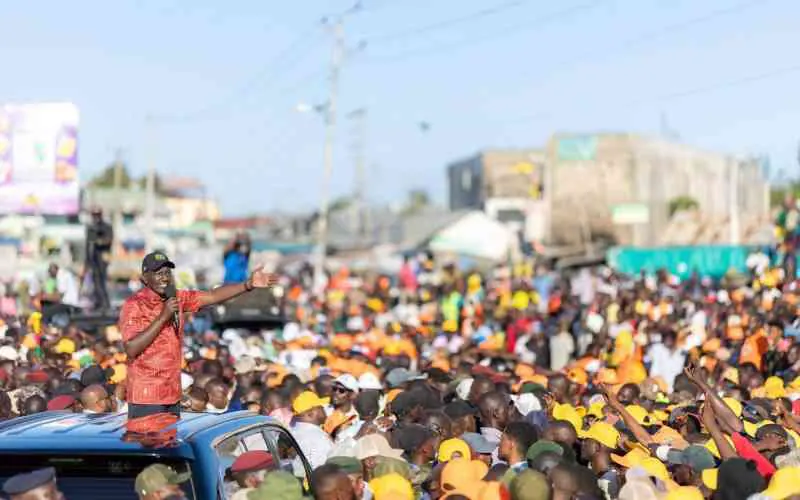
President William Ruto has announced plans to strengthen the Directorate of Criminal Investigations (DCI) Anti-Narcotics Unit with more officers, specialised training, and additional vehicles as the government intensifies efforts to curb the trafficking and abuse of heroin, cocaine, and other drugs. The announcement was made during a media interview at State House Mombasa. Ruto emphasized the government's determination to seal routes and gaps being exploited by drug traffickers, particularly along the Coast, where concerns over the availability of hard drugs have persisted.
The President said strengthening the anti-narcotics unit was part of instructions he had issued earlier, with the government seeking to improve both the personnel and operational capacity of officers tasked with investigating and disrupting drug trafficking networks. Ruto mentioned that some officers had already undergone high-level training to equip them with skills needed to tackle increasingly complex drug-trafficking operations. This move aims to enhance the unit's effectiveness in combating the menace.
To address logistical challenges, including transport, the President announced that an additional 1,000 police vehicles were expected before December, with the Anti-Narcotics Unit among the departments expected to benefit from the new fleet. This will enable officers to respond swiftly and effectively to drug-related crimes. Ruto emphasized that increasing personnel, providing the right equipment, and enhancing their capacity were crucial in the fight against drug trafficking.
Ruto's remarks followed a question on how the government intended to tackle drug trafficking at the Coast, particularly whether enforcement would focus on major trafficking networks rather than concentrating primarily on low-level offenders. The issue highlights the two dimensions of Kenya's drug challenge: stopping narcotics from entering the country while also addressing demand and substance abuse within communities. The government is seeking a balanced approach to address the complex issue.
The President said enforcement alone would not be sufficient to combat the drug menace. He called for families, religious leaders, and communities to become more involved in preventing young people from turning to drugs and alcohol. Ruto emphasized that parents have a responsibility to guide young people, while religious leaders and community structures can complement government efforts through awareness and prevention initiatives.
The government's proposed increase in personnel and vehicles is intended to strengthen the enforcement side of the response, particularly investigations, mobility, and disruption of trafficking networks. The Coast remains an important focus in the discussion because of its position as a major maritime and commercial gateway. Concerns about trafficking have consequently placed greater emphasis on the capacity of law enforcement agencies to detect and intercept narcotics before they reach local markets.
The President said the government would pursue both sides of the challenge—blocking the supply of drugs while working with society to reduce demand. Ruto emphasized that the fight against narcotics and alcohol abuse would require a collective national response involving government agencies, families, religious institutions, and communities. The planned expansion of the Anti-Narcotics Unit, additional training, and improved transport are expected to provide officers with greater capacity to pursue drug-trafficking networks.
Key points
- President Ruto announces plans to strengthen Kenya's Anti-Narcotics Unit with more officers, specialised training, and additional vehicles.