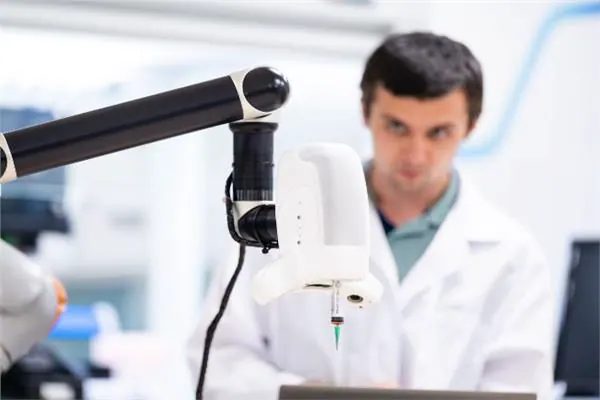
A Russian tech firm, Rostec, has unveiled a new robotic system that uses 3D bioprinting technology to repair complex wounds. The system, developed by RT Business Development, was showcased at the BioProm exhibition in Gelendzhik. It uses a combination of scanning and bioprinting to create a customized 3D model of the wound, which is then used to print layers of a special solution containing living cells.
The robot works by first scanning the wound area and analyzing its shape. It then creates a 3D model of the damaged area and prints layers of a special solution containing living cells, tailored to the specific shape and characteristics of the wound. This approach allows for a more personalized and effective repair process, rather than relying on a one-size-fits-all solution.
The system is based on the DOKA RC5 collaborative robot, which is designed for use in medical applications. The robot has the potential to be used in a variety of medical settings, including the treatment of large-scale skin injuries, such as those sustained by military personnel, firefighters, and motorcyclists.
The technology is part of a broader range of medical projects being developed by Rostec, which is investing over 10 billion rubles in its medical projects by 2030. The company plans to launch the serial production of around 40 additional medical technologies, including those related to 3D bioprinting and regenerative medicine.
The use of 3D bioprinting technology in wound repair has the potential to revolutionize the field of regenerative medicine. By allowing for the creation of customized skin grafts, the technology could improve treatment outcomes for patients with complex wounds. The technology could also reduce the risk of scarring and improve the overall aesthetic outcome of the repair process.
Rostec's investment in medical technology is part of a broader effort to develop innovative solutions for the healthcare sector. The company's focus on 3D bioprinting and regenerative medicine reflects the growing demand for advanced medical technologies that can improve patient outcomes and quality of life.
The development of the robotic system is a significant milestone in the field of medical robotics. With its ability to print customized 3D skin grafts, the system has the potential to make a significant impact on the treatment of complex wounds. As the technology continues to evolve, it is likely to play an increasingly important role in the field of regenerative medicine.
Key points
- Rostec invests over 10 billion rubles in medical projects by 2030
- The robot uses 3D bioprinting technology to create customized skin grafts
- The technology has the potential to revolutionize the field of regenerative medicine