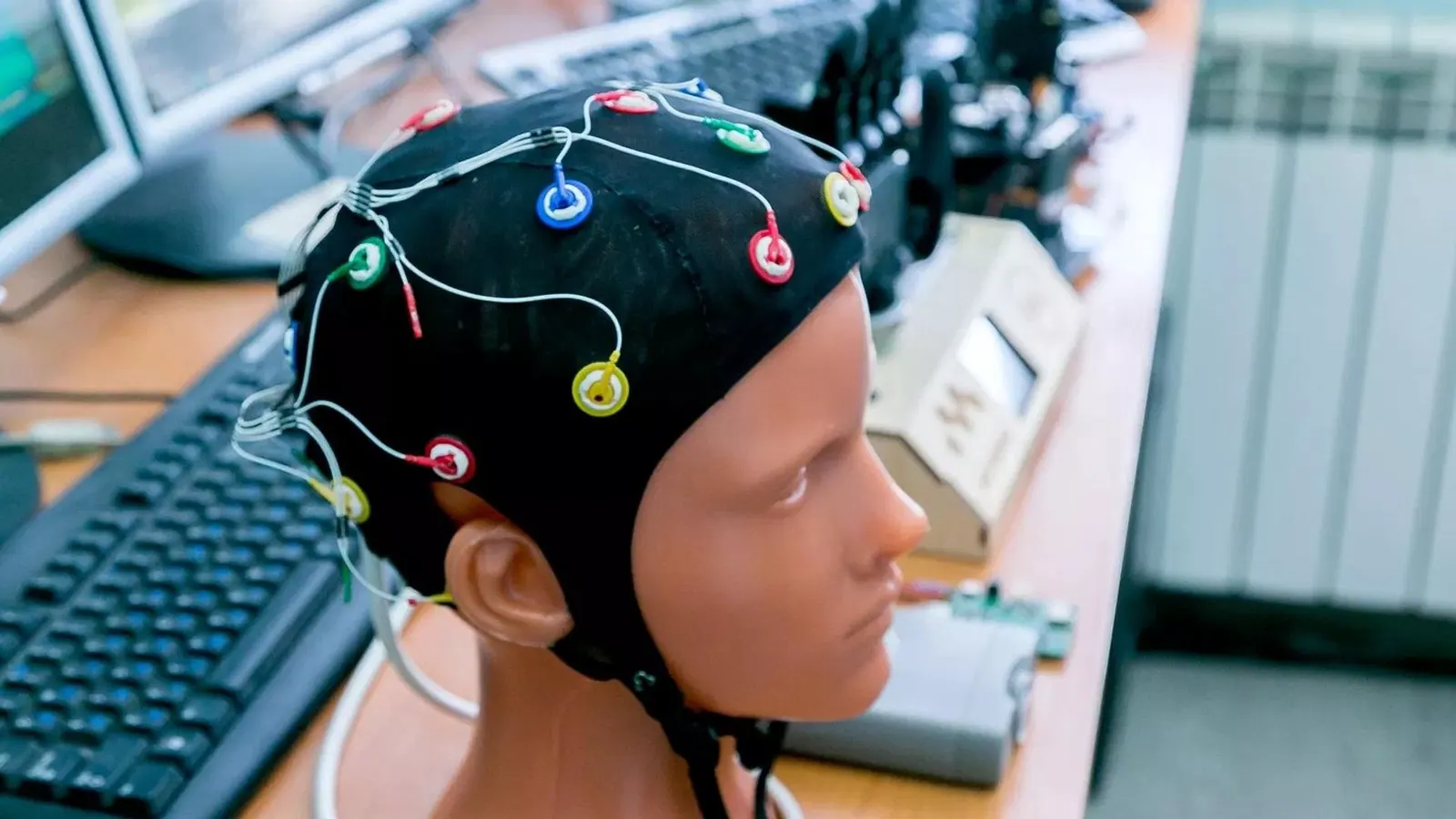
Researchers from the Lobachevsky University in Russia, in collaboration with the Russian Academy of Sciences, Povolzhsky Research Medical University, and Madrid Technical University, have developed a program designed to identify epileptic foci in the brain. The program analyzes brain rhythms during a patient's resting state, rather than waiting for a seizure or rare interictal discharges. This approach enables the program to distinguish between normal brain activity and epileptic activity, estimating the likelihood and location of the epileptic focus.
The developed algorithm has the potential to significantly reduce the time required for diagnosis, from hours to minutes. This not only saves time for patients and doctors but also decreases the need for prolonged electroencephalogram (EEG) monitoring. According to the researchers, their approach can provide crucial information for diagnosis in a shorter amount of time, making it a valuable tool for medical professionals.
The program's development is a significant achievement, as it can analyze short EEG recordings to predict the location of the epileptic focus. This is made possible by the algorithm's ability to search for hidden information in the patient's normal background brain activity, rather than relying on seizure activity. The researchers believe that their program can support the diagnosis of epilepsy, although it is not intended to replace the clinical expertise of medical professionals.
The collaboration between Russian and international researchers has resulted in a program that can analyze brain rhythms and identify patterns associated with epilepsy. By leveraging advances in artificial intelligence and machine learning, the program can quickly process large amounts of data and provide accurate results. This technology has the potential to improve the diagnosis and treatment of epilepsy, a neurological disorder affecting millions of people worldwide.
According to Anton Malkov, the lead researcher on the project, the program's ability to predict the location of the epileptic focus from short EEG recordings is a significant breakthrough. Malkov emphasized that the algorithm's approach is innovative, as it focuses on analyzing normal background brain activity rather than waiting for seizure activity. This approach enables the program to provide rapid and accurate results, which can be critical in emergency situations.
The program's development has significant implications for the diagnosis and treatment of epilepsy. By providing a quick and accurate diagnosis, medical professionals can develop targeted treatment plans, improving patient outcomes and quality of life. Furthermore, the program's ability to analyze short EEG recordings can help reduce the burden on medical facilities and staff, allowing for more efficient use of resources.
The researchers plan to continue testing and refining their program to ensure its reliability and accuracy in clinical settings. If proven successful, the program could become a valuable tool for medical professionals worldwide, supporting the diagnosis and treatment of epilepsy and improving patient care. The development of this program is a testament to the potential of international collaboration and advances in artificial intelligence in improving healthcare outcomes.
Key points
- The program can reduce diagnosis time from hours to minutes.
- The algorithm analyzes brain rhythms during a patient's resting state.
- The program's development has significant implications for the diagnosis and treatment of epilepsy.