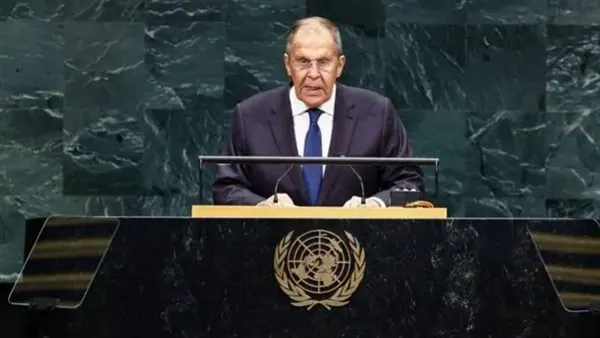
Russian Foreign Minister Sergei Lavrov, in a speech at the United Nations on September 26, 2026, expressed Moscow's readiness to contribute to a settlement in the Middle East, which has been plagued by the Palestinian issue for a long time. He advocated for the implementation of the two-state solution to establish lasting peace. This stance underscores Russia's commitment to finding a diplomatic resolution to the protracted conflict.
During his address, Lavrov also criticized the United States' policy towards Venezuela, specifically the detention of former Venezuelan President Nicolas Maduro. He denounced the arrest as unlawful, noting that Maduro was detained in New York without trial. This criticism highlights the ongoing tensions between Russia and the US over their differing approaches to international relations and governance.
The detention of Maduro is part of a broader context of US-Venezuela relations. In January, the US launched a military operation that resulted in Maduro's arrest at the presidential palace, alongside his wife, by an American special forces unit. This action was part of a larger conflict that began when Maduro refused to export Venezuelan oil to the US, opting instead to strengthen ties with Russia, North Korea, and China.
The political landscape in Venezuela has undergone significant changes. The US had imposed sanctions on the country and opposed Maduro's government, leading to his ousting and the ascension of Delsey Rodriguez as the new president. Rodriguez has since pledged to hold elections in Venezuela to achieve "full democracy." This development has been seen as a step towards stabilizing the country.
The conflict between the US and Venezuela has had far-reaching implications. The US had previously accused Venezuela of drug trafficking and had taken measures to cripple its oil industry. However, with the change in leadership, American oil companies have resumed operations in Venezuela. This resumption has been viewed as a strategic move to reassert US influence in the region.
The international community has been closely watching the developments in Venezuela. During her address at the UN, Rodriguez reiterated her commitment to conducting free and fair elections, a move seen as crucial for restoring democratic norms in the country. This pledge has been welcomed by various nations and international organizations seeking a peaceful resolution to the Venezuelan crisis.
The intersection of Middle Eastern and Venezuelan issues at the UN highlights the complex nature of global diplomacy. As nations navigate their relationships and interests, the push for peaceful resolutions to longstanding conflicts continues. The two-state solution for the Middle East and the quest for democracy in Venezuela remain key areas of focus for international diplomacy.
Key points
- Sergei Lavrov advocates for a two-state solution to achieve lasting peace in the Middle East.
- The US detention of former Venezuelan President Nicolas Maduro has strained US-Russia relations.
- Venezuela's new President Delsey Rodriguez has pledged to hold elections to achieve "full democracy."