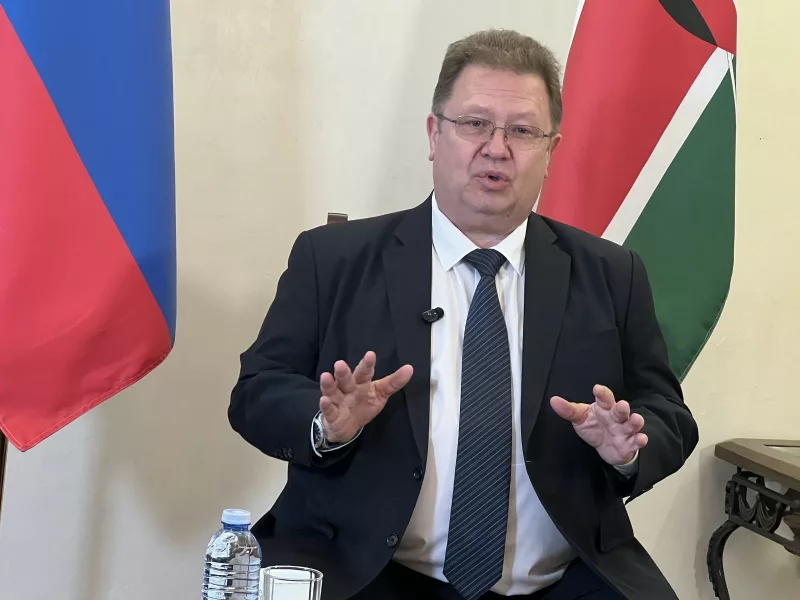
Russian Ambassador to Kenya, Vsevolod Tkachenko, has fondly recalled a peculiar gift he received from residents of Western Kenya during one of his visits to the region. The gift, three chickens, has become an unlikely highlight of his diplomatic experience in Kenya. Born in Western Kenya, the chickens' lives took an unexpected turn when they were presented to Tkachenko, who subsequently granted them Russian citizenship.
The ambassador's experience in Kenya has been shaped by his interactions with ordinary Kenyans, who have shared with him the country's culture, food, music, language, and landscapes. He has developed a deep appreciation for Kenyan cuisine, including ugali, a staple food he initially thought only came in white color but now enjoys in both white and brown varieties.
Tkachenko has also been working to revive his Kiswahili skills, which he had learned previously but had become limited due to lack of practice. He has adopted Kenyan expressions such as 'hakuna matata' (no worries) and 'nzuri' (good), which he frequently uses to describe his positive experiences in the country.
Kenyan music has also made a significant impression on the ambassador, who admires the country's vibrant cultural scene and the way Kenyans use music to express their emotions in various settings. He believes that Russians are not as musically gifted as Kenyans, who seem to sing with emotions that come out clearly in different moods and settings.
Tkachenko's diplomatic approach prioritizes people-to-people contacts, which he believes are crucial in building relationships between countries. He received the three chickens as a symbol of the warmth and personal connections that ordinary Kenyans are willing to make with foreigners.
The ambassador sees significant opportunities for cooperation between Kenya and Russia in areas such as trade, investment, technology, agriculture, energy, education, and logistics. He believes that digitalization, including information technology and smart cities, could be an area of collaboration, as well as agriculture, where Russian expertise in modern technologies could improve production.
Education remains a vital link between Kenya and Russia, with Moscow providing 70 government-funded scholarships to Kenyan students annually. The ambassador plans to increase the number of scholarships and is working with Kenyan authorities to address bureaucratic hurdles that prevent graduates from using their qualifications when they return home.
Key points
- The Russian Ambassador to Kenya received three chickens as a gift from Western Kenya, which he granted Russian citizenship.
- Tkachenko prioritizes people-to-people contacts in diplomacy, believing they are crucial in building relationships between countries.
- Kenya and Russia are exploring opportunities for cooperation in trade, investment, technology, agriculture, energy, education, and logistics.