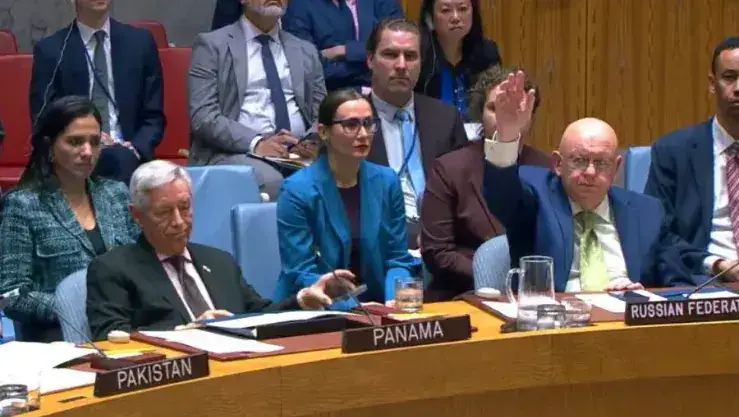
The United Nations Security Council has failed to adopt a US resolution on Western Sahara due to Russia's veto power. The resolution garnered 11 votes in favor, with three members abstaining, but Russia's opposition blocked its adoption. The veto has been seen as a diplomatic victory for the Polisario Front, which represents the Sahrawi people. The move has also sparked concerns about a potential escalation in tensions between Russia and the US.
Prior to the vote, Russia had introduced a rival resolution that would extend the mandate of the UN's MINURSO mission in Western Sahara for an additional year. The Russian resolution emphasizes the need for a fair, lasting, and mutually acceptable solution, in line with the UN Charter and the principle of self-determination. The US had opposed the Russian resolution, and it is expected that intense negotiations will take place at the UN to find a compromise.
The Russian veto has marked a significant shift in the country's approach to the Western Sahara conflict. Historically, Russia has avoided direct confrontation on the issue, reiterating its support for a negotiated settlement. However, by vetoing the US resolution, Russia has taken a firm stance, arguing that the content of the resolution would alter the nature of the conflict.
The US resolution had been described by the Polisario Front as "unfair" and an attempt to impose a solution that would not address the Sahrawi people's right to self-determination. The veto has been welcomed by the Polisario Front, which sees it as a recognition of its legitimate representation of the Sahrawi people.
The Western Sahara conflict has been ongoing for decades, with Morocco claiming sovereignty over the territory and the Polisario Front fighting for independence. The UN has been involved in efforts to find a peaceful solution, but a lasting resolution has yet to be achieved. The Russian veto has added a new layer of complexity to the situation.
The aftermath of the veto is expected to see increased diplomatic efforts to find a compromise. The UN is likely to continue playing a key role in negotiations, with the aim of finding a solution that addresses the concerns of all parties involved. The situation remains uncertain, with many stakeholders anxiously awaiting the outcome of future talks.
The use of the veto power by Russia has highlighted the deep-seated divisions within the international community on the Western Sahara issue. The move has also underscored the challenges faced by the UN in resolving long-standing conflicts, particularly in the face of opposition from powerful member states.
Key points
- Russia's veto of the US resolution on Western Sahara has blocked the adoption of a new UN Security Council resolution on the issue.
- The Russian resolution, which would extend the mandate of the UN's MINURSO mission, emphasizes the need for a fair and lasting solution.
- The veto has marked a significant shift in Russia's approach to the Western Sahara conflict, with implications for future diplomatic efforts.