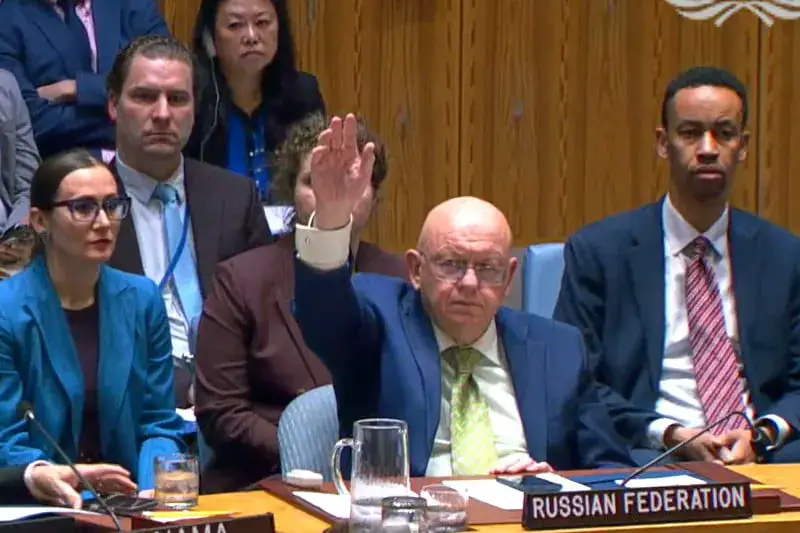
The United Nations Security Council, comprising 15 members, voted on a resolution submitted by the United States regarding the Moroccan Sahara. Despite garnering support from 11 members, the resolution failed to pass due to Russia's veto. The vote took place on October 30, 2026, with Russia exercising its permanent member privilege to block the resolution. Three members abstained from voting.
The resolution's failure prevents it from being adopted, despite securing a majority of votes. Russia's veto power, as a permanent Security Council member, effectively dismissed the US-backed proposal. This development comes amid ongoing debates about the status of the Moroccan Sahara. The region has been a point of contention for years, with Morocco maintaining sovereignty and various international parties advocating for a peaceful resolution.
In response to the veto, Morocco's ambassador to the UN, Omar Hilal, expressed gratitude to Algeria, which he claimed was responsible for the manufactured conflict in the Moroccan Sahara. Hilal's comments reflect Morocco's stance on the issue, emphasizing the country's sovereignty over the region. Algeria has historically supported the Polisario Front, a group seeking independence for Western Sahara.
The United States, in its address to the Security Council, argued that there was no justification for the continued stalemate in the Moroccan Sahara conflict. The US representative emphasized that autonomy under Moroccan sovereignty was a viable solution to the dispute. This stance aligns with Morocco's position, which views autonomy as a key component of any lasting resolution.
The Moroccan Royal Court issued a statement following the UN Security Council vote, highlighting the decision not to extend the mandate of the UN's peacekeeping mission in Western Sahara, MINURSO. The move was seen as a step toward the final resolution of the Sahara issue within the UN framework. Morocco has long sought to resolve the conflict through a negotiated settlement.
In a separate development, a Russian-drafted alternative resolution on the Moroccan Sahara failed to gain traction at the Security Council, securing only three votes. This outcome reflects the international community's divided stance on the issue. Russia's proposal was seen as an attempt to counterbalance Western influence in the region.
The ongoing dispute over the Moroccan Sahara continues to draw international attention, with various parties advocating for a peaceful and lasting resolution. The UN Security Council's inability to adopt a resolution underscores the complexities of the issue. Morocco and Algeria remain at odds over the region's status, with the international community seeking a solution that balances competing interests.
Key points
- Russia vetoes US resolution on Moroccan Sahara at UN Security Council
- US advocates for autonomy under Moroccan sovereignty as solution to conflict
- Moroccan Royal Court sees non-renewal of MINURSO mandate as step toward final resolution