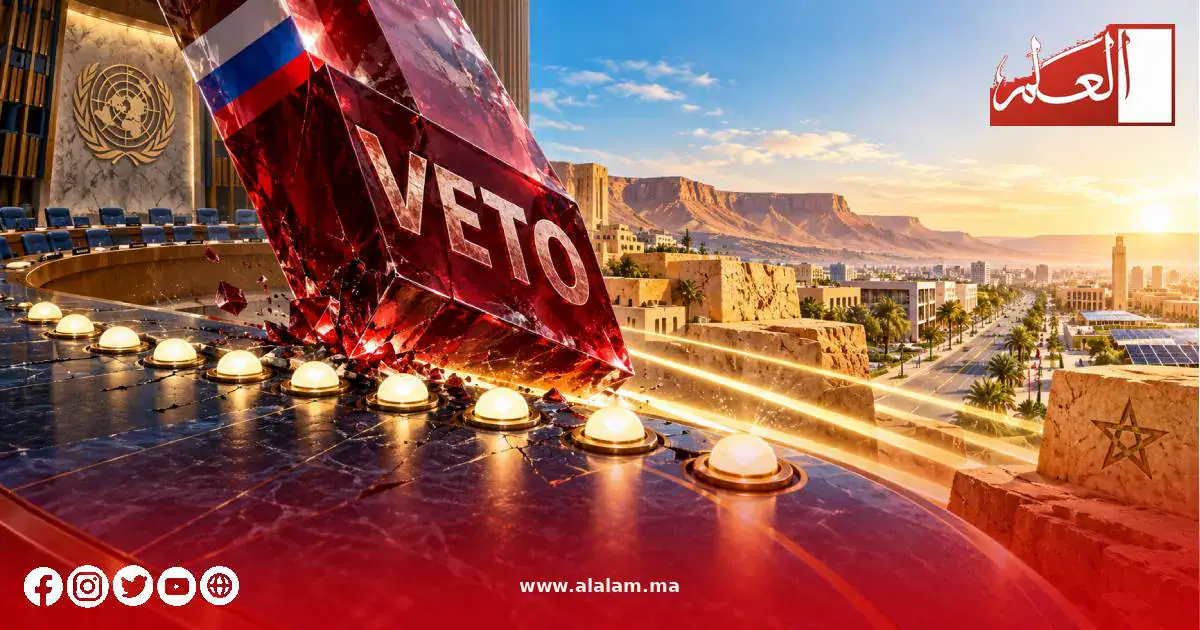
The UN Security Council has failed to adopt a resolution on Western Sahara due to Russia's veto on a US-proposed text. The move has sparked controversy, with Morocco welcoming the development as a step towards a new phase in managing the issue. The Russian veto has raised questions about the role of the Security Council in resolving the Western Sahara conflict. The vote was 11-1, with three countries abstaining.
The US-proposed resolution would have extended the mandate of the UN Mission for the Referendum in Western Sahara (MINURSO) but with changes to its name, tasks, and a focus on autonomy under Moroccan sovereignty. Russia opposed the move, arguing it would impose a predetermined solution. Instead, Russia proposed a one-year extension of MINURSO's current mandate, but this was not adopted. The Russian veto has been seen as a significant development in the Western Sahara conflict.
Russia's veto has been defended as a legitimate exercise of its right under the UN Charter. However, critics argue that it undermines the democratic principles of the Security Council and gives disproportionate power to the five permanent members. The veto has also raised questions about the future of MINURSO and the Western Sahara conflict. Morocco has welcomed the development, seeing it as an opportunity to move forward with a new approach.
China abstained on the US-proposed resolution and then supported Russia's alternative proposal. This move has been seen as a reflection of China's complex relationships with Morocco and the Polisario Front. China's stance has been interpreted as an attempt to balance its relations with Morocco and its support for African countries. China's vote has sparked questions about its role in the Western Sahara conflict.
Pakistan's decision to abstain on both the US and Russian proposals has been seen as a reflection of its concerns about the Kashmir dispute with India. Some analysts have suggested that Pakistan's abstention may have been motivated by a desire to maintain consistency in its stance on self-determination. However, this has not been officially confirmed. Pakistan's vote has raised questions about the potential implications for the Western Sahara conflict.
Somalia's decision to vote in favor of the Russian proposal has sparked questions about its relations with Morocco and the Polisario Front. The vote has been seen as a significant development, given Somalia's location in Africa and its relationships with other countries on the continent. Somalia's stance has been interpreted as a reflection of its support for African countries and its commitment to the UN Charter.
The controversy surrounding Russia's veto has highlighted the challenges facing the UN Security Council in resolving the Western Sahara conflict. The issue remains a contentious one, with Morocco and the Polisario Front holding different positions. The international community will be watching closely as the situation develops.
Key points
- Russia's veto on the US-proposed resolution has sparked controversy and raised questions about the role of the Security Council in resolving the Western Sahara conflict.
- The veto has been seen as a significant development in the Western Sahara conflict, with Morocco welcoming the move as a step towards a new phase in managing the issue.
- The controversy has highlighted the challenges facing the UN Security Council in resolving the Western Sahara conflict, with different countries holding different positions.