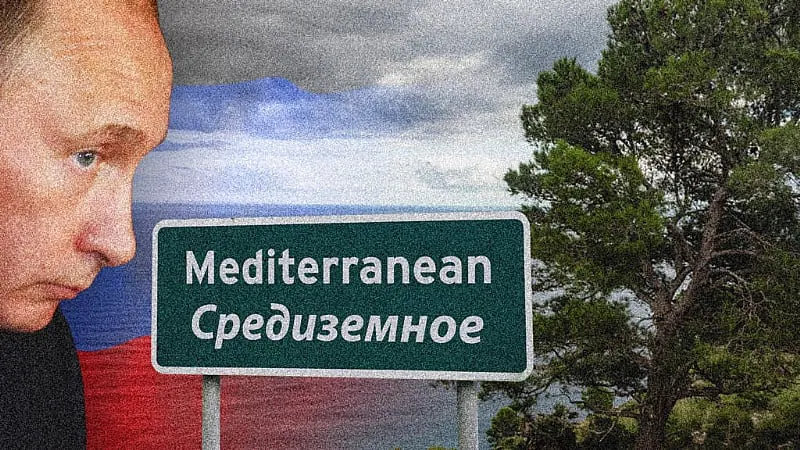
Several Mediterranean countries have been informed by the CIA of a potential imminent Russian operation, according to a report by Spanish daily El Mundo. The plan is believed to involve drones launched from Russian vessels disguised as commercial ships, directed towards Spain, Italy, and France. The drones, specifically the Gerbera type, are smaller and lighter than those deployed in Ukraine.
The Gerbera drones would take between one-and-a-quarter to two hours to reach the Italian, Spanish, or French coasts, but their size would render them incapable of delivering significant ammunition. Instead, the likely objective would be to surprise through unexpected attack or cause light damage upon impact. Lithuanian officials familiar with the information obtained by the CIA suggest that the goal is to sow doubt and panic.
However, French President Emmanuel Macron contradicted the Spanish report, claiming to know nothing about Russia's plans and stating that the CIA had not informed French authorities about any potential attack. Experts highlight the ambiguity at the core of such revelations, suggesting that Russia may be using this as a tactic of cognitive and psychological warfare.
Mark Lacy, a specialist in Russian hybrid warfare, explains that an important tactic of hybrid war is cognitive warfare or psychological warfare, which is about the perception of what's occurring. Both Russia and Western countries supporting Ukraine could use this to their advantage. Russia may have deliberately conveyed plans to extend its hybrid campaign into the Mediterranean without intending to act.
Mario Baumann, an expert in the Russian threat on Europe, considers the theory around a potential Russian hybrid attack on the Mediterranean to be "absolutely possible". He points to previous incidents in Spain and France, where Russia was accused of supporting the Catalan independence movement and launching cyberattacks. Baumann notes that Russia will always choose points where it is not expected.
Southern European countries, particularly Spain, Italy, and France, represent Europe's "weak point" when it comes to hybrid threats. These countries face major elections in 2027, which could be targeted by Russian hybrid warfare. Experts note that electoral interference is a key theme amid Russian hybrid warfare, aiming to instill a sense of fear and anxiety among the population.
The use of drones provides an ideal technology to generate paranoia, as they can be used to fly over airports or cut underwater cables, expanding the range of threat. To succeed, access to the Mediterranean Sea is vital, and the Russians have already been accused of launching drones from ships in the North Sea. Southern Europe's last line of defense is fast disappearing, making it essential for these countries to be prepared for potential hybrid threats.
Key points
- Russia's hybrid warfare threat looms over the Mediterranean region, targeting Spain, Italy, and France.
- The use of drones, specifically the Gerbera type, is believed to be part of the planned Russian operation.
- Southern European countries face major elections in 2027, which could be targeted by Russian hybrid warfare.