A recent incident involving two tankers near the occupied Crimean coast in early 2019 highlighted the consequences of Russia's shadowy gas schemes at sea. According to the Association for the Reintegration of Crimea, this event showcased the irresponsible actions of Russia in applying these schemes. Experts from the association have conducted research on Russia's strategy in creating a new shadow gas fleet as part of its hybrid war.
Russia's actions in Africa are part of a broader strategy to exert influence on the Global South. With its relations with Europe and the US strained, Russia is turning its attention to countries in Africa, including South Africa. The southern African country is facing an energy deficit due to declining gas supplies from Mozambique through the ROMPCO pipeline, which has been operational for over 20 years.
The ROMPCO pipeline, stretching 865 kilometers, connects Mozambique's gas fields to South Africa's industrial heartland in Secunda. However, with Mozambique's gas fields depleting rapidly, supplies are expected to cease by 2027, posing an energy catastrophe for South Africa. In this context, Russian state-owned companies Rosneft and Gazprom are exploring opportunities to participate in projects in Mozambique and South Africa.
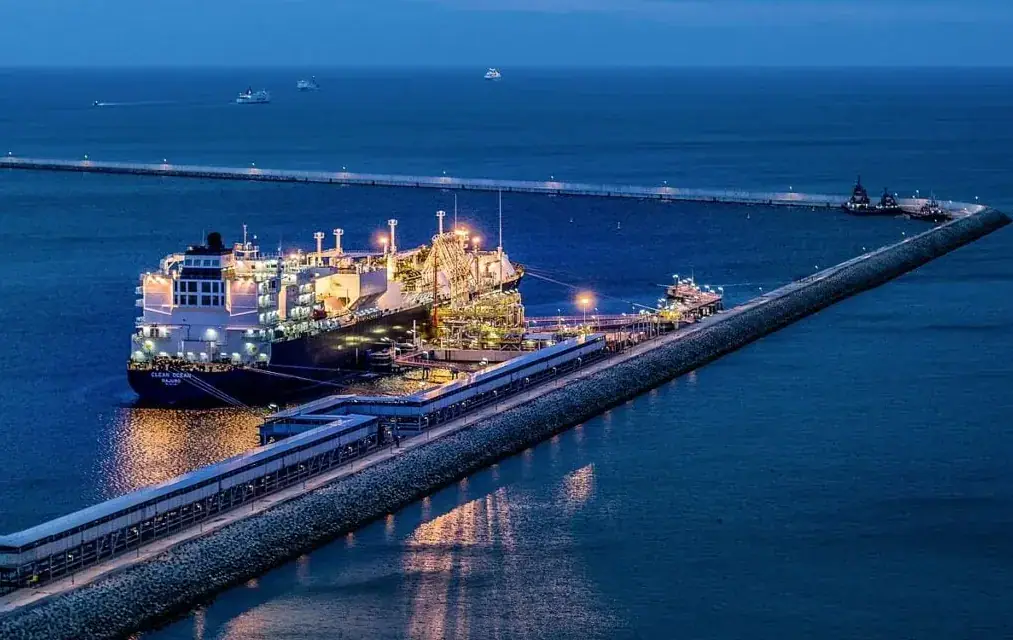
The proposed project involves constructing infrastructure to receive and transport Russian liquefied natural gas (LNG) using a shadow fleet. LNG requires cryogenic insulated tanks for transportation by sea, and Russia plans to utilize its expertise in this area. A floating storage and regasification unit (FSRU) is to be stationed at the Matola port in Mozambique, which will receive LNG from various international sources.
The FSRU will convert the LNG back into gas, which will then be fed into the ROMPCO pipeline. The terminal in Matola is not only intended for transit to South Africa but also to supply a new 2000-megawatt power plant in Mozambique. Part of the regasified gas will be used to generate electricity for export to South Africa, Eswatini, and Botswana.
To ensure its involvement in the project, Russia requires not only political but also military control. The Russian private military company, the African Corps, is expected to be deployed to Mozambique under the guise of "military-technical cooperation and counter-terrorism." The African Corps, linked to the Russian Defense Ministry, will provide security services for the infrastructure project.
The deployment of the African Corps to Mozambique follows a similar pattern in other African countries, including Mali, Niger, the Central African Republic, and Burkina Faso. According to research by the Robert Lansing Institute, there is a clear connection between the deployment of the African Corps and Russia's subsequent involvement in energy infrastructure projects.
Key points
- Russia's expansion into Africa's gas sector is driven by a desire to diversify its gas exports and secure new revenue streams.
- The involvement of Russian state-owned companies and the African Corps in Mozambique and South Africa raises concerns over Russia's intentions and methods.
- The proposed LNG project in Mozambique has the potential to significantly impact the energy landscape in southern Africa.