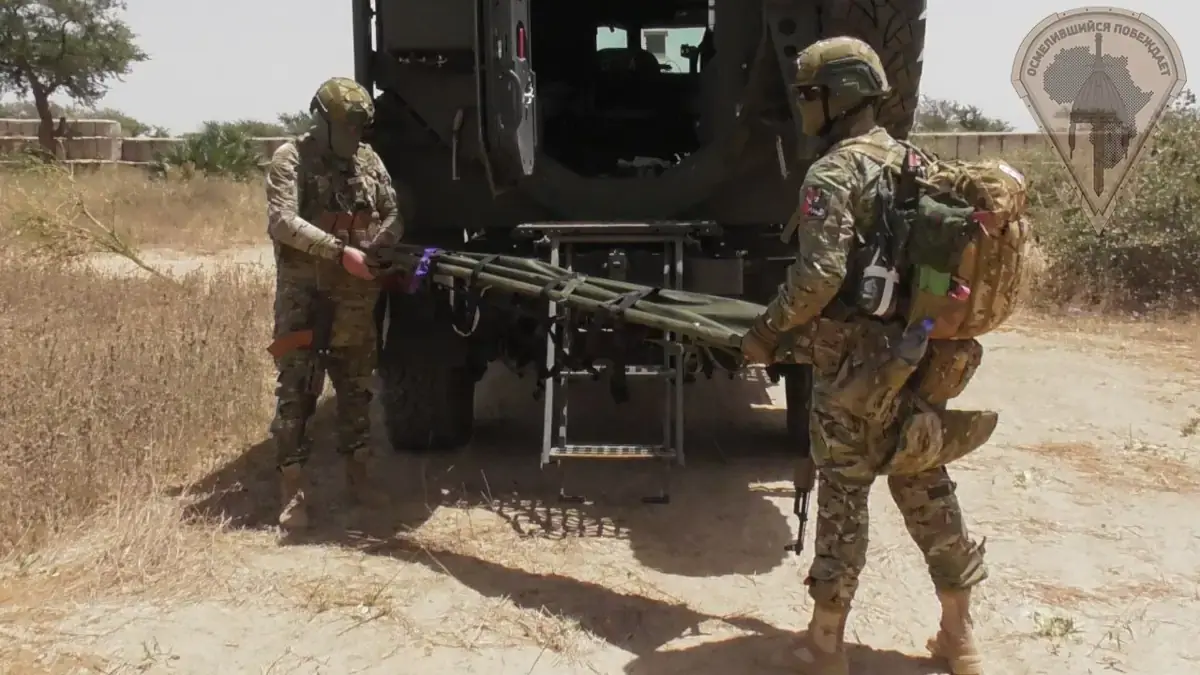
The Russian Africa Corps has carried out a series of strikes in Mali using kamikaze drones, specifically the ZALA Lancet, since April this year. According to an analysis by the Conflict Insights Group (CIG), a US-based research center, at least 10 such strikes have been recorded. These attacks were often accompanied by surveillance drones from the same manufacturer. This development marks a new escalation in the conflict.
The introduction of these drones coincides with efforts by Russian and Malian forces to regain control after an insurgent offensive in April that resulted in the death of Mali's defense minister. The CIG analysis, released on November 19, 2026, highlights a significant increase in airstrikes and drone usage. Since April, there have been approximately 16 aerial strikes per week, compared to just under 7 per week over the previous 52 weeks.
The number of fatalities resulting from these airstrikes has also surged, rising from less than 25 per week to over 60 per week, representing an increase of nearly 150%. While these figures encompass all airstrikes and drone attacks, not just those involving the Lancet, they indicate a substantial escalation of violence. The CIG notes that the actual number of Lancet attacks could be higher, as their data only accounts for identified cases.
One of the recorded incidents suggests that a Lancet drone likely targeted a vehicle carrying civilians. In addition to the Lancet, other drones have been employed by Russian forces in Mali, including the Iranian-made Shahed and its Russian variants, the Garpiya-A1 and Geran-2. The Lancet is manufactured by ZALA Aero, a subsidiary of the Kalashnikov group, and has been used by the Russian military since 2020.
The increased civilian casualties are likely to have long-term consequences, potentially fueling recruitment for Islamist groups and weakening the Malian government's position. Justin Lynch, director of CIG, describes the Russian campaign as transforming Mali into a "sales pitch for suicide drones." The Africa Corps, which has around 2,500 personnel and falls under the Russian Ministry of Defense, has taken over from the Wagner group as the primary military supporter of Mali's transitional government.
The transitional government came to power following coups in 2020 and 2021. Since the Wagner group's departure in June 2025, Russian and Malian forces have managed to retake some lost territory. The use of kamikaze drones represents a new dimension in the conflict, with potential implications for both the military situation on the ground and the broader regional security landscape.
The Russian and Malian governments had not provided comments on the CIG analysis at the time of publication. The deployment of Lancet drones and the increased frequency of airstrikes underscore the evolving nature of the conflict in Mali and the involvement of external actors in the region. The situation remains a concern for regional and international observers, given its potential to destabilize the area further.
Key points
- The Russia's Africa Corps has conducted at least 10 strikes with ZALA Lancet kamikaze drones in Mali since April.
- The use of kamikaze drones has coincided with a significant increase in airstrikes and fatalities in Mali.
- The increased civilian casualties could fuel recruitment for Islamist groups and weaken the Malian government's position.
Reporting sources
- Mali : la Russie déploie des drones kamikazes Lancet contre les rebelles · lanouvelletribune.info