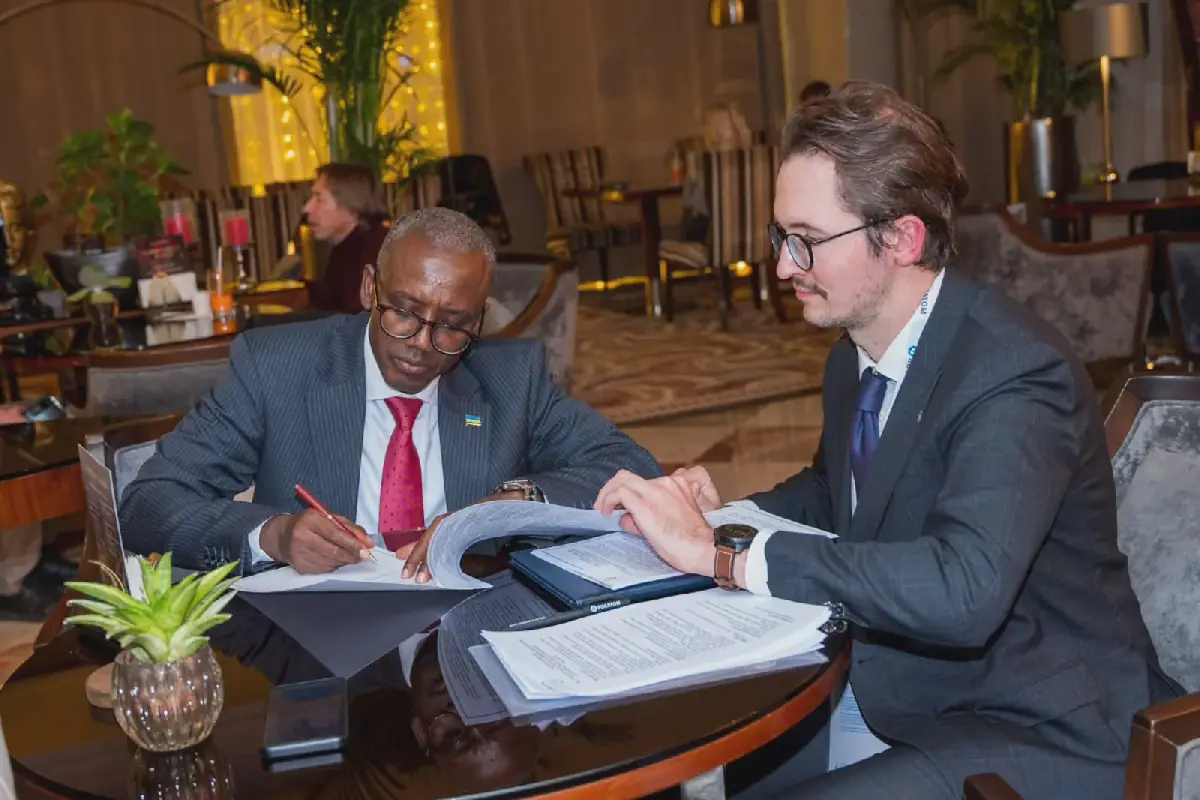
Rwanda has taken a significant step forward in its pursuit of nuclear power following the signing of a new cooperation agreement with Russia. The agreement, signed by the Rwanda Atomic Energy Board (RAEB) and Russia's state nuclear corporation Rosatom, will see the development of a small modular reactor, a Centre for Nuclear Science and Technology, and the training of specialists needed to develop the country's nuclear program. This development was announced by Rwanda's Ambassador to Moscow, Joseph Nzabamwita, after the signing during the Third Russia-Africa Summit in Moscow.
The agreement is a major milestone in Rwanda's nuclear ambitions, which aims to diversify electricity generation, support industrial expansion, and apply nuclear technology in healthcare, agriculture, and mining. Rwanda and Russia began formal cooperation on the peaceful uses of nuclear energy in December 2018, and a year later, they signed an agreement to establish a Centre for Nuclear Science and Technology in Rwanda. The partnership has since expanded towards electricity generation using small modular reactors (SMRs), which are designed to provide nuclear power in smaller units than conventional large-scale plants.
The latest memorandum provides for an assessment of Rwanda's nuclear infrastructure needs, taking into account recommendations from the International Atomic Energy Agency (IAEA) and Rosatom's experience. Rosatom Director General Alexey Likhachev stated that 102 Rwandan students were studying at Russian universities through the corporation's programs. He added that advancing these projects requires not only technological expertise and a skilled workforce but also the development of national nuclear infrastructure.
Rwanda's nuclear ambitions extend beyond generating power, with the planned science center expected to support applications in medicine, agriculture, industry, and scientific research. In healthcare, nuclear technologies can support cancer diagnosis and treatment, while agricultural applications include research and techniques that can help preserve produce. The center is also expected to contribute to the development of Rwandan scientists, engineers, and technicians who will be essential to the program's long-term success.
A July 2026 IAEA review examined Rwanda's preparedness to develop a research reactor for scientific research, healthcare, agriculture, industry, and education. The assessment identified the project as an important step towards expanding the peaceful applications of nuclear technology. Rwanda aims to introduce its first nuclear generation in the early 2030s, with an initial target of 110 megawatts between 2030 and 2033.
President Paul Kagame has argued that nuclear power could help address the country's growing energy needs, diversify its energy mix, and provide the stability required for industrial growth and long-term transformation. However, the challenge for Rwanda is to translate its international partnerships into operational infrastructure and a domestic workforce capable of sustaining the program. Nuclear projects require rigorous safety regulation, trained personnel, financing, radioactive waste management, and emergency preparedness.
The latest agreement marks progress, but the decisive milestones will be the completion of technical assessments, confirmation of project arrangements, regulatory readiness, and the start of construction under an established implementation plan. Rwanda's ambition is to make nuclear technology part of its long-term development strategy to deliver affordable electricity, stronger scientific capacity, and practical benefits across the economy.
Key points
- Rwanda and Russia have signed a cooperation agreement to develop a small modular reactor and train specialists for Rwanda's nuclear program.
- The agreement aims to support Rwanda's nuclear ambitions, which extend beyond generating power to applications in medicine, agriculture, industry, and scientific research.
- Rwanda aims to introduce its first nuclear generation in the early 2030s, with an initial target of 110 megawatts between 2030 and 2033.