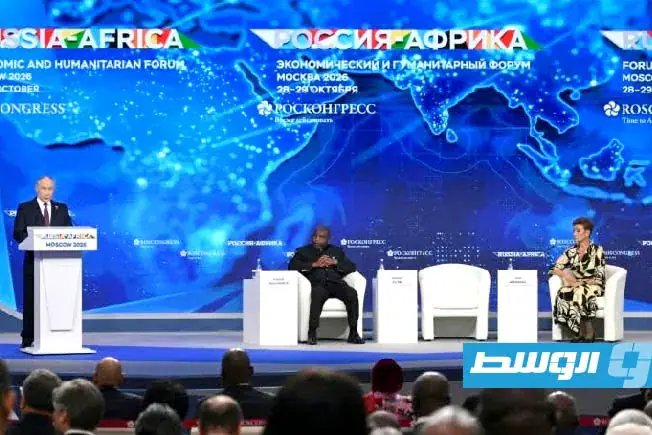
The Russia-Africa summit, now in its third iteration since 2019, kicked off in Moscow on Wednesday, October 28, 2026, with over 20 African leaders in attendance. Russian President Vladimir Putin and his administration aim to strengthen ties with African nations, which they consider natural allies in countering Western influence on the global stage. The gathering occurs as Russia faces stringent Western sanctions due to its conflict with Ukraine and provides military support to several African countries.
The relationship between Russia and Africa dates back to the Soviet era, with Moscow viewing the continent as a crucial balance to what it perceives as Western dominance in international affairs. According to Yuri Ushakov, an aide to President Putin, Russia and Africa are "natural allies in building a multipolar world order." This perspective aligns with Putin's assertion that a unipolar world, dominated by a narrow group of countries, is no longer viable.
During the summit, President Putin emphasized Russia's commitment to expanding cooperation with African nations, particularly in the economic sphere. He highlighted Russia's readiness to increase its agricultural exports to Africa, amid ongoing challenges related to the Ukraine conflict that have impacted grain shipments from both Russia and Ukraine. Furthermore, Putin announced plans to localize the production of Russian vaccines and medicines in Africa, noting a 50% increase in African students in Russia since 2020.
The summit also features discussions on enhancing cooperation in the digital technology sector. Putin expressed openness to sharing Russia's expertise in advanced digital technologies with African nations. This engagement comes as several African countries, particularly in the Sahel region, have been seeking closer ties with Russia, partly as a counterbalance to their historical relationships with Western powers.
Bilateral meetings between Putin and various African leaders are a key component of the summit. Scheduled meetings include discussions with Mali's President Assimi Goïta, whose government has partnered with a Russian military group to combat jihadist threats. Another significant meeting is with the Democratic Republic of Congo's President Félix Tshisekedi, as tensions between the DRC and Rwanda continue to escalate.
The summit is expected to conclude with a declaration aimed at deepening Russia-Africa cooperation, alongside a separate statement on artificial intelligence. According to the Kremlin, 33 documents, some related to economic cooperation, are set to be signed during the event. Russia's diplomatic presence in Africa is substantial, with 48 embassies on the continent and plans to open an additional embassy in Liberia.
The Russia-Africa summit signifies Moscow's efforts to bolster its diplomatic and economic foothold in Africa. With a focus on mutual cooperation and a multipolar world order, the event underscores the evolving dynamics of international relations, where emerging powers seek to play a more significant role.
Key points
- The summit highlights Russia's strategic interest in Africa as a key partner in shaping a multipolar world order.
- Russia aims to expand its economic and military cooperation with African nations.
- The event showcases Russia's diplomatic push in Africa, with plans to increase its presence on the continent.