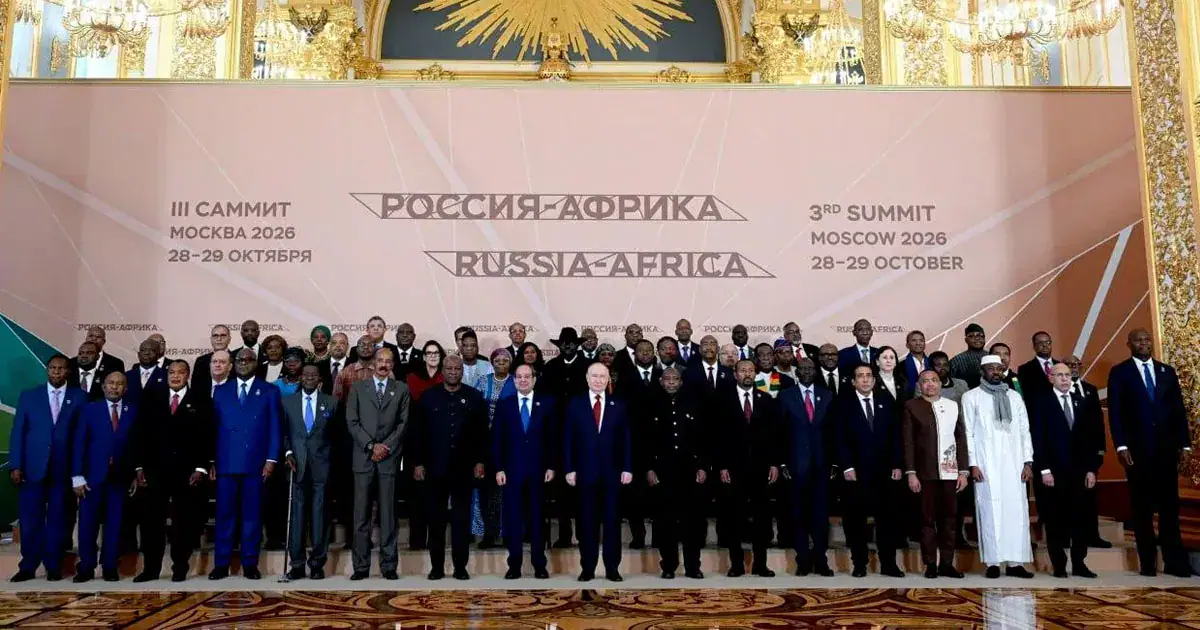
The third Russia-Africa Summit concluded on October 29, 2026, with a declaration, a plan of action until 2029, and a symbolic photo opportunity. The event was seen as a success by Russian media, which highlighted the participation of African leaders as a triumph for the "global majority." However, Western agencies noted a lukewarm response from African countries. The summit's outcome reveals more about Russia's evolving strategy than a potential shift in Africa's allegiances.
African governments have long maintained relationships with multiple global powers, including China, Europe, Turkey, and the Gulf states. They borrow, trade, and secure investments from various sources, making it challenging to pinpoint a significant change in their stance. Russia's efforts to engage with Africa are part of a broader strategy to expand its influence and challenge Western dominance. The summit's focus on multipolarity, UN Security Council reform, and a "just world order" reflects Russia's diplomatic approach.
The Russia-Africa Summit has sparked debate about the continent's potential alignment with Russia. However, experts argue that Africa's relationships with global powers are complex and multifaceted. The summit's outcome is more significant for Russia's relations with Europe, particularly in the context of the Ukraine conflict. The declaration's condemnation of the "illegal seizure of sovereign assets" is seen as a veiled reference to the frozen Russian reserves in Europe.
Russia's economic ties with Africa are relatively limited, with bilateral trade reaching $27 billion in 2025, compared to $348 billion with China and $395 billion with the EU. Despite this, Russia has signed military cooperation agreements with 45 African countries and has provided significant military support to several nations. The summit saw the announcement of a new target for bilateral trade: $50 billion.
The security dynamics in the Sahel region, where Russian military support has been deployed, have raised concerns. The region has become increasingly violent, with over 10,000 deaths between 2022 and 2025, according to Chatham House. The effectiveness of Russian military support in stabilizing the region is uncertain, with some countries experiencing setbacks. The summit's focus on counter-terrorism and information security reflects Russia's priorities in the region.
Notable absences from the summit included several African leaders, including Captain Ibrahim Traoré of Burkina Faso, who has been a vocal supporter of Russia. The participation of 21 heads of state was lower than expected, with some countries sending representatives instead. The summit's guest list and outcome have been interpreted as a mixed success for Russia's efforts to expand its influence in Africa.
The significance of the Russia-Africa Summit lies in its implications for global politics and security. Russia's engagement with Africa is closely tied to its interests in the Middle East and the Mediterranean. The development of Russian military infrastructure in Libya, including six airbases, has raised concerns about the potential for Russian expansion in the region. The summit has highlighted the complex and evolving nature of global politics, with multiple players vying for influence.
Key points
- Russia's engagement with Africa is part of a broader strategy to challenge Western influence and expand its global reach.
- The Russia-Africa Summit has highlighted the complexities of African countries' relationships with global powers.
- The summit's outcome has significant implications for regional security dynamics, particularly in the Sahel and Mediterranean regions.