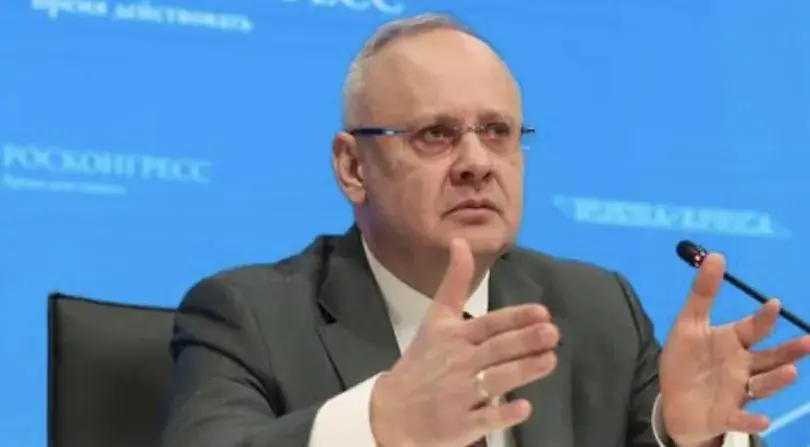
The Russian government has emphasized its desire to strengthen ties with Africa, based on a partnership of equals. At a session held at the Russian National Press Centre on October 29, 2026, Anton Kobyakov, advisor to Russian President Vladimir Putin and president of the Roscongress Foundation, outlined Russia's vision for cooperation with Africa. This vision is centered on breaking away from "neocolonialism" and promoting traditional relationships.
According to Kobyakov, Africa has been elevated to the status of a strategic partner, with Moscow stressing the right of African states to freely choose their partners. Russia is highlighting its historical ties with the continent, dating back to Soviet support for anti-colonial movements in the 1960s. The country claims to want to combat all forms of "neocolonialism". This approach contrasts with that of Western powers, which are accused of adopting a logic of pure competition for African resources and markets.
Kobyakov noted the ongoing geopolitical realignments in several West African countries, including Niger, Mali, and Burkina Faso. He acknowledged the complexity and slowness of contractual transitions. The growing influence of Africa on the international stage was also analyzed. Kobyakov praised the continent's growing power through frameworks such as Agenda 2063 and the African Union's integration into the G20 in 2023.
The strategic role of Africa is confirmed by its demographic weight and key geographic positions. With a projected population of 2.4 billion inhabitants and an overall economic growth of around 4%, the continent is positioning itself as a pivotal player in global logistics chains. These chains include maritime routes in the Red Sea, Suez, and the Indian Ocean.
Kobyakov detailed the operational aspects of Russia's partnership with Africa, particularly in public health and education. In the field of health security, joint programs to combat epidemics, such as yellow fever, malaria, and Ebola, are being implemented with the Russian agency Rospotrebnadzor. Russian-developed vaccines are already being integrated into immunization programs in several countries, including Niger and Burkina Faso.
The two countries are also cooperating in the field of human capital and training, with over 40,000 African students currently pursuing higher education in Russia. Projects to establish branches of Russian universities are being developed in several partner countries, including Burkina Faso, Mali, Algeria, and Niger.
Looking ahead, Kobyakov noted that while the forum has enabled numerous contacts to be established and the foundations of an industrial and technological roadmap to be laid, the implementation and monitoring of agreements remain a major challenge. The dialogue between Moscow and its African partners will continue at upcoming events, including the 30th St. Petersburg Economic Forum next year.
Key points
- Russia seeks to strengthen ties with Africa based on a partnership of equals.
- The two countries are cooperating in public health and education.
- Over 40,000 African students are pursuing higher education in Russia.