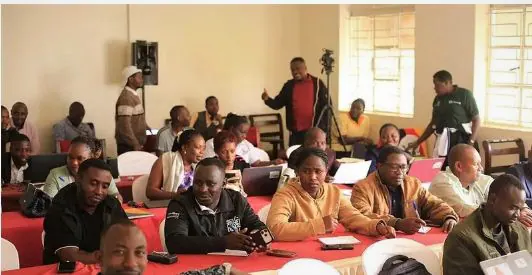
The Uganda AIDS Commission has expressed concern over the rising HIV infections in the Kigezi sub-region, with Rukungiri and Kanungu districts leading the list. According to the commission, the region is experiencing a high HIV burden, prompting renewed calls for vigilance and intensified HIV prevention, testing, and treatment. This was revealed during an engagement workshop for journalists, district, and municipality communication officers in Rukungiri Municipality.
Addressing the gathering, Brian Masimbi, the Principal Statistician at the Uganda AIDS Commission, disclosed that Uganda is experiencing approximately four new HIV infections every hour, translating into 662 new cases weekly. He added that the number of people living with HIV remains higher among females, while males die more than females. This trend is a cause for concern, as it indicates a need for targeted interventions to address the disparities.
Within Kigezi, Rukungiri District leads with an HIV prevalence of 8.1%, followed by Kanungu at 6%. Other districts cited include Kabale at 5.2%, Rukiga at 4.3%, Rubanda at 2.6%, and Kisoro at 2%. Masimbi attributed the high HIV burden in these districts to multiple factors, including multiple sexual partners, low condom use, low male circumcision, alcohol consumption, poverty, and wealth inequalities, as well as stigma and discrimination.
Nationally, about 1,550,000 people are living with HIV, including 980,000 females, 569,000 males, and 71,000 children. According to Masimbi, 344,000 people were recorded as new cases, while 19,000 deaths occurred among people living with HIV in 2024. The commission is working to end AIDS as a public health threat by 2030, but new infections are backsliding the ambition.
Kemigisha Joanitah, Manager for Social Behavior Change, urged the young generation to be vigilant and take responsibility for their health. She emphasized that the government aims to end AIDS as a public health threat by 2030, but new infections are hindering progress. Joanitah called for increased awareness and education on HIV prevention and treatment.
Dr. Davis Ahabwe, Principal Medical Officer for Rukungiri Municipality, urged residents to seek HIV testing and begin treatment promptly if positive, to reduce transmission. He emphasized that early detection and treatment are critical in managing the disease and preventing further spread. Journalists were also urged to accurately disseminate HIV information to help Ugandans avoid dying unaware.
The engagement workshop aimed to equip journalists and communication officers with accurate information to disseminate to the public. Attendees, including Kemigisha Maurice, the Communication Officer for Rukungiri Municipality, and Samuel Amanya from Uganda Radio Network (URN) Kigezi region, emphasized the importance of collaboration between district and municipal leadership, communication departments, and journalists in sharing sensitive public health information.
Key points
- Uganda records approximately four new HIV infections every hour.
- Rukungiri District leads Kigezi sub-region with an HIV prevalence of 8.1%.
- The Uganda AIDS Commission aims to end AIDS as a public health threat by 2030.