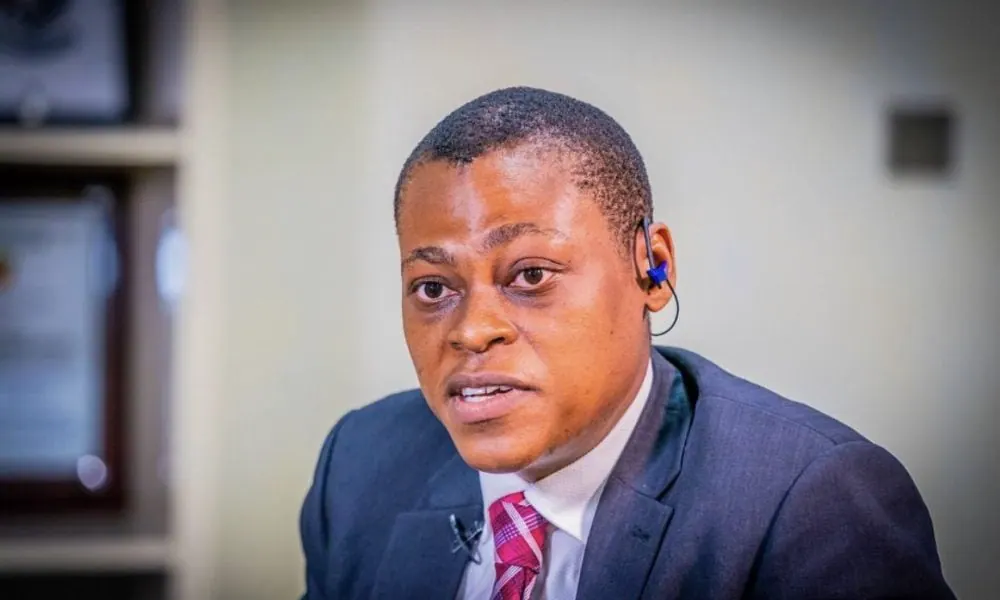
Arise Television Morning Show anchor, Rufai Oseni, has shed light on Senate President Godswill Akpabio's decision to reject being addressed as Nigeria's acting president during President Bola Tinubu and Vice President Kashim Shettima's recent absence from the country. According to Oseni, Akpabio's insistence that he was not the acting president demonstrated his unwillingness to assert the powers of the National Assembly as a co-equal arm of government. This statement was made on Monday during an analysis of President Tinubu's extended stay abroad.
Oseni expressed skepticism about the National Assembly's ability to effectively challenge the President, citing its previous support for the declaration of a state of emergency in Rivers State. He noted that Nigerians should not expect the National Assembly to challenge the President effectively, given its past actions. The declaration of a state of emergency in Rivers State was a result of a political squabble between a political godfather and godson, and the National Assembly endorsed it through voice votes.
The Arise TV anchor questioned Akpabio's ability to lead the National Assembly in challenging the executive, emphasizing that the legislature was constitutionally intended to operate as a co-equal arm of government. He argued that if Nigerians expect the National Assembly to stand up to the President, they are either delusional or not aware of the Assembly's past actions. Oseni highlighted the National Assembly's endorsement of the state of emergency in Rivers State as an example of its subservience to the executive.
Oseni also pointed out that Akpabio's rejection of the acting president role was a result of his political surrogates already referring to him as such while President Tinubu and Vice President Shettima were away. Akpabio felt compelled to clarify his position, which Oseni saw as a sign of the Senate President's reluctance to assert his authority. This development, according to Oseni, indicates that Akpabio may not be willing to effectively lead the National Assembly in challenging the executive.
The implications of Akpabio's rejection of the acting president role and the National Assembly's past actions are significant, according to Oseni. He believes that the National Assembly's failure to assert its authority will continue to undermine its role as a co-equal arm of government. Oseni expressed concern that the country's system of governance, based on the separation of powers, is not being effectively implemented in Nigeria.
Oseni's comments come at a time when President Tinubu is facing criticism for his extended stay abroad. The President's prolonged absence has raised concerns about the country's governance and the ability of the National Assembly to effectively oversee the executive. Oseni's analysis suggests that the National Assembly may not be able to provide the necessary checks and balances on the executive, given its past actions and Akpabio's reluctance to assert his authority.
In conclusion, Rufai Oseni's comments highlight the complexities of Nigeria's system of governance and the challenges facing the National Assembly in asserting its authority. The rejection of the acting president role by Akpabio and the National Assembly's past actions have significant implications for the country's governance and the separation of powers. Key issues that need to be addressed include the National Assembly's ability to effectively challenge the executive and the need for a more robust system of checks and balances.
Key points
- - Rufai Oseni criticizes National Assembly's inaction - Akpabio rejects acting president role amid Tinubu's absence - National Assembly's past actions undermine its authority