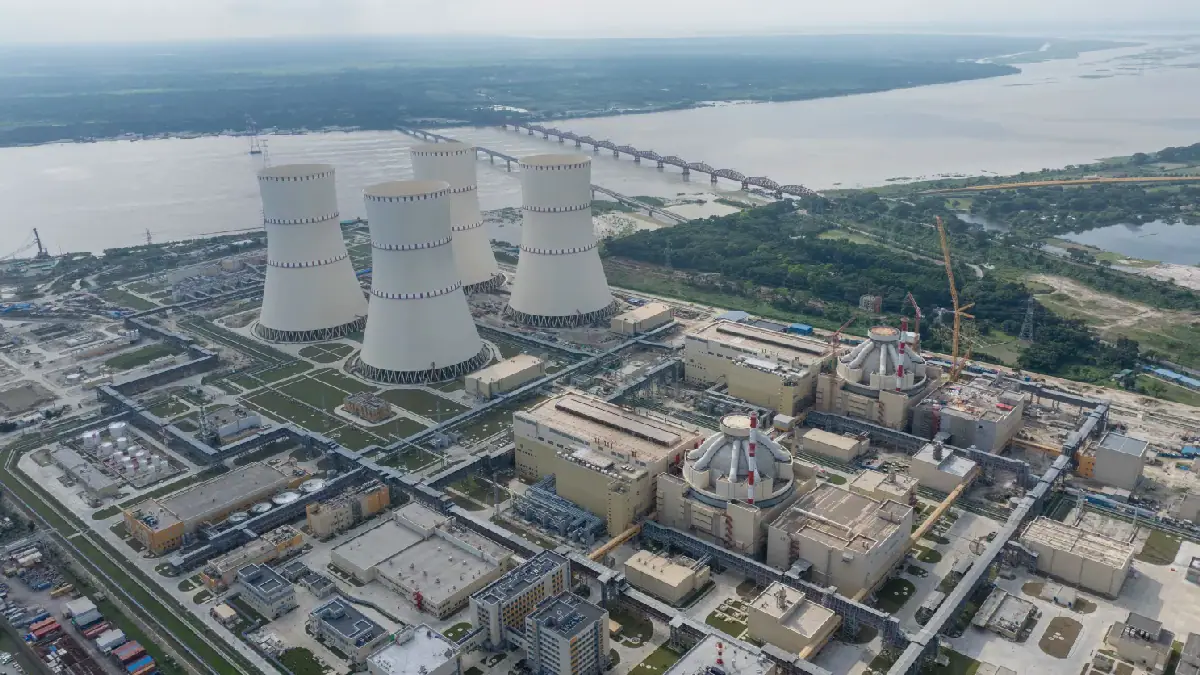
Russia's Rosatom has achieved a significant milestone in its nuclear project with Bangladesh, successfully synchronising Unit 1 of the Rooppur Nuclear Power Plant with the country's national power grid. The first megawatts generated at the plant have reached Bangladesh's power system, with the reactor reaching 40 percent of its rated power. This marks the point at which the generator can be connected to the grid for the first time, with the generator output standing at 370 MW.
The successful synchronisation of Unit 1 of Rooppur NPP is a landmark event for both Russia and Bangladesh, according to Rosatom Director General Alexey Likhachev. He highlighted that Bangladesh is gaining a reliable, stable, and environmentally friendly source of energy that will significantly reduce the country's dependence on imported hydrocarbons. Nuclear power also provides Bangladesh with access to advanced technologies and contributes to the development of engineering expertise and scientific research.
Rosatom's achievement in Bangladesh is part of its broader strategy to expand its presence in the global nuclear technology market. The company is currently building 28 of the 32 power units under construction by nuclear vendors outside their home markets. This includes projects in Egypt, Turkey, and other countries. In Egypt, Rosatom is building the continent's first Generation III+ nuclear power plant, El-Dabaa NPP, with all four units being constructed simultaneously.
The El-Dabaa NPP project in Egypt is a significant undertaking, with around 26,000 people working at the site, most of them Egyptian nationals. Reactor pressure vessels are already in place at Units 1 and 2, with delivery of the first batch of fuel for Unit 1 planned for 2027. This project marks a major milestone in Africa's nuclear energy development, with Egypt set to become the first country on the continent to host a Generation III+ nuclear power plant.
Rosatom is also making progress on its nuclear project in Turkey, with Unit 1 of Akkuyu NPP having started hot functional testing. This is the penultimate stage of tests before start-up operations, with all equipment of the reactor plant being tested in operating modes before nuclear fuel is loaded for the first time. The successful completion of these tests will pave the way for the plant's start-up.
Rosatom's expansion into Africa is part of its strategy to supply African countries with nuclear power plants of various sizes and configurations. According to Alexey Likhachev, the company's partnership with African countries is based on the principle that Africa is diverse, and Rosatom has a tailored approach for each country that goes beyond a single project. This approach is expected to help Rosatom establish a strong presence in the African nuclear market.
The successful synchronisation of Unit 1 of Rooppur NPP and the progress on other Rosatom projects in Egypt and Turkey demonstrate the company's capabilities in the nuclear technology market. With its experience and expertise, Rosatom is well-positioned to play a significant role in Africa's nuclear energy development in the coming years.
Key points
- Rosatom has synchronised Unit 1 of the Rooppur Nuclear Power Plant with Bangladesh's national grid, marking a milestone in the project's development.
- The company is building 28 of the 32 power units under construction by nuclear vendors outside their home markets, including projects in Egypt and Turkey.
- Rosatom is ready to supply African countries with nuclear power plants of various sizes and configurations, with a tailored approach for each country.