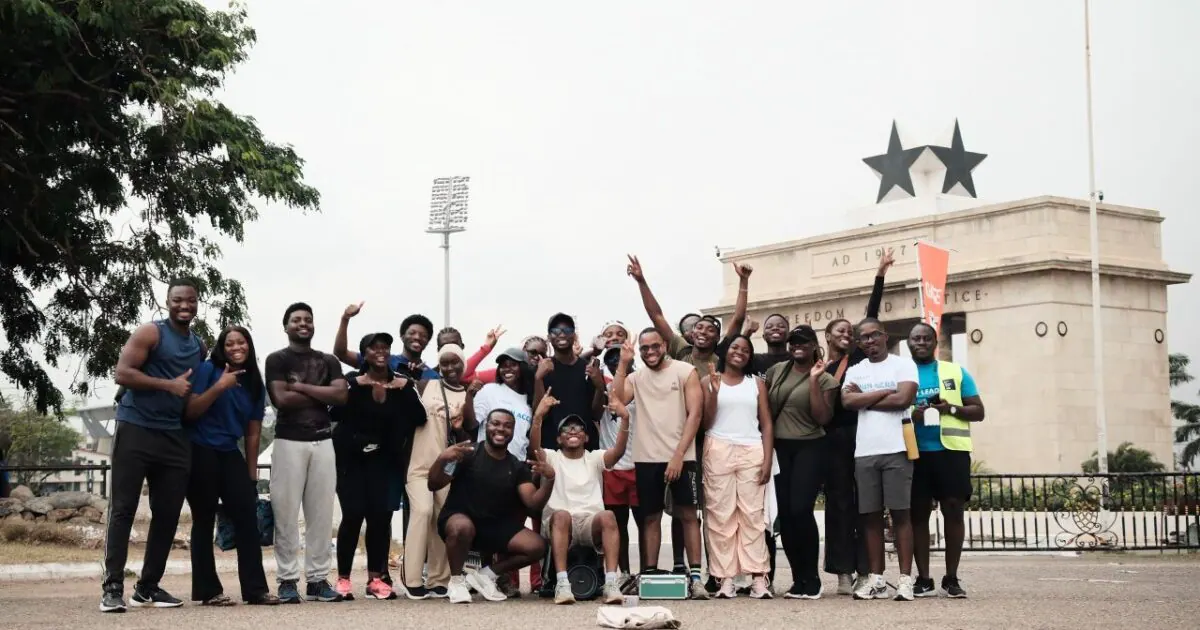
A new project in Ghana is working to make invisible air pollution visible. Roots and Routes, a youth-led initiative, combines health walks with air-quality monitoring and tree planting to raise awareness about air pollution and push for action. The project, led by Dr. Jonathan Caleb Akuaku, aims to create awareness and take action for clean air under the World Economic Forum's Clean Air Collaborative. The initiative began with an assessment of Ghana's air-quality standards.
The project involves health walks through parts of Accra, where participants carry AirBeam sensors to measure the quality of the air. The sensors, supplied by partner organization Ever and Better, measure fine particulate matter, including PM2.5. The team has completed two of four planned health walks, covering areas such as Accra's central business district and Nima. The walks are not just for exercise, but also to gather data on the air quality in different parts of the city.
The project focuses on air pollution because of its consequences for young people. According to the World Economic Forum, one in four young people die prematurely due to the harmful effects of air pollution. Dr. Akuaku cited respiratory illnesses linked to poor air quality as a major concern. The goal is to live a long and healthy life, and addressing air pollution is crucial. Rapidly growing urban areas, such as Accra, are particularly affected by transport, waste, and construction.
The sources of air pollution in Accra include vehicle emissions, open burning of rubbish, and uncollected waste. These are daily problems for residents, but their health consequences can be difficult to see or connect to the air around them. The project plans to work with five schools, engaging students in discussions about air pollution and helping them plant trees. The target is to reach at least 500 students and plant at least 153 trees across the participating schools by October.
The project aims to make young people participants rather than just recipients of information. The walks show them how pollution can be measured, and the school activities introduce them to practical environmental action. Together, these approaches turn an abstract issue into something young people can observe, measure, and respond to. The data collected will ultimately have to travel beyond the people carrying the sensors.
After completing the four planned walks, the team intends to organize a policy dialogue with policymakers and present the findings. This could bring discussions about air quality closer to everyday decisions that shape urban life, such as waste collection and disposal, transport, and city planning. The measurements matter because advocacy is stronger when supported by evidence. The project wants to show how air quality changes from one location to another and identify the conditions contributing to those differences.
The project is being implemented under the World Economic Forum's Clean Air Collaborative, with support from the Global Shapers community. The goal is to change how people understand the air around them. Air pollution does not always arrive with obvious signs of environmental damage, making measurement important. The challenge now is whether the data gathered on those walks can lead to tangible change and improved air quality in Ghana.
Key points
- The Roots and Routes project combines health walks, air-quality monitoring, and tree planting to raise awareness about air pollution in Ghana.
- The project aims to engage young people in environmental action and make them participants in addressing air pollution.
- The data collected will be used to advocate for policy changes and improve air quality in urban areas.