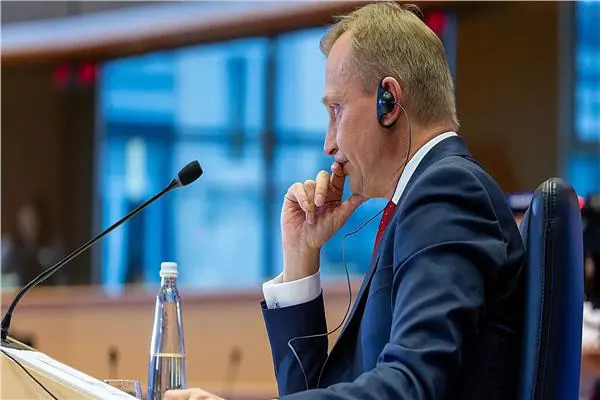
The Romanian parliament has rejected the nomination of Siegfried Muresan, a liberal and pro-European Union member, for the position of prime minister. Muresan, a member of the European Parliament, received only 182 votes out of the 233 required for approval. This development is likely to prolong the ongoing political crisis in Romania, which has been plagued by instability since May. The crisis began when the Social Democratic Party withdrew from the governing coalition in protest of austerity measures implemented by the liberal Prime Minister, Eli Bolojan.
The rejection of Muresan's candidacy has raised concerns about the potential for early elections, which could further exacerbate the country's political instability. However, Romanian President Klaus Iohannis, a strong supporter of the European Union, has warned that holding early elections may not necessarily resolve the crisis. Iohannis has urged politicians to prioritize national interests over electoral considerations. The president's comments come amid growing concerns about the rise of far-right parties in Romania.
The far-right Alliance for the Unity of Romanians (AUR) has emerged as a significant force in Romanian politics, with recent polls indicating that it could potentially win up to 40% of the vote. The party's rise has been attributed to growing discontent with the country's economic and political situation. AUR has been critical of Romania's EU membership and has advocated for a more nationalist agenda. The party's growing popularity has raised concerns about the potential for Romania to shift towards a more eurosceptic stance.
The current political crisis in Romania began in May when the Social Democratic Party (PSD) withdrew from the governing coalition in protest of austerity measures implemented by Prime Minister Eli Bolojan. The PSD then formed an alliance with the far-right AUR to oust Bolojan. Since then, President Iohannis has nominated three candidates for prime minister, all of whom have failed to secure parliamentary approval. Muresan's rejection marks the latest setback in efforts to stabilize the country's government.
President Iohannis has accused politicians of prioritizing electoral interests over national concerns. He has urged parties to work together to find a solution to the crisis. However, with the AUR gaining traction and the PSD pushing for a more nationalist agenda, it remains unclear how the country's politicians will navigate the complex situation. Romania, a member of the European Union and NATO, has not held early elections since the fall of communism in 1989.
The country's instability has raised concerns about its ability to address pressing issues, including corruption and economic development. Romania has struggled with corruption and bureaucratic inefficiencies, which have hindered its economic growth. The country's EU membership has brought significant economic benefits, but the current crisis has raised questions about its future trajectory. The international community has been closely watching the developments in Romania, given its strategic location in Eastern Europe.
As the situation continues to unfold, it remains to be seen how Romania's politicians will respond to the crisis. The country's future trajectory will depend on its ability to form a stable government and address pressing issues. With the AUR gaining popularity and the PSD pushing for a more nationalist agenda, Romania's relationship with the EU and its future direction remain uncertain. The country's leaders will need to navigate these complex challenges to ensure stability and prosperity for its citizens.
Key points
- Romanian parliament rejects pro-European Union candidate for prime minister.
- Far-right party gains traction in Romanian politics.
- Country faces potential early elections amid ongoing crisis.