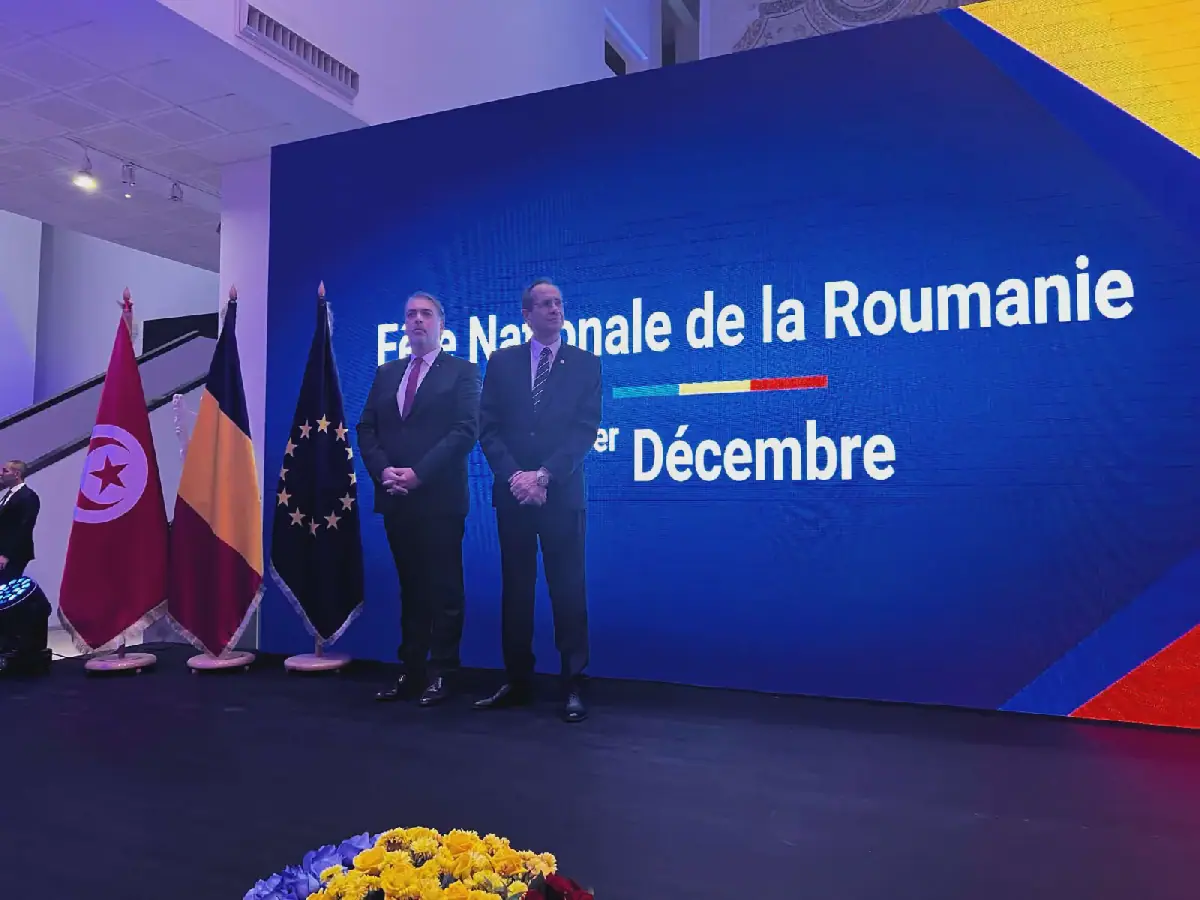
The Romanian Embassy in Tunisia recently organized a ceremony at the Bardo National Museum to celebrate Romania's national day on December 1. The event also marked the 150th anniversary of the birth of Constantin Brâncuși, a renowned Romanian sculptor. Romanian Ambassador to Tunisia Valentin-Ciprian Muntean highlighted the significance of December 1, which commemorates the Great Union of 1918.
The Great Union of 1918 was a pivotal moment in Romanian history, as it united Transylvania, Banat, Crișana, and Maramureș with the Kingdom of Romania. This date has become a national holiday in Romania, symbolizing unity, solidarity, and collective construction. The ambassador also reflected on Romania's 1989 revolution, which ended the communist regime and paved the way for democracy and European integration.
The Bardo Museum was chosen for the event to create a cultural bridge between Tunisia and Romania. The photo exhibit on Brâncuși aims to establish a dialogue between the artist's work and Tunisia's rich Mediterranean and African heritage. Brâncuși, born in Romania in 1876, was known for his simplified forms and quest for universality. The exhibit allows visitors to explore his work and its connection to Tunisian culture.
Tunisian Minister of Higher Education and Scientific Research Mondher Belaïd congratulated the Romanian people and government on the national day. He emphasized Tunisia's commitment to strengthening its friendship and cooperation with Romania, which has been built over several decades. The two countries have a long-standing diplomatic relationship, celebrating the centenary of their diplomatic ties three years ago.
Economic cooperation between Tunisia and Romania has shown progress, with bilateral trade reaching approximately 885 million dinars in 2025. However, both parties recognize the potential for further development. The two countries have also strengthened their cooperation in various sectors, including energy, technology, and tourism. In 2025, around 64,000 Romanian tourists visited Tunisia, representing a 143% increase from 2019.
University cooperation is a significant aspect of the bilateral partnership, with around 1,500 Tunisian students currently studying in Romania. The visit of the Romanian Minister of Culture in November 2025 led to the signing of a new cultural exchange program. The participation of Tunisia as a guest of honor at the second edition of the international university festival in May 2026 resulted in the signing of around thirty agreements between Tunisian and Romanian universities.
The events concluded with a cultural note, as the Brâncuși exhibit demonstrated the power of art to bring together civilizations and memories. The Bardo Museum, with its rich history dating back to Carthage, provided a symbolic setting for the celebration. The exhibit connected Tunisian heritage to modern Romanian creation, highlighting the role of culture in fostering a lasting friendship between Tunisia and Romania.
Key points
- The Romanian Embassy in Tunisia celebrated the national day with a ceremony and photo exhibit on Constantin Brâncuși at the Bardo National Museum.
- The event marked the 150th anniversary of Brâncuși's birth and highlighted the cultural connection between Tunisia and Romania.
- Tunisia and Romania have strengthened their cooperation in various sectors, including economy, education, and culture.