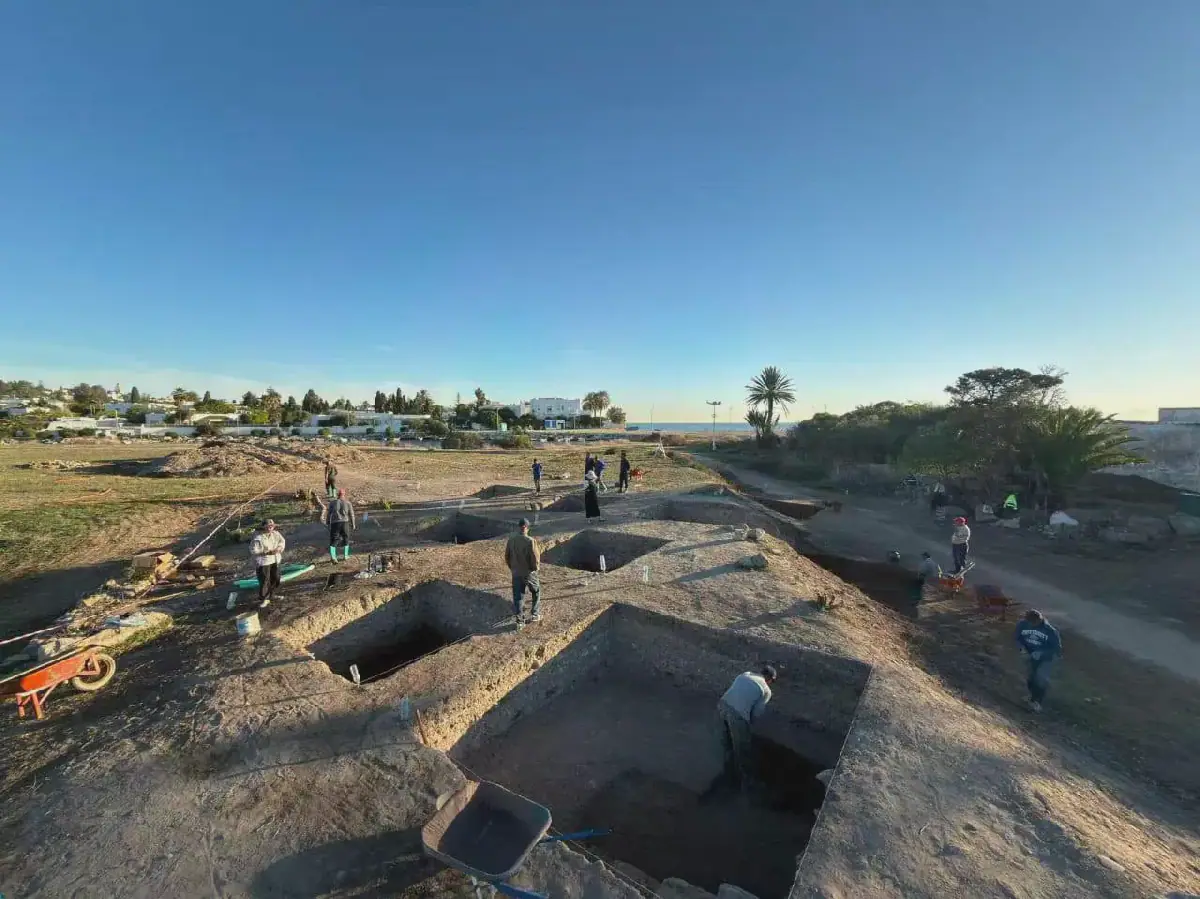
Archaeologists in Tunisia have made a significant discovery at the Punic ports in Carthage, uncovering a defensive wall dating back to the Roman era. The excavation, which began on October 19, 2026, has revealed a wall that may have formed the outer perimeter of the circular harbor at the site. The Tunisian National Heritage Institute (INP) announced the discovery on November 26, 2026, stating that the excavation was conducted in collaboration with the China National Cultural Heritage Center (NACA).
The excavation has uncovered several large stone blocks that are believed to have been part of a wave-breaking structure. The archaeological finds also include ancient pottery, oil lamps, and bronze coins, which suggest that the site was continuously occupied from the Punic to the Byzantine period. These discoveries provide valuable insights into the history and development of the Punic ports in Carthage.
The Punic ports in Carthage are a significant archaeological site, and the discovery of the defensive wall is an important addition to our understanding of the site's history. The excavation is ongoing, with archaeologists working to document and analyze the findings. The site is being excavated under the supervision of the Tunisian Ministry of Cultural Affairs, with the goal of gaining a better understanding of the site's evolution over time.
The discovery of the defensive wall and other archaeological finds at the Punic ports in Carthage highlights the importance of preserving and protecting Tunisia's cultural heritage. The site is a testament to the country's rich history and its significance in the ancient world. The excavation and documentation of the site are crucial for understanding the history and development of the region.
The Tunisian National Heritage Institute (INP) is leading the excavation and documentation of the site, with support from international partners. The discovery of the defensive wall and other archaeological finds is a significant addition to our understanding of the Punic ports in Carthage and its history. The site is an important part of Tunisia's cultural heritage, and its preservation and protection are essential for future generations.
The ongoing excavation at the Punic ports in Carthage is providing new insights into the site's history and development. The discovery of the defensive wall and other archaeological finds is a significant contribution to our understanding of the site and its significance in the ancient world. The excavation is being conducted in accordance with international standards and best practices, with the goal of preserving and protecting the site for future generations.
The discovery of the Roman-era defensive wall at the Punic ports in Carthage is a significant archaeological find that sheds new light on the site's history. The excavation and documentation of the site are ongoing, with archaeologists working to gain a better understanding of the site's evolution over time. The discovery is an important addition to our understanding of Tunisia's cultural heritage and its significance in the ancient world.
Key points
- Archaeologists in Tunisia have discovered a defensive wall dating back to the Roman era at the Punic ports in Carthage.
Reporting sources
- Radio Tunis · Radio Tunis