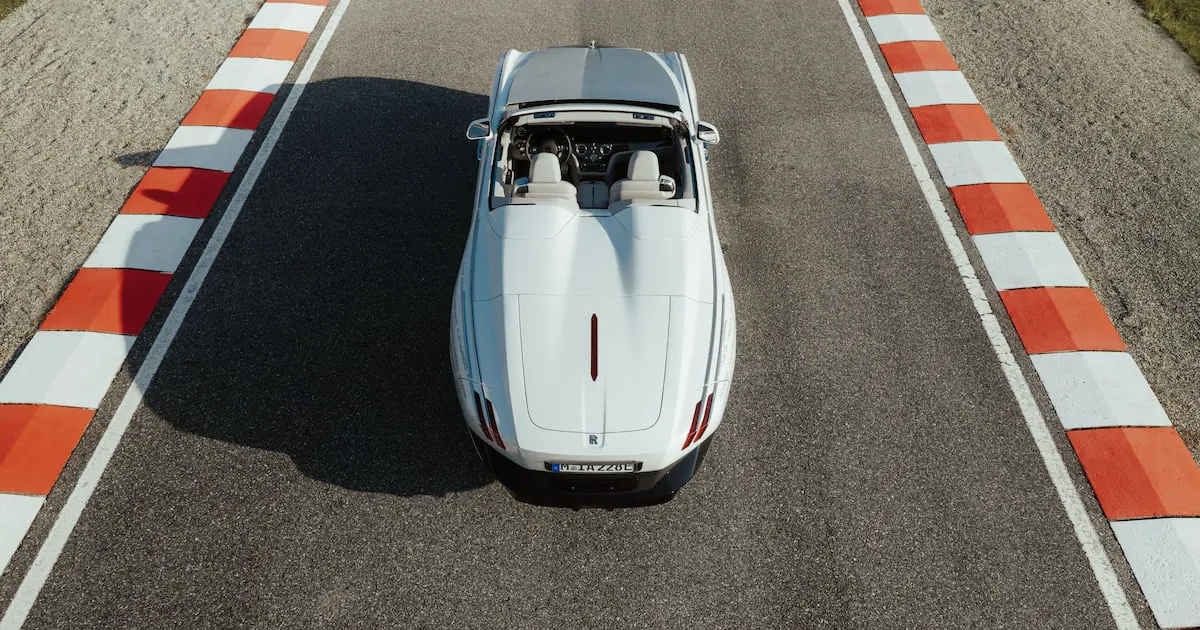
Rolls-Royce has embarked on an extensive testing programme for its bespoke Project Nightingale, a Coachbuild Collection limited to 100 cars. The programme, which began in Southern France, involves testing prototypes in various conditions, including Arctic temperatures and the heat of the Arabian Peninsula. The testing is designed to ensure the car's durability and performance in extreme environments. Project Nightingale combines Rolls-Royce's bespoke design programme with an electric powertrain. The company has historical ties to Southern France, where its founder, Henry Royce, built a house for his designers and engineers.
The development programme for Project Nightingale will involve 350 collective weeks of engineering work, with testing taking place in Southern Europe, the Arctic Circle, and the Arabian Peninsula. The prototypes will also be tested at altitudes of up to 2,750m. The testing programme follows almost three years of development and includes high-speed testing at a private facility, where Project Nightingale will be driven at up to 250km/h. The focus will be on reducing wind noise and improving refinement at speed. Static prototypes have already undergone more than 1,430 hours of aerodynamic development.
The testing programme includes several new features, such as an electrically operated wind deflector developed specifically for the car. The system is designed to prevent high-pressure air from flowing back into the passenger compartment when the roof is lowered. Engineers will assess its ability to reduce turbulence while helping retain warmth in the cabin. The car's roof will also undergo extensive testing, with its lining combining cashmere, fabric, and composite materials intended to reduce noise.
The roof's fabric, closing mechanism, and overall operation will be subjected to 10 separate tests at temperatures of up to 80°C. Another new feature is the so-called Piano Boot, which opens sideways on a cantilever mechanism. Rolls-Royce will subject it to up to 15,000 opening and closing cycles to assess its durability and ensure consistent operation over the vehicle's lifetime. The testing programme is intended to replicate the conditions in which Rolls-Royce says Project Nightingale customers plan to use their cars.
The project takes its name from Le Rossignol, French for "nightingale," the name of the house built by company founder Henry Royce for his designers and engineers near his winter home on the French Riviera. More than a century ago, Rolls-Royce engineers used the area for speed and durability testing, along with the company's test facility in Châteauroux and roads between Monte Carlo and London. The latest programme builds on this legacy of testing and development.
Project Nightingale was announced in April 2026, but detailed performance specifications have yet to be released. The car combines Rolls-Royce's bespoke design programme with an electric powertrain. Further details about the electric powertrain, performance, and pricing have yet to be announced. The testing programme is a critical step in the development of Project Nightingale, ensuring that the car meets Rolls-Royce's high standards.
The extensive testing programme for Project Nightingale demonstrates Rolls-Royce's commitment to quality and performance. With its bespoke design and electric powertrain, Project Nightingale is set to be a unique offering in the luxury car market. The car's development has involved significant investment in engineering and testing, reflecting Rolls-Royce's focus on delivering exceptional vehicles to its customers.
Key points
- Project Nightingale is a Coachbuild Collection limited to 100 cars.
- The testing programme involves 350 collective weeks of engineering work.
- The car features an electrically operated wind deflector and a Piano Boot that opens sideways on a cantilever mechanism.