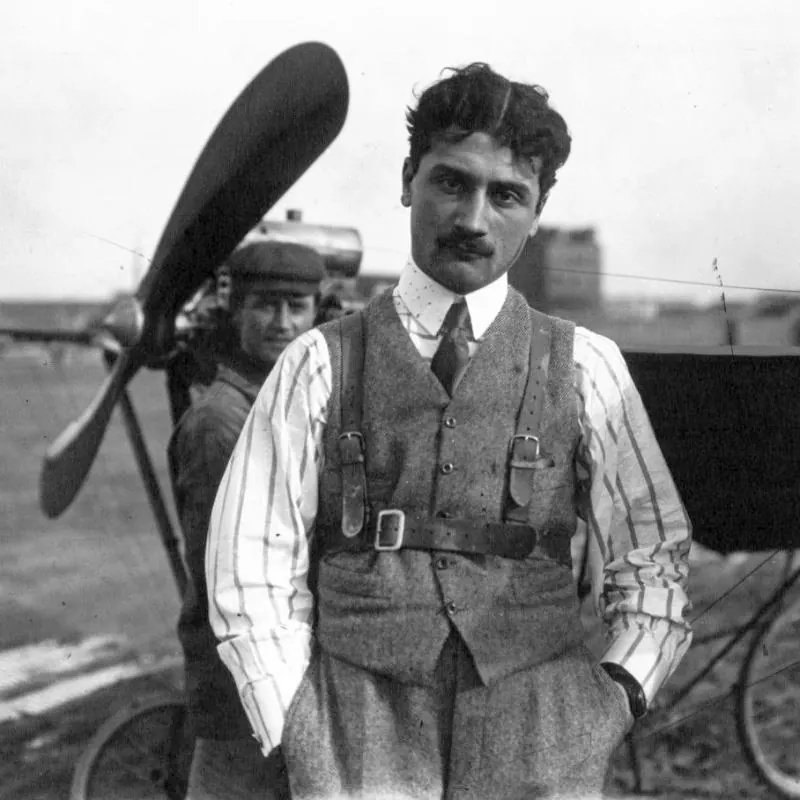
In a remarkable feat of aviation, Roland Garros successfully crossed the Mediterranean Sea in September 1913, flying from Fréjus, France to Bizerte, Tunisia. This daring journey marked a significant milestone in the history of aviation, demonstrating the potential for air travel to connect distant locations. Garros' achievement was met with widespread acclaim, solidifying his reputation as a pioneering aviator. The flight, which took under 8 hours to complete, was a testament to Garros' skill and bravery.
Garros' flight was not an impulsive act, but rather a carefully planned and executed journey. He meticulously prepared for the trip, selecting a suitable route and ensuring that his aircraft, the Demoiselle, was in good working condition. On the day of the flight, Garros departed from Fréjus, France, and headed south towards Tunisia. Despite encountering strong headwinds, he persevered, showcasing his exceptional flying skills. The successful completion of the flight marked a major breakthrough in aviation, paving the way for future long-distance air travel.
The flight was notable not only for its distance but also for the challenging conditions Garros faced. He encountered a violent headwind, which made it difficult to maintain a steady course. Additionally, Garros had to manage his fuel consumption carefully, as he had limited fuel on board. With only 5 liters of fuel remaining upon arrival, Garros demonstrated his ability to navigate complex situations and make the most of available resources. His success was a testament to his expertise and experience as an aviator.
Garros' achievement was widely recognized and celebrated in France and beyond. The French press hailed him as a hero, and his feat was seen as a symbol of French ingenuity and determination. The flight was also seen as a significant milestone in the development of aviation, demonstrating the potential for air travel to connect distant locations and facilitate communication between nations. As news of the flight spread, Garros became an international celebrity, hailed as a pioneer in the field of aviation.
The impact of Garros' flight extended beyond the aviation community, inspiring a new generation of pilots and engineers. His achievement sparked a wave of interest in aviation, with many people seeking to learn more about the possibilities of air travel. The flight also had significant implications for the development of commercial aviation, as it demonstrated the feasibility of long-distance air travel and paved the way for the establishment of air routes between Europe and Africa.
In the years following his Mediterranean flight, Garros continued to push the boundaries of aviation. He went on to achieve numerous other milestones, including becoming one of the first pilots to fly across the Alps. Tragically, Garros' life was cut short during World War I, when he was shot down and killed in action. Nevertheless, his legacy as a pioneering aviator has endured, and he remains one of the most celebrated figures in the history of aviation.
Today, Roland Garros is remembered as a hero and a trailblazer in the world of aviation. His historic Mediterranean flight marked a significant turning point in the development of air travel, and his legacy continues to inspire new generations of pilots, engineers, and innovators. As the aviation community continues to evolve and push the boundaries of what is possible, Garros' achievement serves as a reminder of the power of human ingenuity and determination.
Key points
- Roland Garros completed a groundbreaking flight across the Mediterranean Sea in September 1913, flying from Fréjus, France to Bizerte, Tunisia in under 8 hours.