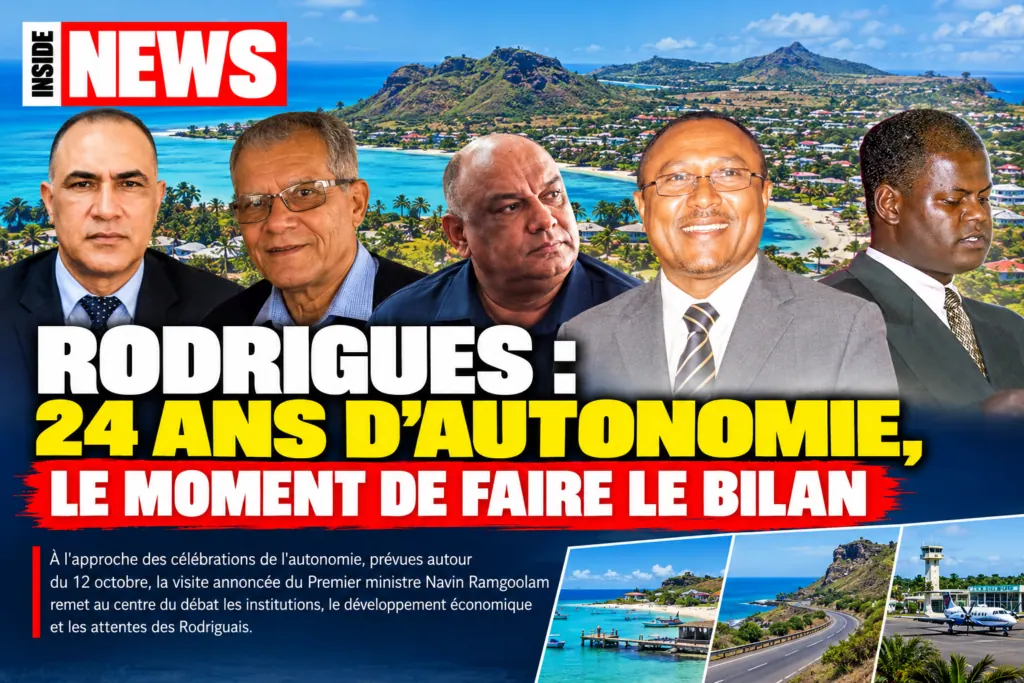
The island of Rodrigues, part of the Republic of Mauritius, is celebrating 24 years of autonomy. On October 12, 2002, the first session of the Regional Assembly gave institutional reality to the island's autonomy, as consecrated by the Rodrigues Regional Assembly Act 2001. Since then, Rodrigues has had its own elected institutions and competencies in several areas of development. The anniversary is significant, with Prime Minister Navin Ramgoolam visiting the island from October 11-13 to participate in official celebrations.
The visit by Prime Minister Ramgoolam, his first since returning to power in November 2024, will include several institutional meetings and inaugurations. The highlight of the celebrations will take place on October 12 at the Jean-Daniel André stadium in Camp-du-Roi. This commemoration offers an opportunity to reflect on the major stages of Rodrigues' autonomy, the political leaders who have guided it, and the projects that have gradually transformed the island.
Since 2002, Rodrigues has had five chief commissioners and several political alternations. The island's political history is closely tied to Serge Clair, founder of the Organization of the People of Rodrigues (OPR) and a key figure in the autonomist movement. However, Clair did not become the first chief commissioner in October 2002, losing the election in the La Ferme constituency. Jean Daniel Spéville, also an OPR member, took the lead of the first regional executive.
Serge Clair eventually became chief commissioner in February 2003 after a by-election in January 2003. This period allowed for the establishment of new institutions and the definition of relations between the regional executive and the central government. The setup of the autonomous administration represented a significant transformation for Rodrigues, whose public affairs were previously more centralized.
In 2006, the Mouvement Rodriguais (MR), led by Nicolas Von Mally, took power, and Johnson Roussety became chief commissioner. This period saw the continued development of public services and infrastructure, while issues of transportation, water, and employment remained at the forefront of concerns. The island's difficulties in these areas persist, highlighting the need to measure autonomy by its results.
Gaëtan Jhabeemissur succeeded Johnson Roussety in January 2011, amidst a period of recomposition. Over the years, Rodrigues has seen several projects aimed at improving its infrastructure and economy. Despite these achievements, challenges in water supply, connectivity, and employment remain. The autonomy of Rodrigues, while providing the island with its own institutions, also requires tangible progress in addressing these pressing issues.
As Rodrigues marks 24 years of autonomy, the visit by Prime Minister Ramgoolam and the celebrations offer a chance to assess the island's progress and look to the future. The island's leaders and residents will likely reflect on the accomplishments and challenges of autonomy, as well as the opportunities and obstacles that lie ahead.
Key points
- Prime Minister Navin Ramgoolam visits Rodrigues from October 11-13 to participate in the 24th anniversary celebrations of the island's autonomy.
- Rodrigues has had five chief commissioners and several political alternations since 2002.
- Despite progress, the island continues to face challenges in water supply, connectivity, and employment.