In the heart of Qalyubia governorate, approximately 3 kilometers southeast of the town of Shibin al-Qanatir, lies the archaeological site of Tel al-Yahudiya. Excavations at the site have uncovered numerous rock-cut tombs, showcasing a range of architectural styles and burial practices. According to Dr. Abdel Rahim Reihan, an archaeology expert, the site is of significant importance due to its strategic location and the variety of historical layers it contains. The site has been dated to various periods, including the Hyksos era, the New Kingdom, and the Greek and Roman periods.
The site, also known as Leontopolis, covers an area of around 60 acres and has been a subject of interest for archaeologists since the 18th century. Dr. Reihan highlighted that the site was an important center during the Hyksos period, with a fortified structure built by the Hyksos rulers. The fort, which dates back to the Second Intermediate Period, features a unique design with rounded corners and a mudbrick wall. Excavations have also uncovered a Roman military camp situated on top of the rock-cut tombs, adding another layer to the site's complex history.
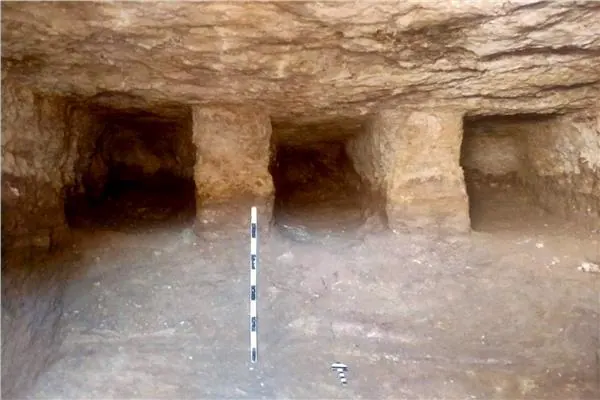
The rock-cut tombs discovered at Tel al-Yahudiya exhibit two primary architectural styles. The first type features a rectangular entrance leading to a main hall with several burial niches, known as "biats." The second type consists of a vertical shaft or well that leads to a chamber or burial niches. These diverse architectural styles demonstrate the evolution of burial practices over time. Dr. Reihan emphasized that the presence of such rock-cut tombs in the region is rare, given the soft, alluvial soil that characterizes the Nile Delta.
In addition to the rock-cut tombs, the site contains other types of burials, including coffin-shaped tombs and simple pit graves. These tombs date back to various periods, including the Hyksos era, the New Kingdom, and the Greek and Roman periods. The site has also yielded a range of archaeological finds, including pottery, coins, and other artifacts that provide valuable insights into the lives of the people who lived and died there.
The site's history extends beyond the ancient Egyptian periods, with evidence of Jewish settlement during the Ptolemaic era. According to Dr. Reihan, a Jewish temple was built at the site during this period, attracting Jewish refugees fleeing persecution in Judea. The site was also an important center for the production of distinctive, colorful pottery, known as "Tel al-Yahudiya ware," which has been found throughout the Mediterranean region.
The ongoing excavations at Tel al-Yahudiya continue to shed light on the complex history of the site and its significance in the context of ancient Egyptian and Mediterranean archaeology. The site provides a unique window into the lives of people from various cultures and periods, offering insights into their burial practices, architectural styles, and daily lives. As excavations continue, it is likely that further discoveries will be made, adding to our understanding of this fascinating archaeological site.
The Egyptian Supreme Council of Antiquities is leading the excavation efforts at Tel al-Yahudiya, with a team of archaeologists and experts working to uncover the site's secrets. The team includes Dr. Ayman Ashmawi, Dr. Anwar Ahmed Abdel Samad, and Dr. Mohamed Ibrahim Omar, among others. Their work is crucial in preserving the site's cultural heritage and promoting our understanding of ancient Egyptian history and culture.
Key points
- The discovery of rock-cut tombs at Tel al-Yahudiya highlights the diversity of ancient burial practices in Egypt.
- The site provides a unique example of the coexistence of different cultures and periods in a single location.
- Ongoing excavations at Tel al-Yahudiya continue to shed light on the site's complex history and significance in ancient Egyptian and Mediterranean archaeology.