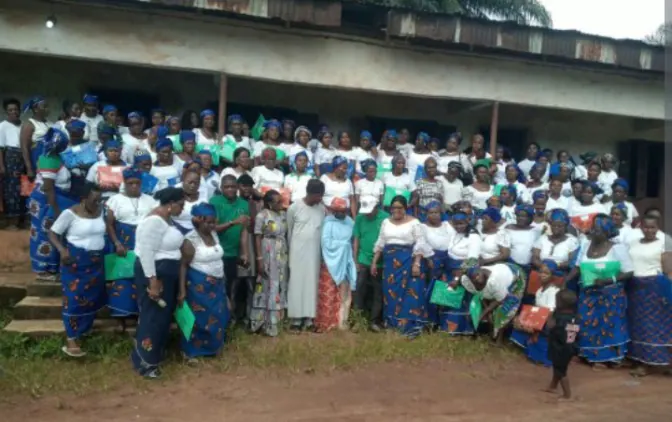
The Raw Materials Research and Development Council (RMRDC) recently conducted a training program in Enugu State, focusing on Black Soldier Fly (BSF) farming. The initiative aimed to promote alternative sources of animal feed and create new livelihood opportunities for women and youths. The training covered the fundamentals of BSF production, including breeding, feeding, harvesting, processing, and using larvae as a protein-rich ingredient in livestock and fish feed.
Black Soldier Fly larvae are gaining popularity as an alternative protein source due to their ability to thrive in small spaces and feed on organic waste. The RMRDC has previously conducted practical training on BSF farming, highlighting its potential as a low-cost and sustainable approach to reduce dependence on conventional feed ingredients like fishmeal and soybean. This approach can help improve the livestock industry's sustainability and reduce production costs.
The RMRDC's training initiatives focus on equipping entrepreneurs and small and medium-scale enterprises with practical skills to improve productivity, reduce production costs, and support local raw-material development. The council's Director-General, Prof. Nnanyelugo M. Ike-Muonso, expressed his delight that the program took place in Egede, their ancestral village, and primarily benefited rural women and young people who rely on subsistence farming for their livelihoods.
The training program, held at Egede in Udi Local Government Area of Enugu, was a two-day capacity-building workshop on harnessing the benefits of Black Soldier Fly as an alternative protein source in livestock feed and other value-added products. The RMRDC DG, represented by Enugu State Coordinator Engr. Ude Henrietta, emphasized that the training was more than an academic exercise, but an opportunity to introduce a practical technology that can transform waste into protein, animal feed, agricultural inputs, employment, and income.
One of the significant benefits of BSF is its potential contribution to livestock-feed development, as feed is a major cost confronting livestock producers. Protein ingredients like soybean meal and fishmeal are crucial components of many animal diets, but their availability and prices can affect the economics of livestock production. BSF larvae contain protein and lipids, making them a promising ingredient in poultry, fish, and other animal feeds.
As an institution mandated to promote the development and utilization of Nigeria's raw materials for industrial growth and economic development, the RMRDC is working to shift the nation's economy from a predominantly raw-material-producing economy to a value-added and knowledge-driven industrial economy. The council's philosophy emphasizes that resources should not only be extracted or produced but also developed, processed, and converted into products that create jobs, generate income, and support sustainable economic development.
The Black Soldier Fly provides an excellent example of the RMRDC's philosophy in action. By promoting BSF farming and utilization, the council aims to create new opportunities for entrepreneurs, improve the sustainability of the livestock industry, and contribute to Nigeria's economic development. The training program in Enugu State is a step towards achieving these goals, and its impact is expected to be felt in the region.
Key points
- The RMRDC's training program aims to promote alternative sources of animal feed and create new livelihood opportunities for women and youths in Enugu State.
- Black Soldier Fly larvae are a promising alternative protein source due to their ability to thrive in small spaces and feed on organic waste.
- The RMRDC's initiatives focus on equipping entrepreneurs and small and medium-scale enterprises with practical skills to improve productivity and support local raw-material development.