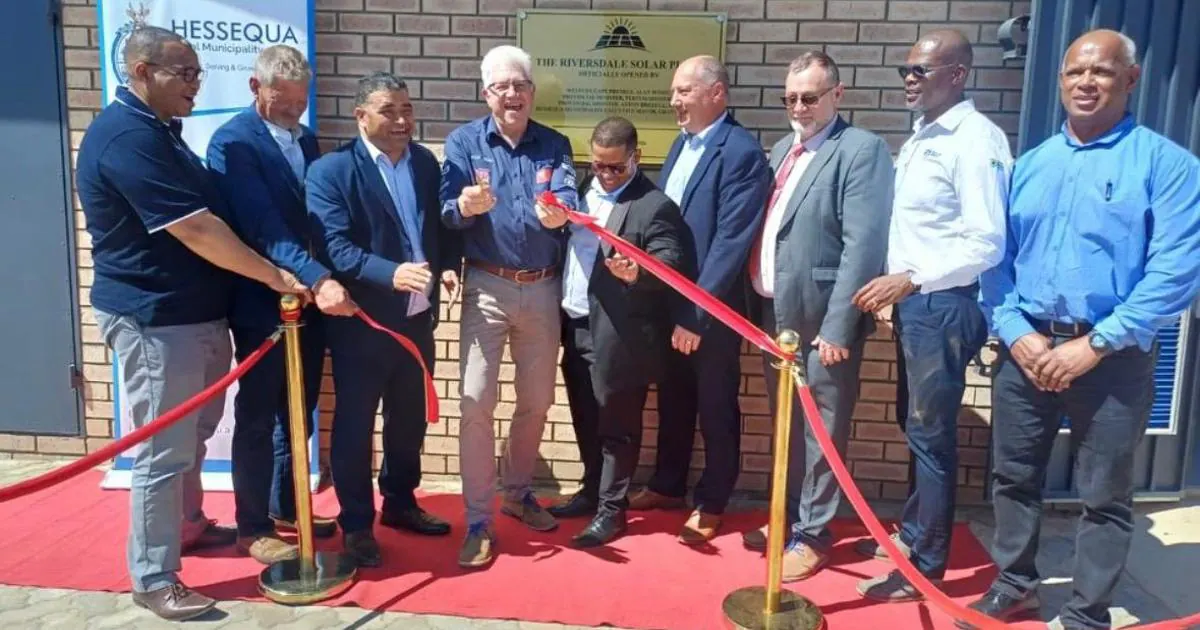
The Western Cape town of Riversdale has launched a new solar power plant, enabling residents to benefit from reduced electricity costs and a more stable energy supply. The plant, comprising 10 MW of solar photovoltaic power, is capable of generating up to 15 million kilowatt-hours of electricity annually. This initiative is part of a broader effort to decrease reliance on Eskom, the national electricity supplier, and provide more affordable energy options for local communities.
According to Alwie Lester, special advisor on energy to Western Cape Premier Alan Winde, the project also includes a battery energy storage system with a storage capacity of 10 MW hours. This setup allows Riversdale to supply itself with electricity if there are any issues with Eskom's supply. However, the town remains connected to the Eskom network and still uses some of their energy. The project cost was just over R200 million for the municipality, which includes a maintenance and operating window.
The solar power plant's generation is embedded in the municipal network, meaning it does not rely on Eskom's network. Lester explained that the municipality currently pays around R3 per kilowatt-hour for Eskom's electricity, but with the new solar plant and battery energy system, the cost is reduced to approximately R2.80 per kilowatt-hour. This reduction in cost is made possible by the municipality owning the generation, allowing them to sustain a lower price for residents.
The project is expected to recover its costs in about six years. Additionally, the Hessequa municipality can cap Eskom's tariff increase at 7% for residents, compared to Eskom's 9% increase. This provides a more stable and affordable energy option for the community. The success of the Riversdale solar plant has sparked interest from other municipalities, including those in George, Stellenbosch, Drakenstein, and Swartland.
Lester emphasized that the primary driver behind this initiative is the cost of electricity, rather than a need to insulate against load shedding. Municipalities are seeking to offer their citizens better pricing and stable energy. The City of Cape Town is also set to commission similar plants with the same objective of reducing dependence on Eskom.
The Riversdale solar plant is a significant step towards energy independence and affordability for the local community. By generating its own electricity, the town can provide a more stable and cost-effective energy supply for its residents. This project serves as a model for other municipalities seeking to reduce their reliance on Eskom and provide more affordable energy options.
The Western Cape government is actively exploring similar initiatives to promote energy independence and affordability. With several municipalities expressing interest in similar projects, the region may see a significant shift towards renewable energy and reduced reliance on Eskom in the coming years.
Key points
- The Riversdale solar plant has reduced the town's electricity costs to approximately R2.80 per kilowatt-hour from Eskom's R3 per kilowatt-hour.
- The project is expected to recover its costs in about six years.
- The initiative has sparked interest from other municipalities, including those in George, Stellenbosch, Drakenstein, and Swartland.