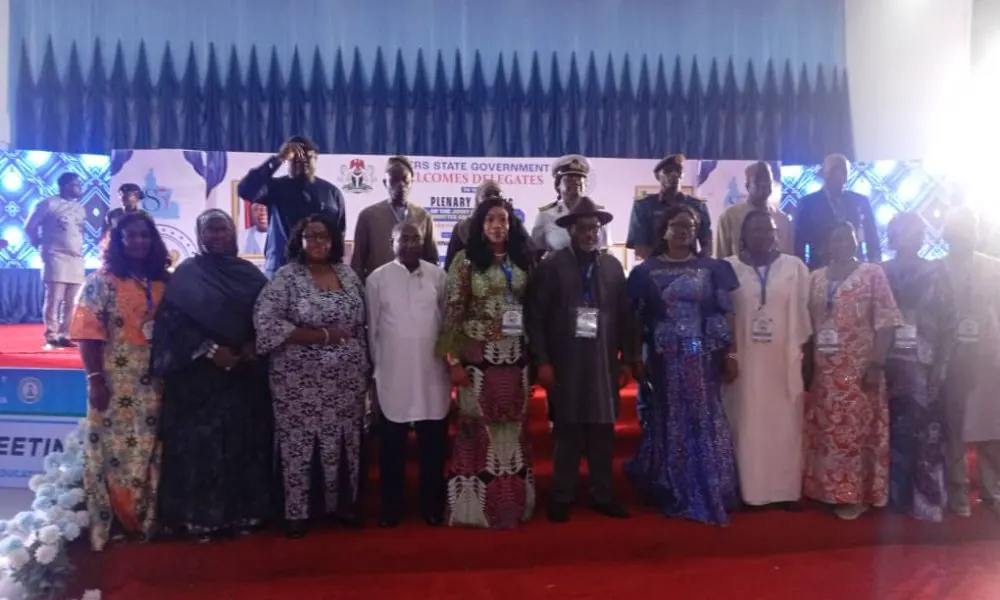
The Rivers State Government has reaffirmed its commitment to prioritizing human capital development, particularly education, as a foundation for sustainable development and national progress. This commitment was made by Governor Siminalayi Fubara while declaring open the 85th Plenary Meeting of the Joint Consultative Committee on Education (JCCE). The meeting, hosted by Rivers State, brought together education policymakers, technocrats, and stakeholders from the 36 states of the federation and the Federal Capital Territory.
The four-day plenary, with the theme "Infrastructural Development And Teacher Motivation: Panacea for Improved Learning Outcomes," focused on deliberating on critical issues affecting the education sector and developing policies to improve teaching and learning outcomes. Fubara, represented by the Commissioner for Education, Dr. Peters Nwagor, emphasized that his administration had placed human capital development at the center of its governance philosophy. The state government has made deliberate investments in the construction, rehabilitation, and upgrading of educational infrastructure across the state.
However, Fubara stressed that infrastructure alone could not guarantee meaningful educational outcomes, emphasizing the need to prioritize the welfare, training, and continuous professional development of teachers. He described teachers as central to the success of the education system. Quoting former South African President Nelson Mandela, Fubara said education is a powerful instrument for changing society. He added that sustained investment in teachers would strengthen the entire education system.
The governor acknowledged the challenges confronting Nigeria's education sector, including inadequate funding and infrastructure deficits. He called for stronger collaboration among the Federal Government, states, and other stakeholders to address the problems. Fubara urged participants to ensure that resolutions reached at the plenary did not end as policy documents but translated into measurable improvements in classrooms, schools, and the lives of teachers and learners across the country.
The Minister of Education, Dr. Maruf Tunji Alausa, commended the Rivers State Government and people for their hospitality and arrangements put in place to host the plenary. Alausa highlighted Federal Government initiatives aimed at transforming the education sector, including the Nigerian Education Sector Renewal Initiative and the Renewed Hope Energised Education Programme. He urged delegates to develop pragmatic and actionable recommendations on infrastructure, teacher capacity development, and innovative financing.
The minister stressed that the outcome of the plenary would be consolidated and forwarded to the National Council on Education, the highest policy-making body in the sector, for consideration and further action. The JCCE plenary provided an important platform for stakeholders to exchange ideas, harmonize policies, and address emerging challenges confronting the nation's education system.
The Rivers State Government's commitment to human capital development is part of a broader effort to address the country's education challenges. The state government's investments in educational infrastructure and teacher development aim to improve learning outcomes and contribute to sustainable development and national progress. The 85th JCCE plenary brought together stakeholders to discuss critical issues in the education sector and develop policies to improve teaching and learning outcomes.
Key points
- The Rivers State Government prioritizes education as a foundation for sustainable development and national progress.
- The 85th JCCE plenary focused on infrastructural development and teacher motivation as a panacea for improved learning outcomes.
- The Federal Government has initiated several programs aimed at transforming the education sector, including the Nigerian Education Sector Renewal Initiative and the Renewed Hope Energised Education Programme.