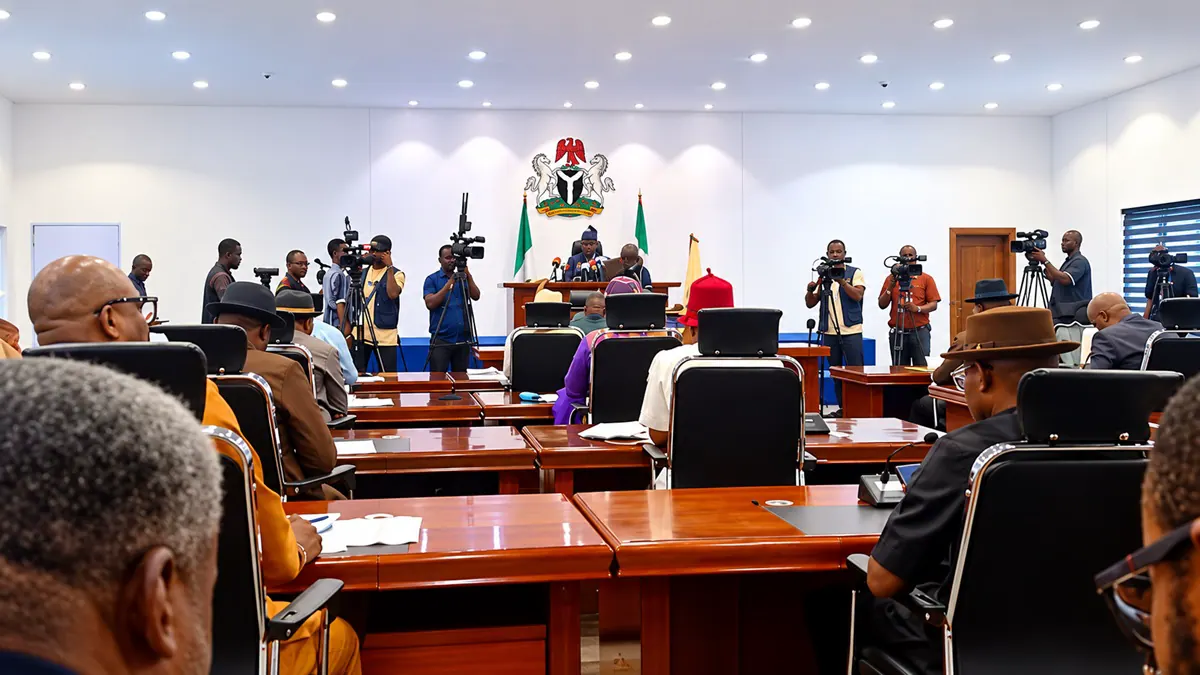
The Rivers State House of Assembly has thrown its weight behind a proposed constitutional amendment to establish state police across Nigeria. This move follows the transmission of the Constitution of the Federal Republic of Nigeria, 1999 (Sixth Alteration) Bill, 2026, by the National Assembly to the 36 state Houses of Assembly for consideration and approval. The bill seeks to amend the 1999 Constitution to create a legal and institutional framework for the establishment and operation of state police.
The resolution was made on Monday, making Rivers one of the states to formally indicate support for the constitutional alteration as the process moves through the state legislatures. The transmission of the bill followed a formal communication by the Clerk to the National Assembly, Kamoru Ogunlana, on September 16, 2026, to the state legislatures. This process is being conducted pursuant to Section 9 of the 1999 Constitution, which prescribes the procedure for altering the Constitution.
To become law, the proposed amendment requires the approval of not less than two-thirds of all the state Houses of Assembly, which translates to at least 24 Houses of Assembly. The National Assembly has not imposed a statutory deadline on the state legislatures for returning their resolutions; however, its leadership has adopted a 30-day administrative timeframe to encourage the Houses of Assembly to consider the proposal and communicate their positions.
The push for state police has intensified in recent years amid persistent security challenges across different parts of Nigeria and concerns over the capacity of the centrally controlled Nigeria Police Force to respond effectively to threats. Supporters of the reform argue that state-controlled police could bring policing closer to communities, improve local intelligence gathering, and enable quicker responses to security threats peculiar to individual states.
The proposed amendment involves significant constitutional and institutional questions, including the structure of command, operational safeguards, funding, accountability, and the protection of police personnel from political interference. The current constitutional framework provides for the Nigeria Police Force as a federal institution, with policing largely controlled from the centre. The proposed amendment seeks to create a constitutional basis for states to establish and operate their own police formations alongside the existing federal structure.
The state police proposal has received backing from President Bola Tinubu, with the administration advancing broader reforms aimed at restructuring policing and improving internal security. A Presidential Working Group on the National Policing Bill was subsequently inaugurated to work on the framework for implementing the proposed policing structure. The Chairman of the working group, Femi Gbajabiamila, stated that the reform was intended to bring policing closer to Nigerians while establishing safeguards capable of making the system more effective and trusted.
For the amendment to advance, the required number of state legislatures must endorse the bill before it can return to the National Assembly and subsequently be presented to the President for assent. The outcome of the ongoing votes by the 36 state Houses of Assembly will determine whether the constitutional process for establishing state police secures the required nationwide legislative support.
Key points
- The Rivers State House of Assembly has endorsed the proposed constitutional amendment to establish state police.
- At least 24 of the 36 state Houses of Assembly must approve the amendment before it can proceed to the next stage.
- The proposed state police system aims to decentralize policing and strengthen Nigeria's response to insecurity.