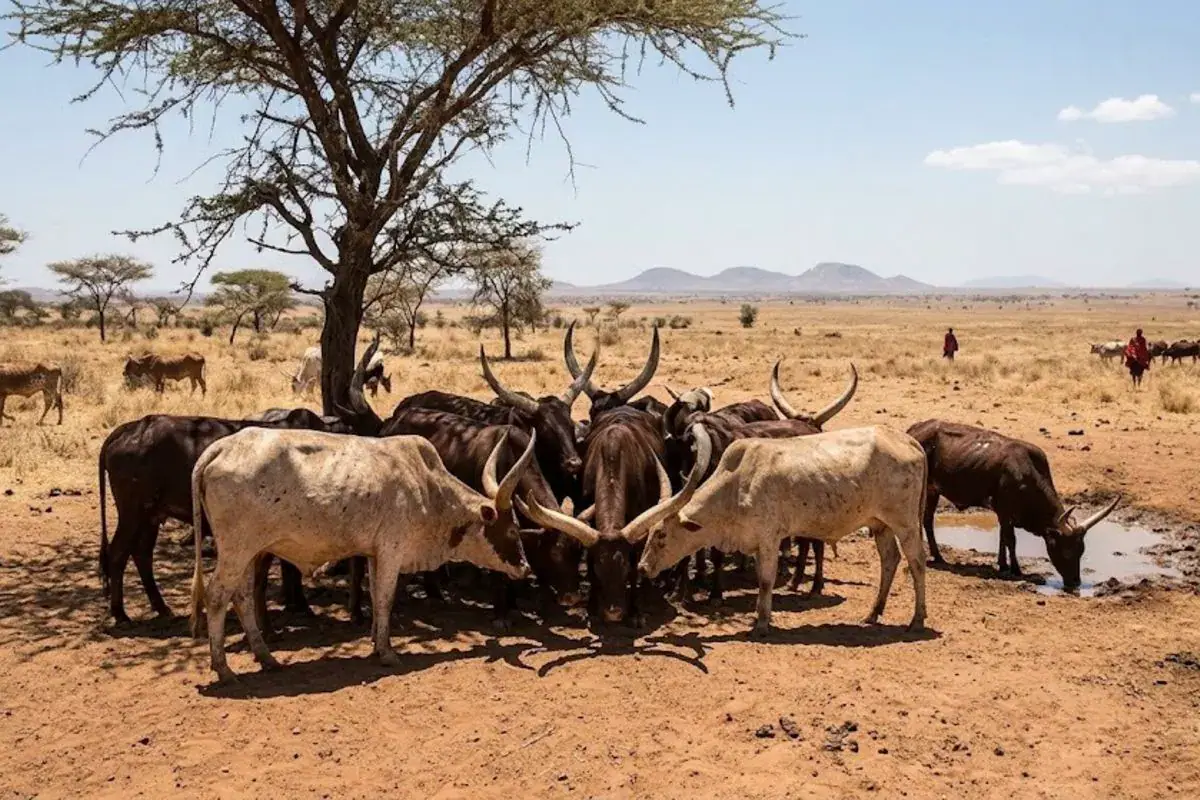
Tanzania is bracing for a potential shortage of meat supplies in the coming months as rising temperatures take a toll on livestock production. The situation has been reported in several regions, including Shinyanga, Simiyu, Tabora, Morogoro, Katavi, Coast, and Dar es Salaam. The Tanzania Meteorological Authority has warned that the country is entering a seasonal rainfall period influenced by El Niño, which is expected to exacerbate the problem. Farmers are reporting weight loss, declining productivity, and animal deaths due to prolonged heat stress.
Livestock farmers are struggling to cope with the high temperatures, which are causing stress among animals, reducing milk production and weight gain. Some animals are becoming weak and dying, raising concerns about future meat supplies. Prof Hezron Nongo, a livestock health expert and lecturer at Sokoine University of Agriculture, explained that excessive heat disrupts animals' normal body functions, weakens their immune systems, and increases their susceptibility to diseases. He emphasized that the situation is critical and requires immediate attention from farmers and authorities.
The chairman of the Tanzania Livestock Keepers Association, Jeremiah Wambura, said the situation has become increasingly difficult for farmers due to high temperatures, compounded by shortages of water and pasture during the dry season. Cattle are losing weight, becoming exhausted, and weaker, making it difficult for some farmers to take them to market or use them for agricultural activities. Wambura advised farmers to sell some of their livestock and save the proceeds rather than wait until the animals lost more value or died.
Poultry farmers are also warning of potential losses due to the high temperatures. Geofrey Kidindima, chairman of the Tanzania Association of Layer Poultry Farmers, said heat stress is causing chickens to die suddenly, with some becoming lethargic or suffering heart failure. He identified Coast, Dar es Salaam, and Morogoro as some of the regions where poultry farmers are experiencing high temperatures. Kidindima advised farmers to reduce overcrowding in poultry houses to minimize heat stress.
The high temperatures are also affecting pig production, with some pigs miscarrying or experiencing difficulties during delivery. Doreen Maro, chairperson of the Tanzania Pig Farmers Association, said the problem is particularly common among farmers whose pig houses have inadequate ventilation. She recommended that farmers provide pigs with more water during hot weather and spray them with water to lower their body temperatures.
Prof Nongo explained that excessive heat disrupts animals' normal physiological processes, affecting feed intake, growth, and productivity. He recommended that farmers improve livestock housing and management, including reducing overcrowding, ensuring adequate ventilation, and providing sufficient drinking water. For cattle, he advised farmers to spray animals with water, provide fresh green fodder, and ensure they have access to shaded areas.
The situation is expected to worsen during the festive season, when demand for meat usually increases. Farmers and authorities are urged to take immediate action to mitigate the effects of the heat stress on livestock production. Key points include:
Key points
- The Tanzania Meteorological Authority has warned that the country is entering a seasonal rainfall period influenced by El Niño.
- Farmers are reporting weight loss, declining productivity, and animal deaths due to prolonged heat stress.
- Experts recommend that farmers improve livestock housing and management to mitigate the effects of heat stress.