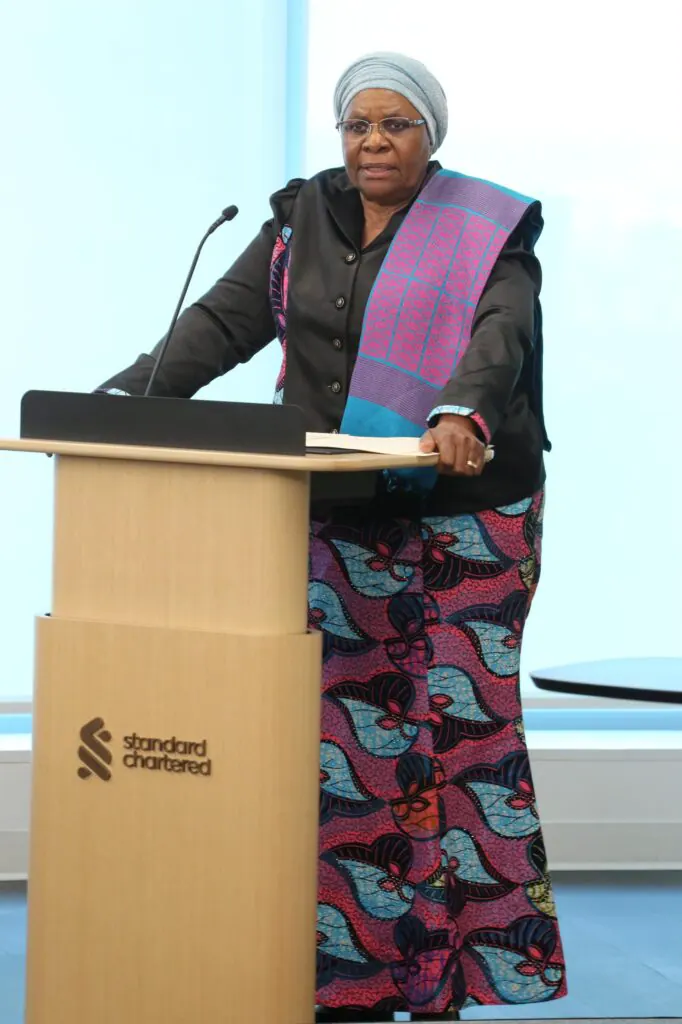
President Netumbo Nandi-Ndaitwah of Namibia has issued a warning about the growing threat of rising sea levels to the country's coastal infrastructure and marine economy, particularly at the strategic Walvis Bay harbour. The harbour, located one to three metres above the mean sea level, serves as a gateway to regional and international markets and is increasingly exposed to climate-related risks. This warning was delivered at a high-level plenary meeting on the existential threats posed by sea-level rise in New York.
According to President Nandi-Ndaitwah, rising sea levels are no longer a distant projection but a present and accelerating reality. This poses significant challenges to Namibia's transport infrastructure, marine resources, biodiversity, and the livelihoods of coastal communities. The country's marine ecosystem, supported by the Benguela Current Large Marine Ecosystem, plays a crucial role in supporting the fisheries sector, contributing to the gross domestic product, food security, and foreign exchange.
The Namibian president highlighted that despite contributing only 0.01% of global greenhouse gas emissions, the country remains highly vulnerable to climate change. This vulnerability results in increasing pressure on public finances and climate-resilience investments. The impacts of climate change on Namibia's marine ecosystem are profound, with rising ocean temperatures, changing ocean chemistry, shifting fish stocks, and declining marine productivity threatening the sector's sustainability.
President Nandi-Ndaitwah called for substantial investment in coastal protection and climate-resilient infrastructure to safeguard trade, investment, employment, and competitiveness. She emphasized the need for greater international climate finance, adaptation funding, and adequate resources for the loss and damage fund. This would enable Namibia to build resilience and adapt to the impacts of climate change.
The president also stressed the importance of climate justice, arguing that countries with the greatest contribution to climate change should scale-up and support economies that contribute the least. This, she believes, is essential for addressing the disproportionate impacts of climate change on vulnerable countries like Namibia. The call for climate justice and support reflects the country's efforts to address the global nature of the climate crisis.
The Walvis Bay harbour is a critical component of Namibia's economy, and its exposure to climate-related risks has significant implications for the country's economic stability. President Nandi-Ndaitwah's warnings highlight the urgent need for action to protect the harbour and other coastal infrastructure from the impacts of rising sea levels. This requires a coordinated effort from governments, international organizations, and other stakeholders.
In conclusion, President Nandi-Ndaitwah's address at the high-level plenary meeting in New York underscored the urgent need for action to address the growing threat of rising sea levels to Namibia's coastal infrastructure and marine economy. The country's vulnerability to climate change requires substantial investment in climate-resilient infrastructure and greater international support to build resilience and adapt to the impacts of climate change.
Key points
- President Nandi-Ndaitwah warns of growing threat to Walvis Bay harbour from rising sea levels
- Namibia's marine ecosystem and fisheries sector are vulnerable to climate change impacts
- President calls for substantial investment in coastal protection and climate-resilient infrastructure