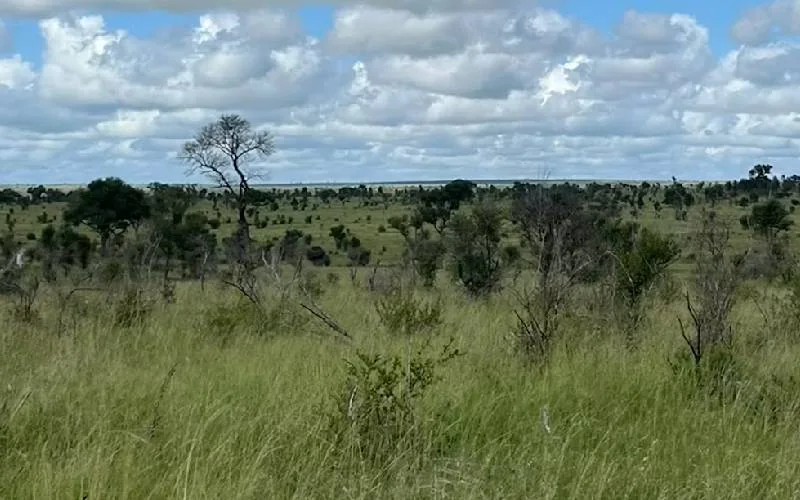
A recent analysis of experiments and long-term data from Kruger National Park in South Africa has revealed a significant increase in savanna grass production, attributed to rising atmospheric CO₂ levels. The study, which examined 70 published experiments on C4 savanna grasses and combined the results with monitoring data from 533 sites in Kruger National Park covering 1989-2021, found a 28% increase in above-ground grass biomass over the three-decade period. This increase coincided with an 18% rise in atmospheric CO₂.
According to the researchers, higher CO₂ levels improved water-use efficiency in grasses, allowing them to retain more moisture and continue photosynthesising during dry spells. This amplified growth, particularly in water-limited savannas. The growth response was weaker when water was abundant, confirming that the CO₂ benefit is mediated primarily by drought mitigation rather than a simple boost in photosynthetic capacity.
The study's findings suggest that the trend of increased grass growth could persist through the 21st century, even as temperatures rise and rainfall patterns shift. However, hotter, drier conditions may temper the magnitude of the effect. The researchers used model simulations to project future grass growth under different climate scenarios.
While the increased grass growth means greater carbon uptake during growth, most of the additional carbon is quickly returned to the atmosphere through grazing, decomposition, or fire. This limits long-term soil carbon storage. The study's authors note that savannas cover roughly half of Africa, and shifts in grass productivity could influence wildlife forage, livestock feed, fire fuel loads, and the balance of carbon between plants, soils, and the atmosphere.
The researchers argue that land-management plans for grazing and fire should incorporate CO₂-driven changes in grass quantity and species composition. This is rather than relying solely on historic rainfall and temperature patterns. The study's findings have important implications for conservation and management of savanna ecosystems.
The study's results are based on data from Kruger National Park, but the researchers believe that the findings could be applicable to other savanna ecosystems in Africa. The study's lead author noted that the findings highlight the need for adaptive management strategies that take into account the impacts of rising CO₂ levels on savanna ecosystems.
Overall, the study provides new insights into the impacts of rising CO₂ levels on savanna ecosystems. The findings have important implications for conservation, management, and climate change mitigation efforts in Africa. The study's results could inform strategies for maintaining healthy and resilient savanna ecosystems in the face of climate change.
Key points
- A 28% rise in savanna grass production in Kruger National Park is linked to higher atmospheric CO₂ levels over three decades.
- Higher CO₂ levels improve water-use efficiency in grasses, allowing them to retain more moisture and continue photosynthesising during dry spells.
- Land-management plans for grazing and fire should incorporate CO₂-driven changes in grass quantity and species composition.