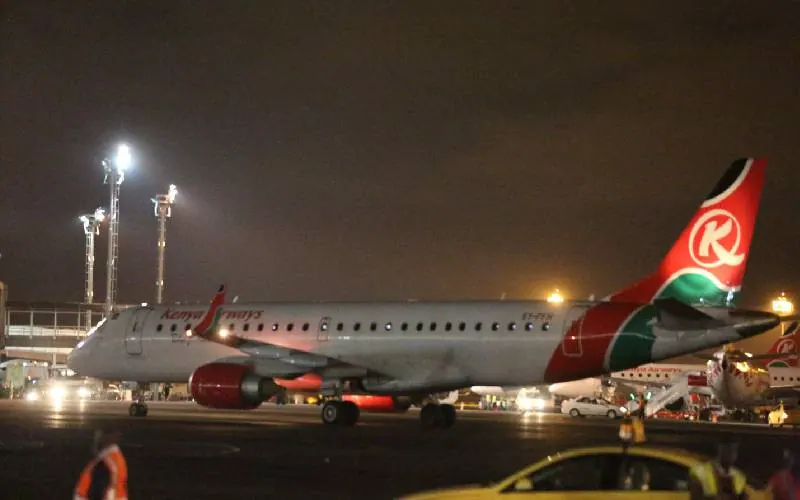
African airlines are experiencing significant financial strain due to rising costs, high taxes, and passenger charges. The International Air Transport Association (IATA) has warned that these increasing costs are undermining the profitability and expansion of carriers across the continent. IATA Regional Vice President for Africa and the Middle East Kamil Alawadhi stated that governments are treating aviation as a source of revenue rather than a strategic sector that drives trade, tourism, investment, and economic growth.
According to Alawadhi, the cost burden on African airlines is being compounded by limited funding, ageing airport infrastructure, intense competition from international carriers, and higher fuel costs linked to geopolitical tensions. He made these remarks during the 10th Africa Aviation Summit in Nairobi, highlighting the challenges faced by the aviation industry in Africa. The summit brought together industry stakeholders to examine issues affecting airlines and air travel in Africa.
One of the significant concerns raised by Alawadhi is the charges imposed on airlines and passengers for Advance Passenger Information (API) and Passenger Name Record (PNR) systems. These systems are used to strengthen border security and facilitate immigration processing. However, some countries are charging up to $30 per passenger for these systems, which Alawadhi described as excessive and a government responsibility rather than a revenue-generating activity.
Alawadhi also expressed concerns over passenger levies in several African markets, including Tanzania, Gabon, and Equatorial Guinea. In Tanzania, charges can reach $45 per sector for a one-way journey, while in Gabon and Equatorial Guinea, the charges are $30 and $50, respectively. He warned that such costs could make air travel more expensive, constrain passenger demand, and weaken the ability of airlines to expand their networks.
The IATA executive called for governments to follow internationally recognised standards and establish clear legal and operational frameworks for API and PNR programmes. He urged governments to finance and implement these programmes in line with internationally agreed standards and International Civil Aviation Organisation (ICAO) principles. This would help reduce the cost burden on airlines and passengers.
Aviation intelligence consultant Sean Mendis supported the call for governments to reconsider their approach to taxation, arguing that lower costs could stimulate demand and attract greater investment into the sector. He cited Ghana's decision in 2017 to remove a 17.5 per cent Value Added Tax on domestic airfares as an example of a policy aimed at reducing the cost of air travel and stimulating the market.
Mendis also called for reforms in the management of national airlines, urging governments to prioritise competitive recruitment and professional management. He argued that governments should avoid using airlines primarily as vehicles for creating employment, as excessive staffing and political interference could weaken the financial performance of state-owned carriers. By addressing these challenges, African airlines can improve their profitability and expand their networks.
Key points
- African airlines face significant financial strain due to high taxes, passenger charges, and regulatory levies.
- IATA has called for governments to follow internationally recognised standards for API and PNR programmes.
- Lower costs and reforms in national airlines' management could stimulate demand and attract greater investment into the sector.