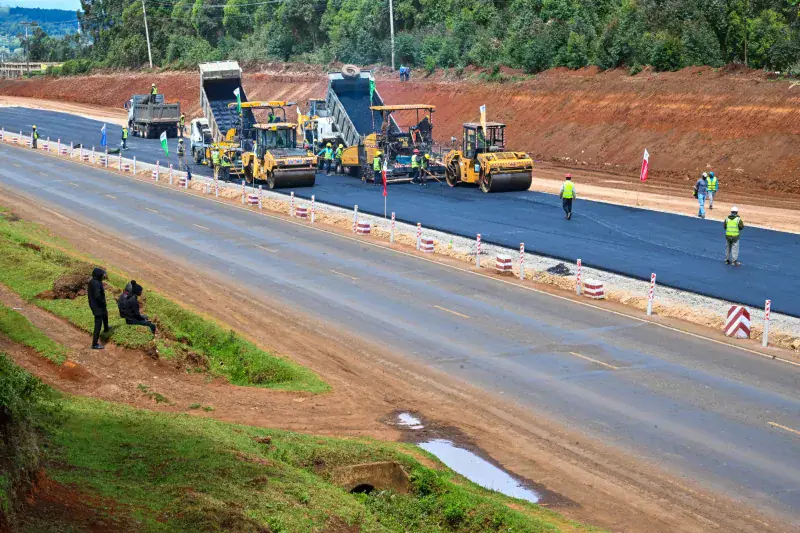
The Rironi-Mau Summit highway project in Kenya is making encouraging progress, with Parliament expressing confidence in the pace of construction. National Assembly Departmental Committee on Transport and Infrastructure Chairperson George Kariuki said the committee had observed significant progress during an inspection of the ongoing works. He described the highway as a transformative investment with far-reaching economic benefits for Kenya and the wider East African region. The project aims to strengthen Kenya's transport infrastructure and improve connectivity between the Port of Mombasa, Nairobi, Western Kenya, and neighbouring countries.
The committee inspected the project alongside Roads and Transport Cabinet Secretary Davis Chirchir and the technical team overseeing its implementation. Kariuki said the project, pursued by successive administrations, was critical to improving connectivity, reducing travel time and congestion, and lowering the cost of transporting goods along that corridor. The committee noted a few delays but described them as not significant enough to undermine the overall implementation schedule. Kariuki assured that parliamentary oversight would remain central to ensuring public resources were properly utilised and contractors fulfilled their contractual obligations.
The committee raised concerns over disruptions to motorists caused by the ongoing construction, urging contractors to strengthen traffic management measures and prioritise road users' safety. Kariuki acknowledged that construction works would inevitably cause temporary inconvenience but said such disruptions should not expose motorists to unnecessary risks. He drew parallels with the inconvenience motorists experienced during the construction of Thika Road, arguing that the short-term disruption should be viewed against the long-term benefits of improved infrastructure.
Global supply disruptions have raised questions over the project's delivery schedule, particularly regarding petroleum-related products such as bitumen and asphalt used in road construction. However, Kariuki dismissed concerns that international supply challenges would derail the project, saying contractors had already secured sufficient tarmac for the section scheduled for completion in December. He added that the committee expected asphalt works to begin within two to three weeks, expressing confidence that the project team was making deliberate efforts to honour its commitments.
Kariuki also dismissed criticism suggesting that global supply disruptions would prevent the project from being completed, insisting that necessary materials had already been secured. He said the committee would conduct another inspection around December to assess progress and witness the laying of the asphalt surfacing. The project's progress has been hailed by MPs, who believe it will have a positive impact on the economy and the lives of Kenyans.
Beyond its transport benefits, Kariuki said the highway would unlock economic opportunities for communities along the corridor, particularly farmers and small-scale traders whose livelihoods depend on efficient access to markets. Improved connectivity would allow them to transport their produce faster and at a lower cost, stimulating employment, attracting investment, facilitating trade, and strengthening regional integration. The benefits would be particularly significant for farmers dealing in perishable agricultural products.
The Rironi-Mau Summit highway project is part of the government's wider infrastructure development agenda, aligned with Kenya Vision 2030 and the Bottom-Up Economic Transformation Agenda (BETA). The project's completion is expected to position Kenya as a strategic trade and logistics hub connecting the East African hinterland to international markets through the Port of Mombasa. Kariuki's remarks underscore the government's ambition to transform Kenya's infrastructure and economy through such flagship investments.
Key points
- The Rironi-Mau Summit highway project is on track, with MPs expressing confidence in the pace of construction despite global supply chain disruptions.