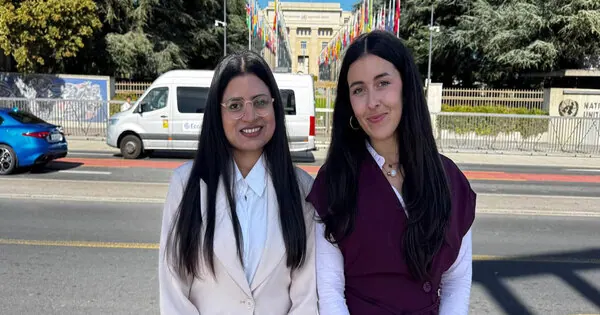
The United Nations Human Rights Council in Geneva recently hosted a side event titled "Child Enforced Marriage as a Gender-Based Violence," which shed light on the rights of women and children in Sindh, Pakistan. The event featured speakers, including the UN Special Rapporteur on the sexual exploitation and sexual abuse of children, representatives of the Working Group on Violence Against Women and Girls, and members of the Sindhi community. The discussion focused on the issue of child and forced marriages, as well as human rights violations against women and girls in Sindh.
Alejandra Martinez Otero, Coordinator at Global Human Rights Defence, stated that the event aimed to bring attention to the rights of communities being persecuted in Pakistan, such as the Sindhi and Baloch communities. She alleged that the Pakistani government is not respecting the rights of these communities and emphasized the need for greater attention to their plight. Martinez Otero also highlighted the importance of bringing these cases before the UN and other high-level representatives and organizations in Geneva.
Dr. Shagufta Kandhro, a women's rights activist from Sindh, attended the event to raise concerns about women and girls in Sindh, particularly with regards to early and child marriages. She urged the United Nations Human Rights Council to take action against the state and protect human rights, women's rights, and children's rights. Kandhro emphasized the need for greater attention to the rights and protection of women and children, particularly in cases involving early and child marriages.
The event was part of a broader effort to highlight human rights abuses against Sindhi women and children. According to Martinez Otero, the rights of Sindhi women and children are often neglected, and it is essential to bring their cases to the attention of the international community. The discussion at the UNHRC event underscored the need for greater awareness and action to address these human rights abuses.
The issue of child and forced marriages is a significant concern in Sindh, Pakistan. According to human rights activists, these practices are often linked to broader issues of poverty, lack of education, and social inequality. The event at the UNHRC highlighted the need for a comprehensive approach to address these issues and protect the rights of women and children.
The UNHRC event also highlighted the importance of international cooperation to address human rights abuses against Sindhi women and children. Martinez Otero and Kandhro emphasized the need for collaboration between governments, civil society organizations, and the international community to protect human rights and prevent abuses. They also called for greater support for human rights defenders and activists working on these issues.
The discussion at the UNHRC event underscored the need for greater attention to the rights and protection of women and children in Sindh, Pakistan. The event provided a platform for Sindhi women's rights activists to raise their concerns and call for action to address human rights abuses. The international community has been urged to take note of these issues and support efforts to protect human rights and prevent abuses.
Key points
- The UNHRC event highlighted human rights abuses against Sindhi women and children, particularly with regards to child and forced marriages.
- The event called for greater attention to the rights and protection of women and children in Sindh, Pakistan.
- International cooperation and support are essential to address human rights abuses against Sindhi women and children.