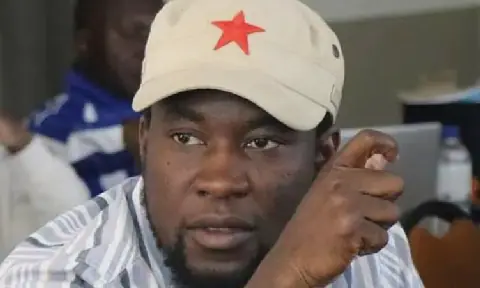
Right-wing populist movements are on the rise globally, with significant advances in Latin America and Europe. According to University of Johannesburg professor David Monyae, the underlying problem is bigger than any individual political leader, citing the failure of capitalism and liberal democracy to deliver to the masses. Monyae argues that the concentration of wealth is contributing to widespread frustration. This trend has been particularly visible in the US, with Donald Trump's presidency often cited as a symbol of the shift.
North-West University professor André Duvenhage examines the distinction between left and right as crucial to understanding the current political moment. He notes that the terms are not necessarily dependent on a single ideology but rather in relation to the status quo. Duvenhage points to the rapidly changing global environment and associated insecurities as important factors behind the current shift. He also mentions the reaction against the failures of centralised, planned socialist projects as a contributing factor.
Monyae disagrees with making central planning a blanket explanation, citing China and Vietnam as examples of countries that have experienced significant economic development. For him, the central issue is whether economic growth is being shared. Monyae emphasizes the need for a shared economy, not one that benefits only a few. Duvenhage and Monyae agree that Donald Trump has helped give momentum to the global rise of right-wing populism but argue that he is not the sole cause of the phenomenon.
The trend is not confined to foreign countries, according to the academics. Duvenhage notes that South Africa is already experiencing both right-wing and left-wing populism. However, he argues that the country's deeper problem is institutional, with the state becoming increasingly dysfunctional. Duvenhage emphasizes that leadership alone will not solve the problem and that institutions need to be rebuilt.
Monyae is more direct about the possibility of the trend intensifying in South Africa. He expresses concern that the country may see a rise in fascism, three decades into democracy. Monyae links the broader political shift to economic decline, technological change, and weakening institutions. He warns that as the economy declines, South Africa may experience outright fascism.
The rise of populist politics raises questions about democratic institutions and minority rights. Duvenhage notes that the biggest challenge facing democracies is a lack of institutionalisation. He cautions that right-wing populists may endanger the democratic side of systems, threatening limited government and emphasizing identity politics, sovereignty, and borders.
Monyae argues that the growth of populism is connected to the failure of political systems to deliver basic improvements in people's lives. He emphasizes the importance of practical issues such as functioning infrastructure, schools, employment, and food security. Ultimately, the discussion points to a broader transformation in global politics, with countries and political movements repositioning themselves in a rapidly changing world order.
Key points
- Right-wing populist movements are driven by economic frustration, institutional failures, and a rapidly changing global order.
- The trend is not confined to foreign countries, with South Africa already experiencing both right-wing and left-wing populism.
- The rise of populist politics raises questions about democratic institutions and minority rights.