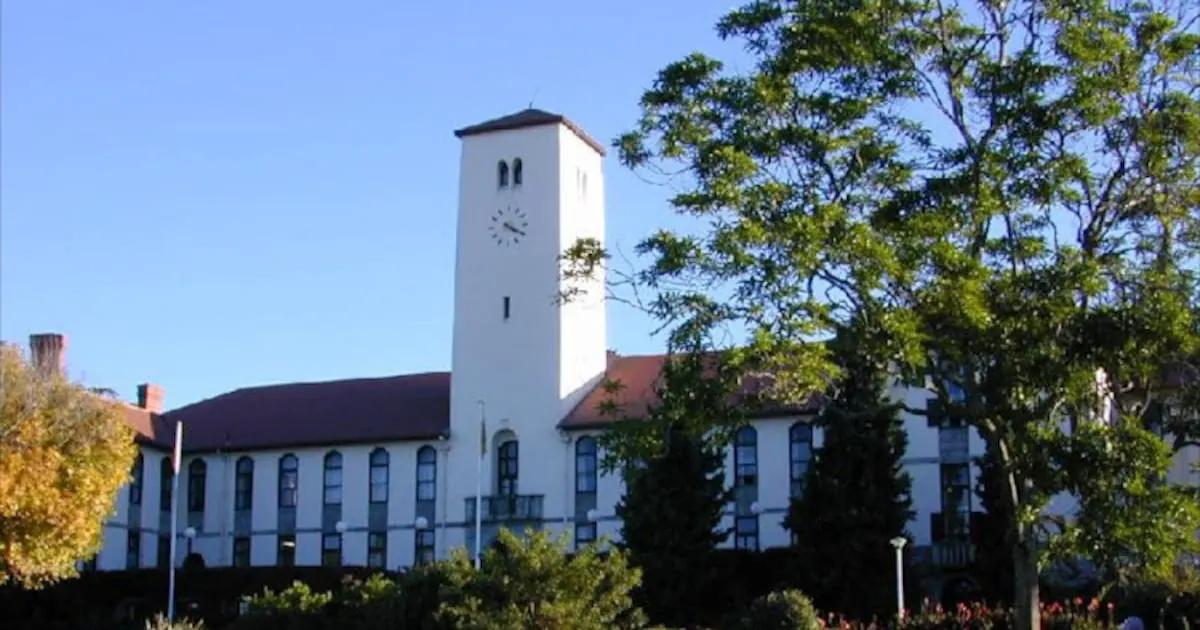
Rhodes University students blocked campus entrances on Tuesday morning, protesting a new fee payment protocol that requires self-funded students to pay a portion of their outstanding debt before registering. The protest followed an emergency student meeting on Monday night, where students raised concerns about the proposed protocol. The Student Representative Council (SRC) mandated by students to call for the suspension of the academic programme until management addresses their concerns.
The new payment regime, set to take effect in 2027, has sparked opposition from students who fear it will place a significant financial burden on them. Under the protocol, students owing R25,000 or less can be admitted to residences, while those owing more must first make arrangements to settle their debt. The university confirmed that the blocked entrances were affecting access to campus.
Vice-chancellor Prof Sizwe Mabizela said the university is facing mounting financial pressure and growing student debt, which has reached R853m at the end of September. He stated that the debt had become unsustainable and that the university is not able to continue to operate if it is not able to recover the student debt. Mabizela warned that continued financial pressure could affect the university’s ability to provide services.
The protocol does not apply to students with guaranteed funding from the National Student Financial Aid Scheme (Nsfas), but covers self-funded students and those funded through bursaries. Mabizela said management had initially proposed that students pay 50% of outstanding fees before registering earlier this year, but student leaders successfully pushed for the amount to be reduced to 20%.
CFO Simon Kaye said the university is facing wider funding pressures in the higher education sector, with no additional government money available. He stated that Nsfas had reduced support, including by capping accommodation and allowances, and had started paying Rhodes monthly without paying tuition fees in full. Kaye emphasized the importance of cash flow for the university.
The SRC has formally challenged the protocol, handing management a memorandum containing its concerns and proposed changes before the policy is implemented next year. Students are demanding that management respond to their concerns and provide clear timelines for resolving the dispute. The university said it remains willing to engage with student leaders.
The dispute has significant implications for students, with the new regime affecting registration, residence admission, and the release of academic results. Key points include:
Key points
- The university requires self-funded students to pay a portion of their outstanding debt before registering.
- Student debt has reached R853m at the end of September.
- The new protocol will affect registration, residence admission, and the release of academic results.