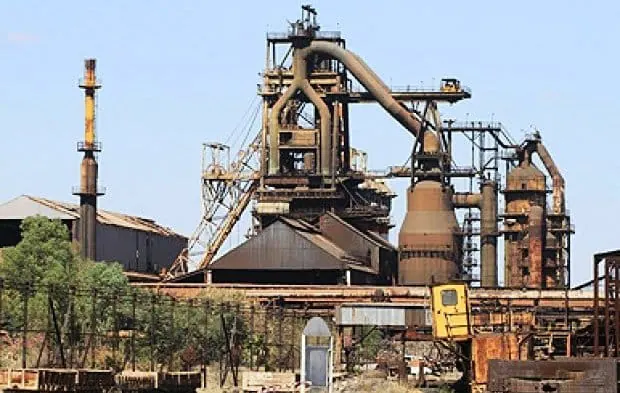
The Ajaokuta Steel Plant, a long-abandoned project, has a complex history of failed attempts and missed opportunities. The plant's revival is now a priority for President Bola Ahmed Tinubu's administration. The project's failure is attributed to various factors, including the introduction of Western technology specifications midway through construction, which created fundamental incompatibility with the Soviet-designed blast furnace. The administration is now exploring a build-operate model over a 10-to-15-year term, with returns flowing back to the state.
A 20-year Gas Supply Agreement was signed in July 2026 between Ajaokuta Steel Company Limited and the Nigerian National Petroleum Company Limited. The agreement will provide up to 50 million standard cubic feet of gas per day to power the plant, addressing a major obstacle that has hindered investors for nearly half a century. Managing Director Nasir Abdulsalam emphasized that gas is essential for operating the steel plant. With this agreement in place, prospective investors from the US and China have conducted technical assessments, concluding that the blast furnaces could be brought back online within six to seven months.
Nigeria has an estimated three billion tonnes of iron ore reserves, enough to sustain operations for decades. Limestone and coal deposits are also abundant. However, the country's raw material endowment has not been the issue; governance has. The economic case for steel is often misunderstood, and Ajaokuta's value lies not in the profit-and-loss statement of the plant itself but in its domino effect along the industrialization chain. Steel is a low-margin industry, but it is essential for construction, transport, machinery, automotive, pipes, and defense.
Ajaokuta's revival is not just a steel project; it is a national economic project. The plant's operation would create approximately 10,000 direct jobs and 70,000 indirect jobs. Achieving the 2030 target of 10 million tonnes would replace $7.5 billion in imports, generate $2 billion in tax revenue, and create over 500,000 jobs across the value chain. Every year of inaction costs Nigeria $6 billion, and over five years, $30 billion – far exceeding the $4-6 billion investment required.
The entry of Dangote into the steel arena is significant, as his interest is driven by the needs of his downstream industries. Dangote's strategy is vertical integration – breaking the bottlenecks of power, steel, and ports to transform the cost structure of Nigerian manufacturing. His goal is to industrialize Africa, modelled on India's Tata Group. Skeptics, however, dismiss the latest optimism as "noise," noting that the blast furnace has never operated.
A comprehensive technical and financial audit is currently underway to determine the plant's viability. The federal government has countered that the current model has failed, and nearly half a billion dollars was paid in settlement to Global Steel Holdings after litigation – money that produced no steel and no jobs. The lesson is that Nigeria must never again substitute commercial discipline with political optimism.
The obstacles to reviving Ajaokuta are formidable but not insurmountable. The gas agreement has been signed, the raw materials are in the ground, and the market is hungry. The private sector has signalled readiness with $2.72 billion in commitments. What remains is the most elusive ingredient of all: political courage. The success of Ajaokuta's revival will depend on the government's ability to make tough decisions and provide the necessary support for the project.
Key points
- Ajaokuta's revival is crucial for Nigeria's industrialization, as it would create jobs, reduce imports, and generate tax revenue.
- The project's success depends on the government's ability to provide a stable and supportive environment for investors.
- A build-operate model over a 10-to-15-year term has been proposed, with returns flowing back to the state.